Declassified UFO / UAP Document
Astrobiology: Search for Biosignatures in Our Solar System and Beyond
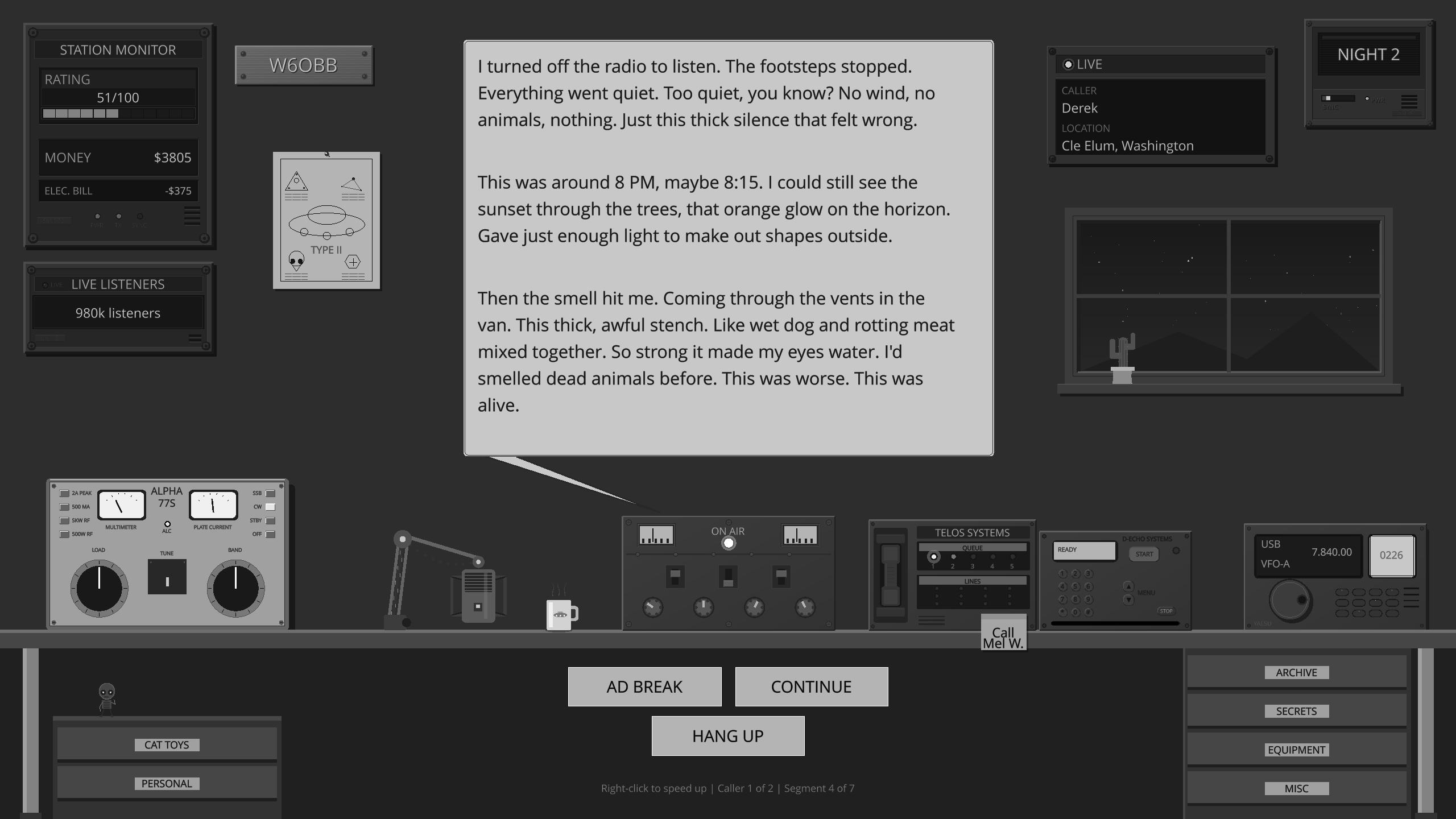
Ever wanted to host your own late-night paranormal radio show?
Across the Airwaves
You're on the air. Callers bring Mothman, Fresno Nightcrawlers, UFO sightings, reptilian autopsies, and whispers about AATIP and Project Blue Book. Every reply shapes how the night goes.
AI-Generated Summary
This hearing transcript details the 2013 congressional review of NASA's Astrobiology Program, focusing on the search for biosignatures and exoplanets. Experts testified on the scientific, technological, and societal importance of astrobiology, advocating for continued long-term funding and international collaboration.
This document is a transcript of a hearing held on December 4, 2013, by the U.S. House of Representatives Committee on Science, Space, and Technology, titled 'Astrobiology: Search for Biosignatures in Our Solar System and Beyond.' The hearing featured testimony from three expert witnesses: Dr. Mary A. Voytek (NASA), Dr. Sara Seager (MIT), and Dr. Steven Dick (Library of Congress). The primary purpose of the hearing was to examine the current state of astrobiology research, the search for biosignatures, and the role of NASA in these efforts.
Dr. Voytek provided an overview of NASA's Astrobiology Program, which was established in 1996 and consists of grant programs, technological development, field-testing, and the NASA Astrobiology Institute. She highlighted the importance of studying extreme environments on Earth—such as hydrothermal vents and glaciers—to understand how life might exist in harsh conditions on other planets like Mars. She also noted that astrobiology research has led to technological spin-offs, such as instruments used to map the Deepwater Horizon oil spill.
Dr. Seager discussed the search for exoplanets, emphasizing the transition from simply finding planets to characterizing their atmospheres for biosignature gases. She highlighted the importance of the Kepler mission and the upcoming TESS and James Webb Space Telescope missions. She advocated for the development of new direct imaging techniques, specifically the 'starshade' and 'internal coronagraph,' to observe Earth-like planets around nearby sun-like stars. She emphasized that while the chance of detecting life with current technology is small, the search is a revolutionary endeavor that could define our legacy.
Dr. Dick provided a historical perspective on the search for life beyond Earth, noting that astrobiology has become a central theme in space science. He emphasized the societal impact of such discoveries and advocated for the re-integration of SETI (Search for Extraterrestrial Intelligence) into the broader astrobiology program, arguing that the current separation is artificial. He also discussed the importance of international cooperation and the need for long-term, stable funding for scientific research.
The committee members engaged the witnesses on topics including the importance of STEM education, the need for bipartisan support for space exploration, the challenges of international collaboration due to ITAR regulations, and the potential societal implications of discovering life. The witnesses collectively emphasized that while the search for life is a long-term investment, it is a legitimate and vital scientific pursuit that inspires the next generation of explorers and helps humanity understand its place in the universe.
We are not like searching for aliens or looking for UFOs. We are using standard astronomy. We are using models that have been used for Earth’s atmosphere and planetary atmosphere.
PDF not loading? Download the PDF directly
Official Assessment
The hearing established that astrobiology is a multidisciplinary field focused on the origin, evolution, distribution, and future of life in the universe. Key themes included the search for exoplanets, the study of extreme environments on Earth as analogs for other planets, and the importance of continued funding for NASA missions and technology development. Witnesses emphasized that while no life has been confirmed elsewhere, the discovery of thousands of exoplanets and the tenacity of life in extreme environments on Earth make the search for life a high-priority scientific endeavor.
Witnesses
- Dr. Mary A. VoytekSenior Scientist for AstrobiologyPlanetary Science Division, National Aeronautics and Space Administration
- Dr. Sara SeagerClass of 1941 Professor of Physics and Planetary ScienceMassachusetts Institute of Technology
- Dr. Steven DickBaruch S. Blumberg Chair of AstrobiologyJohn W. Kluge Center, Library of Congress
Key Persons
- Lamar S. SmithChairman, Committee on Science, Space, and Technology
- Eddie Bernice JohnsonRanking Minority Member, Committee on Science, Space, and Technology
- Baruch BlumbergNobelist, first Director of the NASA Astrobiology Institute