Declassified UFO / UAP Document
Extraterrestrial Intelligence Research: Hearings Before the Subcommittee on Space Science and Applications
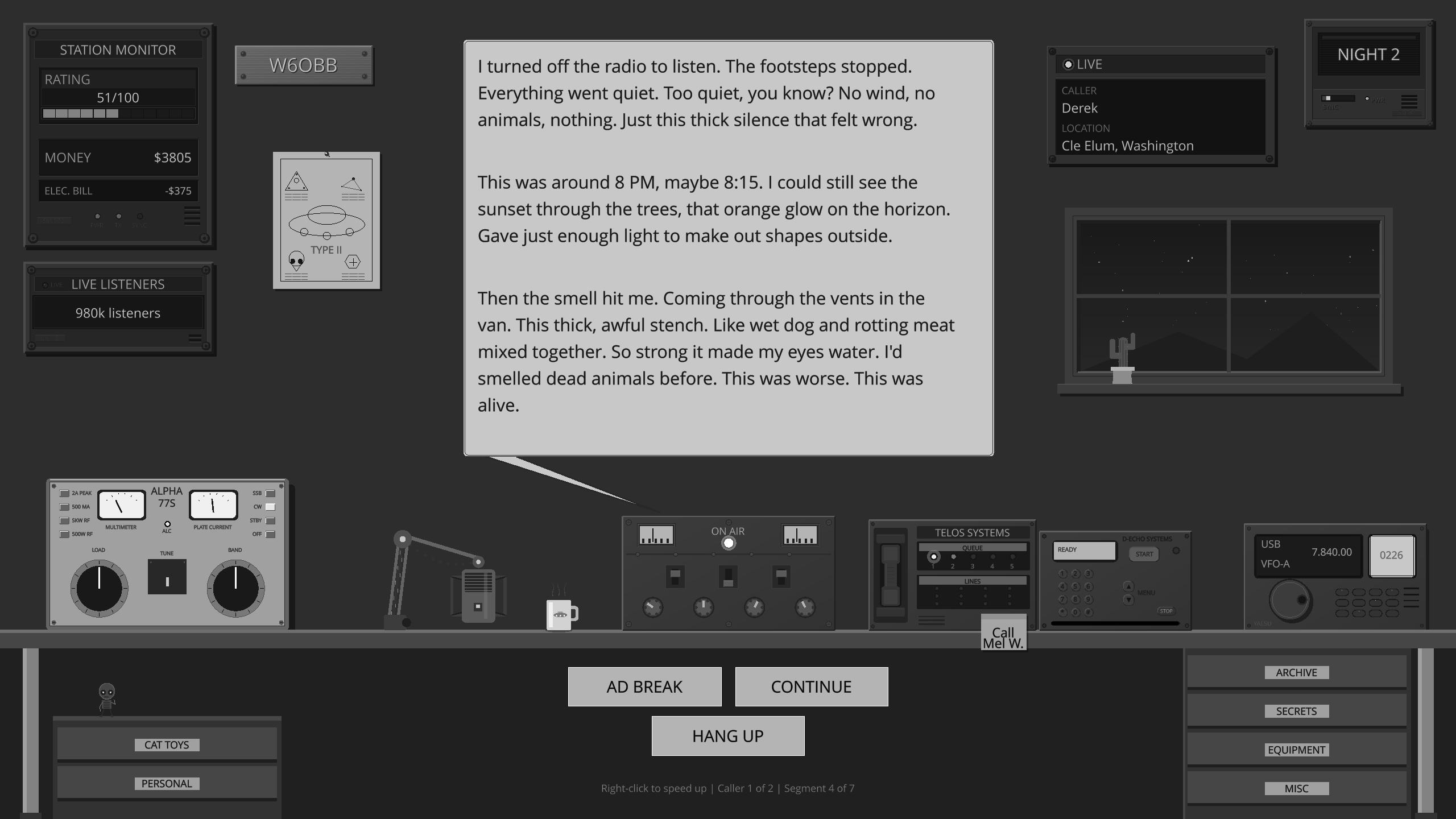
Ever wanted to host your own late-night paranormal radio show?
Across the Airwaves
You're on the air. Callers bring Mothman, Fresno Nightcrawlers, UFO sightings, reptilian autopsies, and whispers about AATIP and Project Blue Book. Every reply shapes how the night goes.

AI-Generated Summary
This document is a transcript of 1978 Congressional hearings regarding the scientific validity and funding of a proposed NASA program to search for extraterrestrial intelligence (SETI). The hearings feature testimony from prominent scientists who argue that a systematic, long-term search is a legitimate scientific endeavor that should be supported despite the lack of immediate results.
This document is a transcript of hearings held on September 19 and 20, 1978, by the U.S. House of Representatives Subcommittee on Space Science and Applications regarding 'Extraterrestrial Intelligence Research.' The hearings were convened to review the scientific rationale for a proposed NASA program to search for extraterrestrial intelligence (SETI), following the decision by the House and Senate Appropriations Committee not to provide funding for the program in fiscal year 1979. The subcommittee, chaired by Hon. Don Fuqua, heard testimony from a panel of distinguished scientists, including Dr. Richard Berendzen, Dr. Philip Morrison, Dr. Noel Hinners, Dr. George C. Pimentel, Dr. A. G. W. Cameron, David S. Heeschen, and Bernard M. Oliver. The witnesses provided a comprehensive overview of the scientific basis for SETI, arguing that the search for intelligent life beyond Earth is a legitimate and important scientific pursuit. They discussed the history of such searches, noting that previous efforts, such as Project Ozma, were 'pioneer' phases characterized by limited resources and sporadic, uncoordinated attempts. The witnesses emphasized that modern technology, particularly the rise of digital computing and advanced radio astronomy, now allows for a more systematic and professional approach. A central theme of the testimony was the distinction between science fact and science fiction. The witnesses stressed that SETI is a sober, scientific endeavor aimed at analyzing the radio frequency spectrum for evidence of intelligent transmissions. They addressed concerns regarding the cost and potential 'wastefulness' of the program, arguing that the investment—estimated at approximately one cent per U.S. citizen per year—is modest compared to the potential scientific and societal benefits. The witnesses also discussed the 'needle in the haystack' problem, noting that while the probability of success is unknown, the search itself is a necessary step in understanding our place in the universe. They advocated for a 'mixed strategy' that includes both broad-frequency surveys and targeted searches of nearby stars. The hearings also touched upon the broader context of 'biocosmology,' which encompasses research into the origin of life, the prevalence of planetary systems, and the evolution of intelligence. The witnesses argued that SETI is an intrinsic part of this broader scientific endeavor. Throughout the hearings, the subcommittee members expressed support for the scientific merit of the research while acknowledging the political challenges of securing funding in an era of fiscal constraint. The witnesses urged the subcommittee to view SETI as a long-term commitment rather than a short-term project, emphasizing that the search for extraterrestrial intelligence is a fundamental human quest that should not be abandoned due to the lack of immediate, positive results.
The probability of success is difficult to estimate; but if we never search, the chance of success is zero.
PDF not loading? Download the PDF directly
Official Assessment
The subcommittee reviewed the scientific rationale and scope for a proposed NASA program to search for extraterrestrial intelligence (SETI). Witnesses emphasized that while contact is remote, the scientific and societal implications are profound. The consensus among the scientific witnesses was that a systematic, long-term search is a valid and important scientific endeavor, distinct from science fiction, and that current technology allows for a more rigorous search than previous 'pioneer' efforts.
Witnesses
- Dr. Richard BerendzenProvost, American University and Professor of AstronomyAmerican University
- Dr. Philip MorrisonInstitute Professor and Professor of PhysicsMassachusetts Institute of Technology
- Dr. Noel HinnersAssociate Administrator for Space ScienceNASA
- David S. HeeschenDirectorNational Radio Astronomy Observatory
- Bernard M. OliverVice President of Research and DevelopmentHewlett-Packard Corp.
- Dr. George C. PimentelDeputy DirectorNational Science Foundation
- Dr. A. G. W. CameronChairman, Space Science BoardNational Science Foundation
Key Persons
- Don FuquaChairman of the Subcommittee
- Frank DrakePioneer of the search for extraterrestrial intelligence