Declassified UFO / UAP Document
Life in the Universe: Hearing before the Subcommittee on Space and Aeronautics, Committee on Science, House of Representatives, One Hundred Seventh Congress, First Session, July 12, 2001
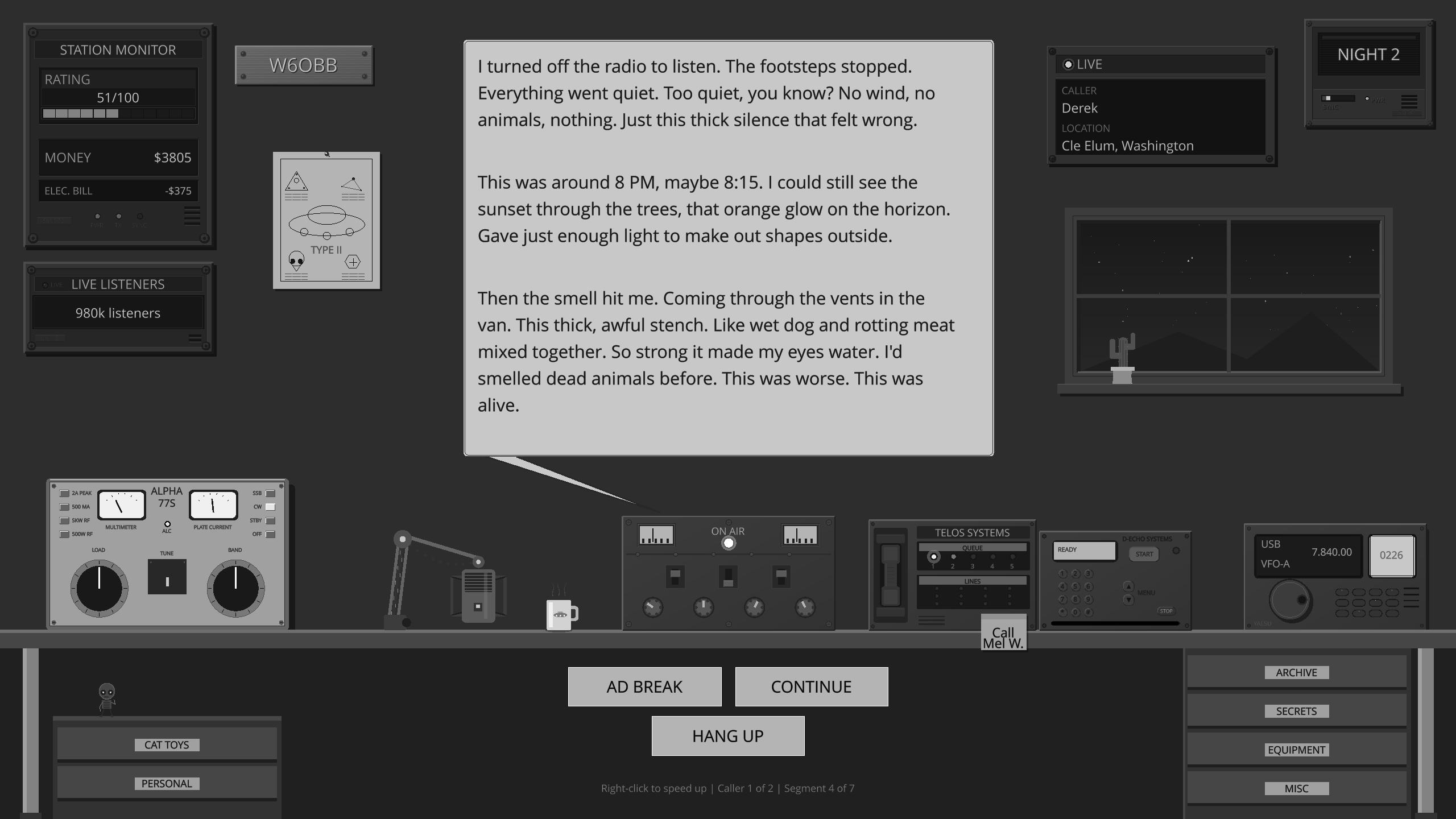
Ever wanted to host your own late-night paranormal radio show?
Across the Airwaves
You're on the air. Callers bring Mothman, Fresno Nightcrawlers, UFO sightings, reptilian autopsies, and whispers about AATIP and Project Blue Book. Every reply shapes how the night goes.

AI-Generated Summary
This hearing transcript documents a 2001 congressional review of NASA's astrobiology programs and the privately funded SETI Institute's search for extraterrestrial intelligence. It highlights the scientific shift toward searching for microbial life in our solar system and the development of new technologies for detecting Earth-like planets and potential extraterrestrial signals.
This document is a transcript of a hearing held on July 12, 2001, by the Subcommittee on Space and Aeronautics of the U.S. House of Representatives Committee on Science, titled 'Life in the Universe.' The hearing was convened to review ongoing scientific efforts to search for life elsewhere in the universe, including astrobiology programs and the privately funded SETI Institute's Phoenix Program. Chairman Dana Rohrabacher opened the hearing by noting the public's fascination with extraterrestrial life, often fueled by Hollywood films, and the committee's desire to distinguish fact from fiction through scientific inquiry. The panel of witnesses included Dr. Neil deGrasse Tyson, Dr. Jack D. Farmer, Dr. Edward J. Weiler, and Dr. Christopher F. Chyba.
Dr. Tyson discussed the cultural implications of the search for life, noting that public interest is disproportionately high compared to other scientific fields. He emphasized that the search for life is a fundamental human question that transcends American culture. Dr. Farmer, representing the NASA Astrobiology Institute, detailed the recent advances in understanding the environmental limits of life on Earth, particularly the discovery of 'extremophiles,' which has expanded the search parameters for life in our solar system, specifically on Mars and Europa. Dr. Weiler, NASA's Associate Administrator for Space Science, provided an overview of NASA's Origins program, highlighting the search for Earth-like planets and the development of future missions like the Terrestrial Planet Finder and the Next Generation Space Telescope. He noted that while no Earth-like planets have been confirmed, the process of planet formation appears common. Dr. Chyba, from the SETI Institute, explained the institute's mission and the transition of SETI research from a government-funded program to a private, non-profit endeavor. He described the ongoing Project Phoenix and the development of the Allen Telescope Array, which will significantly increase the number of stars examined for potential signals.
The discussion also touched upon the funding of SETI research. Witnesses and committee members, including Ms. Lofgren and Mr. Smith, debated the role of federal funding versus private support. Dr. Chyba clarified that the SETI Institute is not seeking earmarked government funds but rather a level playing field where SETI research can compete for grants under peer review. The committee also briefly discussed the topic of Unidentified Flying Objects (UFOs), with the witnesses expressing skepticism regarding claims of alien visitation, emphasizing the lack of physical evidence and the reliance on unreliable eyewitness testimony. The hearing concluded with a discussion on the potential for future discoveries, with witnesses agreeing that while the search for intelligent life is speculative, the search for microbial life in our solar system is a high-priority, achievable goal. The document includes the full transcript of the hearing, prepared statements from the witnesses, and answers to post-hearing questions submitted by the committee members.
The probability of success is difficult to estimate; but if we never search, the chance of success is zero.
PDF not loading? Download the PDF directly
Official Assessment
The hearing explored the scientific search for life in the universe, focusing on astrobiology, the search for extrasolar planets, and the search for extraterrestrial intelligence (SETI). Witnesses emphasized that while the search for life is a fundamental scientific question, it also holds significant cultural and public interest. The panel discussed the importance of liquid water as a prerequisite for life, the potential for microbial life in our solar system (specifically Mars and Europa), and the technological advancements in radio astronomy, such as the Allen Telescope Array, that are enabling more sophisticated searches for intelligent life. The hearing also addressed the funding challenges for SETI and the importance of maintaining scientific credibility and peer review in these research efforts.
Witnesses
- Neil deGrasse TysonDirector, Department of Astrophysics and Hayden Planetarium, American Museum of Natural History, New York CityAmerican Museum of Natural History
- Jack D. FarmerRepresentative, Arizona State University, NASA Astrobiology InstituteArizona State University
- Edward J. WeilerAssociate Administrator, Office of Space Science, National Aeronautics and Space Administration (NASA)NASA
- Christopher F. ChybaSearch for Extraterrestrial Intelligence (SETI) Institute, and Associate Professor, Department of Geological and Environmental Science, Stanford UniversitySETI Institute
Key Persons
- Dana RohrabacherChairman, Subcommittee on Space and Aeronautics
- Lamar SmithMember, Subcommittee on Space and Aeronautics
- Bart GordonMember, Subcommittee on Space and Aeronautics
- Nick LampsonMember, Subcommittee on Space and Aeronautics
- Sheila Jackson LeeCongresswoman
- Jill TarterBernard M. Oliver Chair for SETI, SETI Institute