Declassified UFO / UAP Document
Les Phénomènes Aérospatiaux Non-Identifiés Sont-ils Étudiables ? Deuxième Partie : Annexes
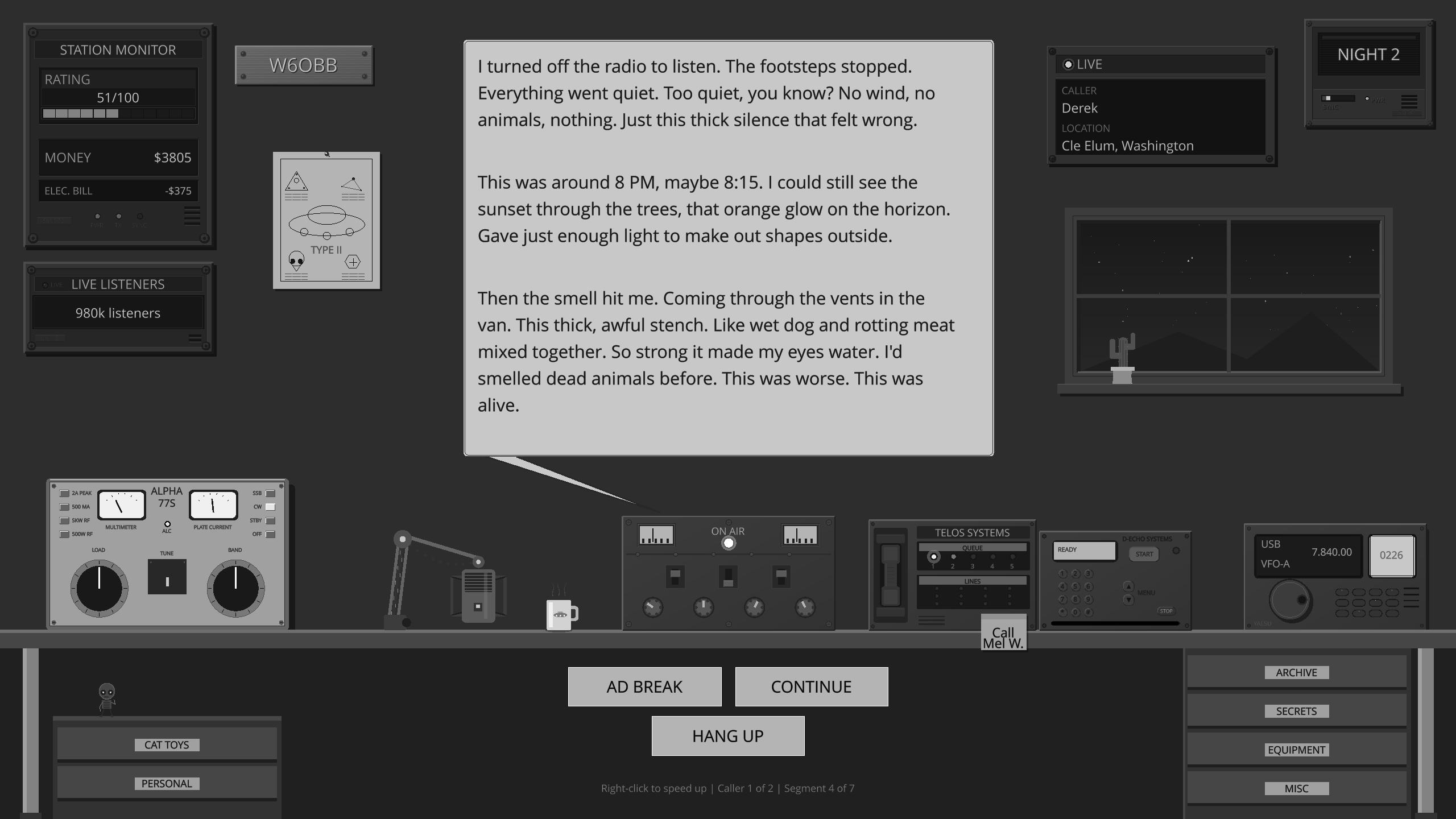
Ever wanted to host your own late-night paranormal radio show?
Across the Airwaves
You're on the air. Callers bring Mothman, Fresno Nightcrawlers, UFO sightings, reptilian autopsies, and whispers about AATIP and Project Blue Book. Every reply shapes how the night goes.

AI-Generated Summary
This 1983 GEPAN report establishes a rigorous scientific methodology for investigating UAP by integrating witness, environmental, psychosocial, and physical data. It emphasizes the necessity of refutable hypotheses and systematic data collection over speculative interpretations.
This document, authored by Alain Esterle in March 1983 for the Centre National d'Études Spatiales (CNES) under the GEPAN (Groupe d'Étude des Phénomènes Aérospatiaux Non-Identifiés), serves as the second part (Annexes) of a larger report titled 'Are Unidentified Aerospace Phenomena Studyable?'. The document provides a methodological framework for the scientific investigation of UAP. It posits that UAP research has historically been hampered by speculative and arbitrary discussions. To move toward a rigorous scientific approach, the author proposes a model based on four primary observables: witness testimony, the physical environment (topography, meteorology, etc.), the psychosocial context (cultural and ideological factors), and physical traces. The author illustrates this with a tetrahedron model, where the UAP stimulus sits at the center, and the researcher collects data from the four vertices. The annexes detail specific areas of study, including the difficulty of establishing a stable data corpus, the classification of observations (from identified to non-analyzable), and the role of perception in witness accounts. It also discusses the scientific validity of hypotheses, using the SETI program as a comparison for the extraterrestrial hypothesis, noting that such hypotheses must be refutable to be scientific. Furthermore, the document explores physical phenomena that may be confused with UAP, such as lightning (and its associated electromagnetic signatures and ground traces) and meteors. It highlights the importance of standardized observation networks and the potential for advanced analysis, such as spectral analysis of light sources, to improve the quality of data. The document concludes that while UAP studies are challenging, they can be approached through systematic, multi-faceted data collection and analysis, avoiding the pitfalls of unverified assumptions.
Le travail du chercheur consistera donc d'abord à essayer de reconstituer une image la plus fidèle possible du stimulus initial afin de pouvoir mieux l'analyser.
PDF not loading? Download the PDF directly
Official Assessment
The document outlines a rigorous scientific methodology for studying UAP, emphasizing the need to analyze four observables: witness testimony, physical environment, psychosocial context, and physical traces. It argues that UAP studies should avoid reliance on single, non-refutable hypotheses like the extraterrestrial hypothesis, and instead focus on data collection and inter-disciplinary analysis.
Key Persons
- Alain ESTERLEAuthor
- M. JimenezAuthor of Note Technique no 10
- F. LouangeAuthor of internal documentation
- J.P. PETITChargé de Recherches au CNRS
- Claude POHERResearcher