Declassified UFO / UAP Document
Bilan et Perspectives de l'Etude des Phenomenes Aerospatiaux Non Identifies en France
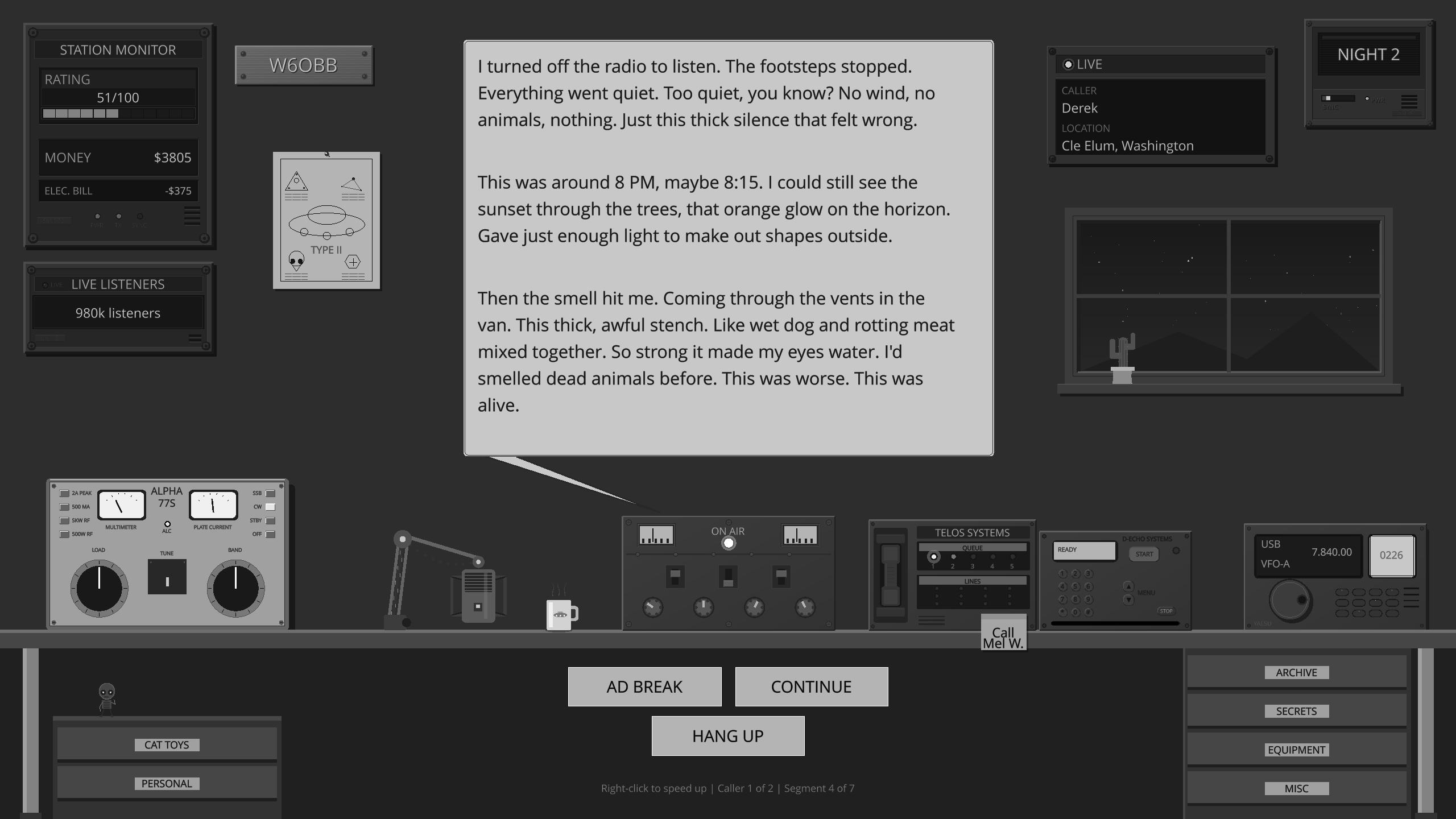
Ever wanted to host your own late-night paranormal radio show?
Across the Airwaves
You're on the air. Callers bring Mothman, Fresno Nightcrawlers, UFO sightings, reptilian autopsies, and whispers about AATIP and Project Blue Book. Every reply shapes how the night goes.

AI-Generated Summary
This document details the French government's scientific approach to studying UAP through the SEPRA, utilizing a four-part 'tetrahedron' methodology. It highlights the successful identification of the November 5, 1990, 'triangle' sighting as a Soviet rocket reentry.
This document is a presentation from the 1993 International Symposium on Unidentified Aerospace Phenomena in San Marino, authored by J. Jacques Velasco, head of the French SEPRA (Service d'Expertise des Phénomènes de Rentrées Atmosphériques). The document outlines the history, methodology, and objectives of the French government's official study of UAP, which began under GEPAN in 1977 and continued under SEPRA within the CNES (Centre National d'Études Spatiales). The author emphasizes that France is one of the few countries to have organized an objective, scientific study of these phenomena, free from political or media pressures. The core of the French methodology is the 'tetrahedron' model, which analyzes four distinct 'observables': the witness, the testimony, the physical environment, and the psychosocial environment. This approach is designed to move beyond simple, reductionist interpretations and to provide a rigorous framework for evaluating reports. The document highlights the importance of cooperation with official bodies such as the Gendarmerie Nationale, the military, and various scientific laboratories to ensure data quality. A significant portion of the document is dedicated to the case of November 5, 1990, where a large, silent, luminous triangle was reported across France. Initially compared to similar sightings in Belgium, the SEPRA's investigation, aided by data from NASA, determined that the event was the atmospheric reentry of the third stage of a Soviet Proton rocket that had launched a Gorizon 21 satellite. This case is presented as a success story for the SEPRA's mission to provide clear, objective information to the public and prevent media-driven panic. The document also discusses the classification system used for reports, ranging from Class A (identified) to Class D (unidentified). It notes that while many reports are identified as conventional phenomena (aircraft, balloons, meteors, etc.), a small percentage remain unidentified and warrant further scientific study. The author concludes by advocating for the establishment of a similar, impartial European structure to collect and analyze UAP data, emphasizing that the goal is not to prove or disprove the existence of extraterrestrial craft, but to study unidentified phenomena with the rigor of science.
Aujourd'hui, le problème n'est plus d'affirmer, les O.V.N.I. 'existent ou n'existent pas', mais plutôt d'appréhender, sans idée a priori dans leur globalité, certains phénomènes non identifiés avec le regard de la science.
PDF not loading? Download the PDF directly
Official Assessment
The November 5, 1990 event was identified as the atmospheric reentry of the third stage of a Soviet Proton rocket used to launch a Gorizon 21 satellite.
The study of UAP in France is conducted through a rigorous, multidisciplinary approach using a 'tetrahedron' model of four observables: witness, testimony, physical environment, and psychosocial environment. The SEPRA maintains a database of over 2100 reports and emphasizes objective, scientific analysis to avoid media-driven speculation.
Key Persons
- Roberto PINOTTIProfessor