Declassified UFO / UAP Document
Note Technique N°4: Recherche statistique d'une typologie des descriptions de phénomènes aérospatiaux non identifiés
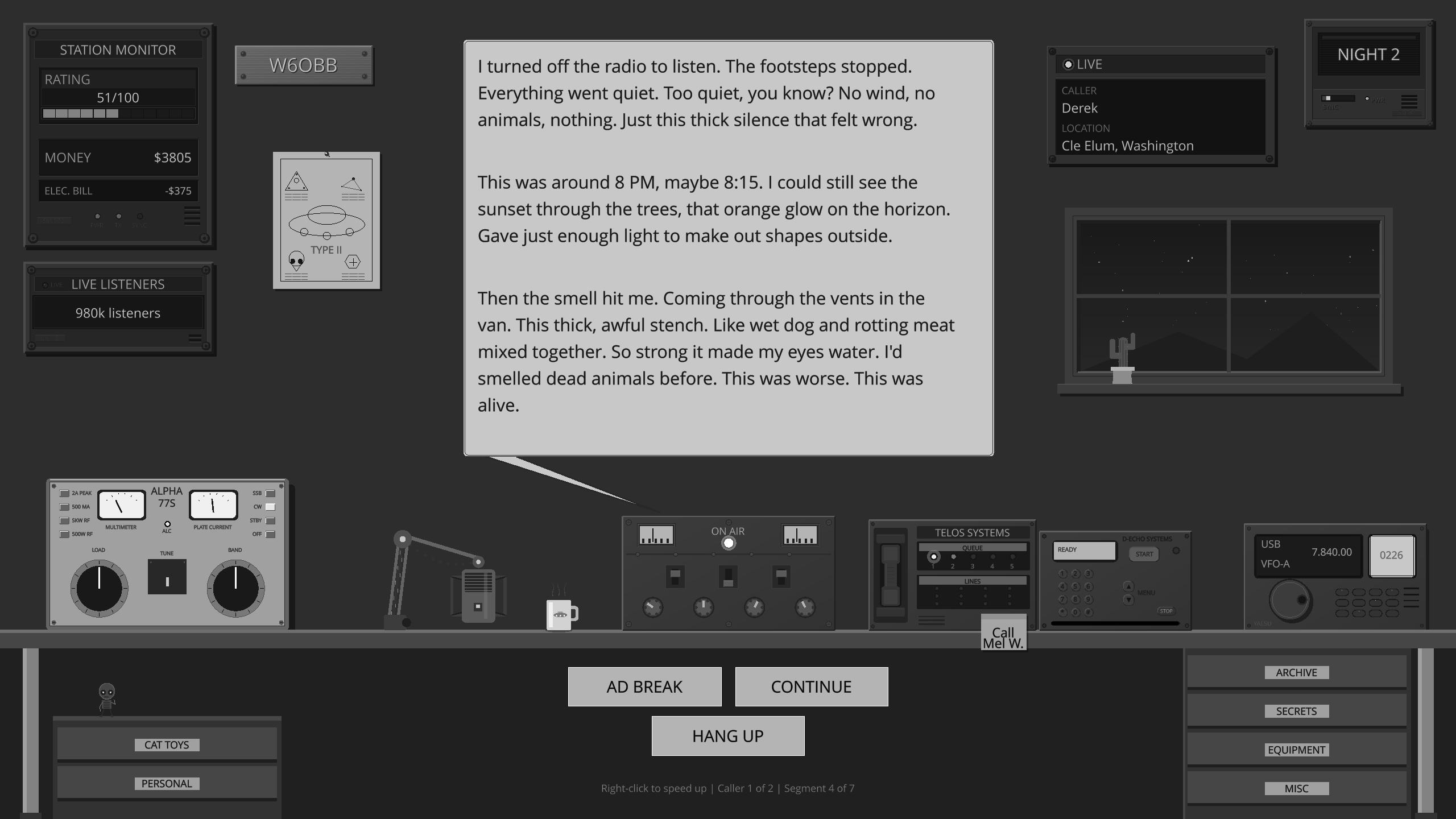
Ever wanted to host your own late-night paranormal radio show?
Across the Airwaves
You're on the air. Callers bring Mothman, Fresno Nightcrawlers, UFO sightings, reptilian autopsies, and whispers about AATIP and Project Blue Book. Every reply shapes how the night goes.

AI-Generated Summary
This 1981 GEPAN technical note provides a statistical analysis of 207 French UAP reports from 1974-1978. It concludes that current statistical methods and data quality are insufficient to establish a definitive typology, emphasizing the need for interdisciplinary research into witness perception.
This technical note, published by the Centre National d'Etudes Spatiales (CNES) under the GEPAN group on March 25, 1981, presents a statistical analysis of UAP (Unidentified Aerospace Phenomena) reports collected by the French Gendarmerie Nationale between 1974 and 1978. The document serves as a follow-up to previous studies (specifically BES-80) and aims to move beyond simple descriptive statistics by applying multidimensional data analysis methods, including factorial analysis and automatic classification (dynamic clusters). The authors, led by the GEPAN research team, seek to identify potential typologies or clusters within the 207 observations analyzed. The study is divided into four main sections: the methodology and tools used for analysis, the preparation and coding of the data, the results of the statistical classifications, and a final conclusion regarding the limitations of the current approach. The methodology involves recoding qualitative data into binary variables to facilitate mathematical modeling. The authors acknowledge significant challenges, including the heterogeneity of the data, the lack of precision in witness reports (particularly regarding distance and size), and the potential for bias introduced by the initial data collection process. The results of the factorial analyses and automatic classifications are described as 'floues' (blurry) or difficult to interpret, with the classes often overlapping. The authors find that the observed correlations are generally weak and that the groupings are heavily influenced by the arbitrary nature of the coding system. A key finding is the significant role of witness perception and the potential influence of psycho-sociological factors, such as the location of the observation and the witness's background. The document highlights that the 'distance' parameter is particularly problematic, as it appears to be linked to the witness's environment and the presence of clouds rather than an objective measurement. The authors conclude that no definitive scientific certainty can be derived from this statistical work alone. They argue that the current data set and coding methods are insufficient to establish a robust typology of UAP. Instead, they propose that future research should focus on interdisciplinary approaches, specifically integrating psycho-sociology and the psychology of perception, to better understand the human element in UAP reporting. The note concludes by suggesting that the statistical debate has reached a point where it must address the complex interactions between physical, psychological, and environmental factors, and that existing statistical tools may not yet be fully adapted to this 'gymnastics'.
Compte tenu des critiques qui précédent, il est clair qu'aucune certitude n'émerge de ce travail, mais pour comprendre ce qu'il peut apporter, il faut le resituer dans le contexte des études statistiques déjà réalisées.
PDF not loading? Download the PDF directly
Official Assessment
The study concludes that statistical analysis of the current UAP data set reveals only weak correlations and no definitive structures. The findings suggest that the observed phenomena are heavily influenced by the nature of the data collection process and witness perception, rather than inherent physical properties of the UAP themselves. The authors emphasize the need for more refined coding and interdisciplinary research, particularly in psycho-sociology and the psychology of perception, to better understand the data.
Key Persons
- Claude PoherResearcher/Author of previous files