Declassified UFO / UAP Document
Concepts for Extracting Energy From the Quantum Vacuum
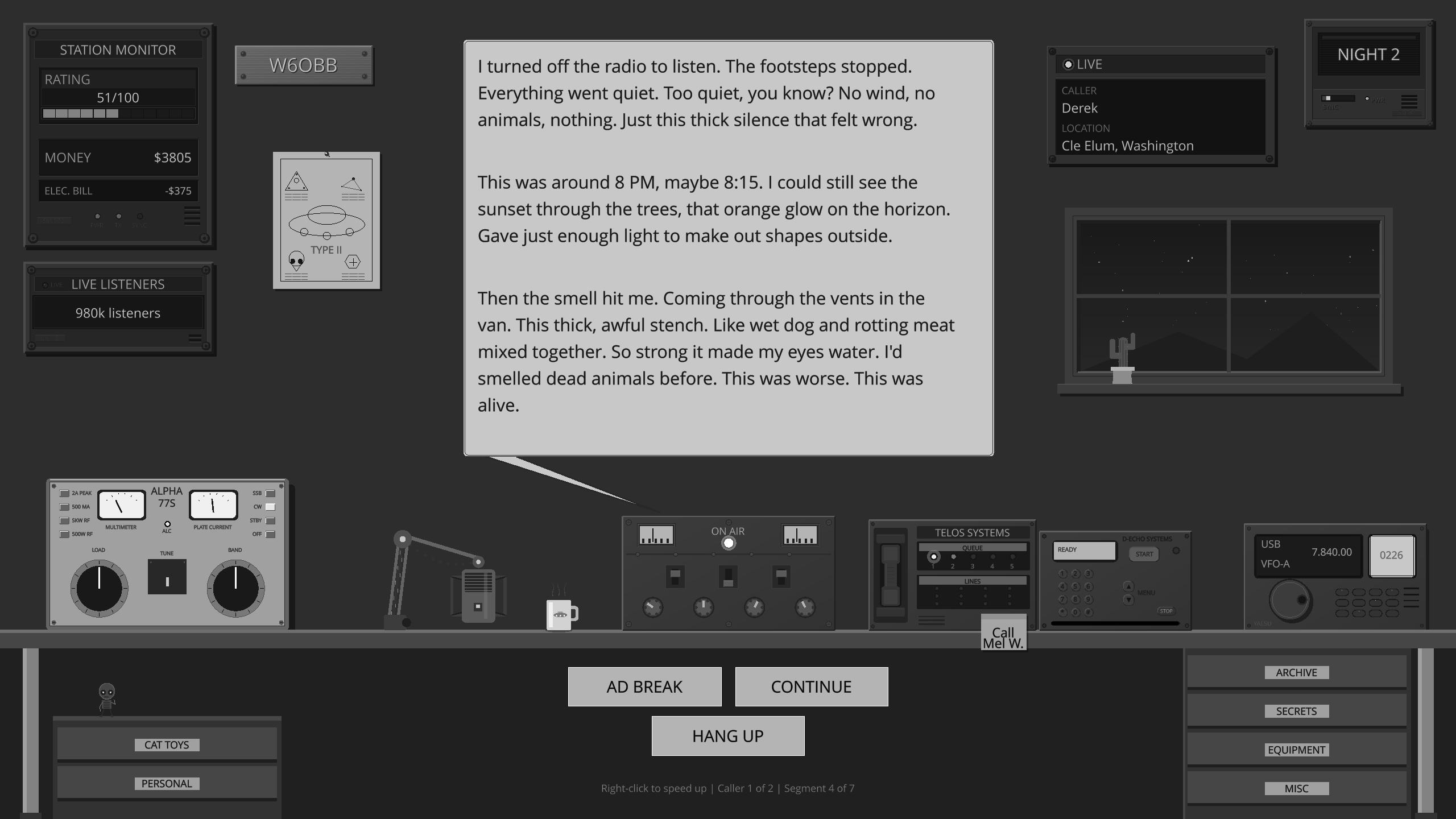
Ever wanted to host your own late-night paranormal radio show?
Across the Airwaves
You're on the air. Callers bring Mothman, Fresno Nightcrawlers, UFO sightings, reptilian autopsies, and whispers about AATIP and Project Blue Book. Every reply shapes how the night goes.

AI-Generated Summary
This document is a technical assessment of theoretical methods for extracting energy from the quantum vacuum (Zero-Point Field). It concludes that while the vacuum contains vast energy, no practical extraction method has been demonstrated, and further research into new boundary conditions and materials is required.
This Defense Intelligence Reference Document, dated April 6, 2010, and produced under the Advanced Aerospace Weapon System Applications (AAWSA) Program, provides a comprehensive technical overview of concepts related to extracting energy from the quantum vacuum. The document begins by establishing the theoretical basis for the Zero-Point Field (ZPF), noting that quantum theory predicts space is filled with random electromagnetic waves. It discusses the enormous energy density associated with these fluctuations and the challenges of reconciling this with general relativity and observed cosmological constants.
The report reviews several historical and proposed experimental concepts for energy extraction. These include the Casimir effect, where parallel conducting plates experience an attractive force due to ZPF imbalances; the use of resonant dielectric spheres to downshift high-frequency ZPF radiation; and the potential for extracting energy through ground state energy reduction in hydrogenic atoms within microcavities. The document also examines the 'EV phenomenon' (electromagnetic vortices or 'strong electrons'), which were observed in laboratory plasma experiments and hypothesized as a potential source of energy.
Theoretical considerations are divided into QED (Quantum Electrodynamics) and SED (Stochastic Electrodynamics) perspectives. The document notes that while QED is highly successful, its standard formalism treats the vacuum as immutable, which complicates the concept of continuous energy extraction. SED, as an alternative, treats the ZPF as a classical background field, which may offer different possibilities for energy conversion, though it faces its own theoretical shortcomings. The report also explores 'degradable' vacuum states, such as those induced by gravitational squeezing, redshift, or high-intensity fields (e.g., 'sparking the vacuum' or melting the QCD vacuum).
The document concludes that while the vacuum is a potential source of energy, no practicable technique has been successfully demonstrated in the laboratory. It emphasizes that the key to future progress lies in identifying new boundary conditions or material interactions that can perturb the ZPF in a way that allows for energy extraction. The report recommends further research into material science, specifically metamaterials and micro-electromechanical systems (MEMS), to better understand and potentially manipulate vacuum energy. It acknowledges that the field is in its early stages and requires significant theoretical and experimental development to determine if continuous energy extraction is physically viable.
If the ZPF is real, then there is the possibility that it can be tapped as a source of power or be harnessed to generate a propulsive force for space travel.
PDF not loading? Download the PDF directly
Official Assessment
The document explores theoretical concepts for extracting energy from the quantum vacuum (Zero-Point Field). It reviews various experiments and theoretical models, including the Casimir effect, stochastic electrodynamics (SED), and vacuum decay mechanisms. It concludes that while the vacuum contains enormous energy density, practical extraction remains unproven and faces significant theoretical and experimental challenges. The report suggests that future research should focus on new boundary conditions and material properties to potentially harness this energy.
Key Persons
- F. B. MeadResearcher/Communicator
- H. E. PuthoffResearcher/Contributor
- V. TeofiloReviewer
- B. HaischResearcher/Contributor
- L. J. NickischContributor
- A. RuedaContributor
- D. C. ColeContributor
- M. IbisonContributor
- S. LittleContributor
- M. LittleContributor
- J. NewmeyerContributor
- E. H. AllenContributor
- T. W. KephartContributor
- P. C. W. DaviesContributor