Declassified UFO / UAP Document
Antigravity for Aerospace Applications
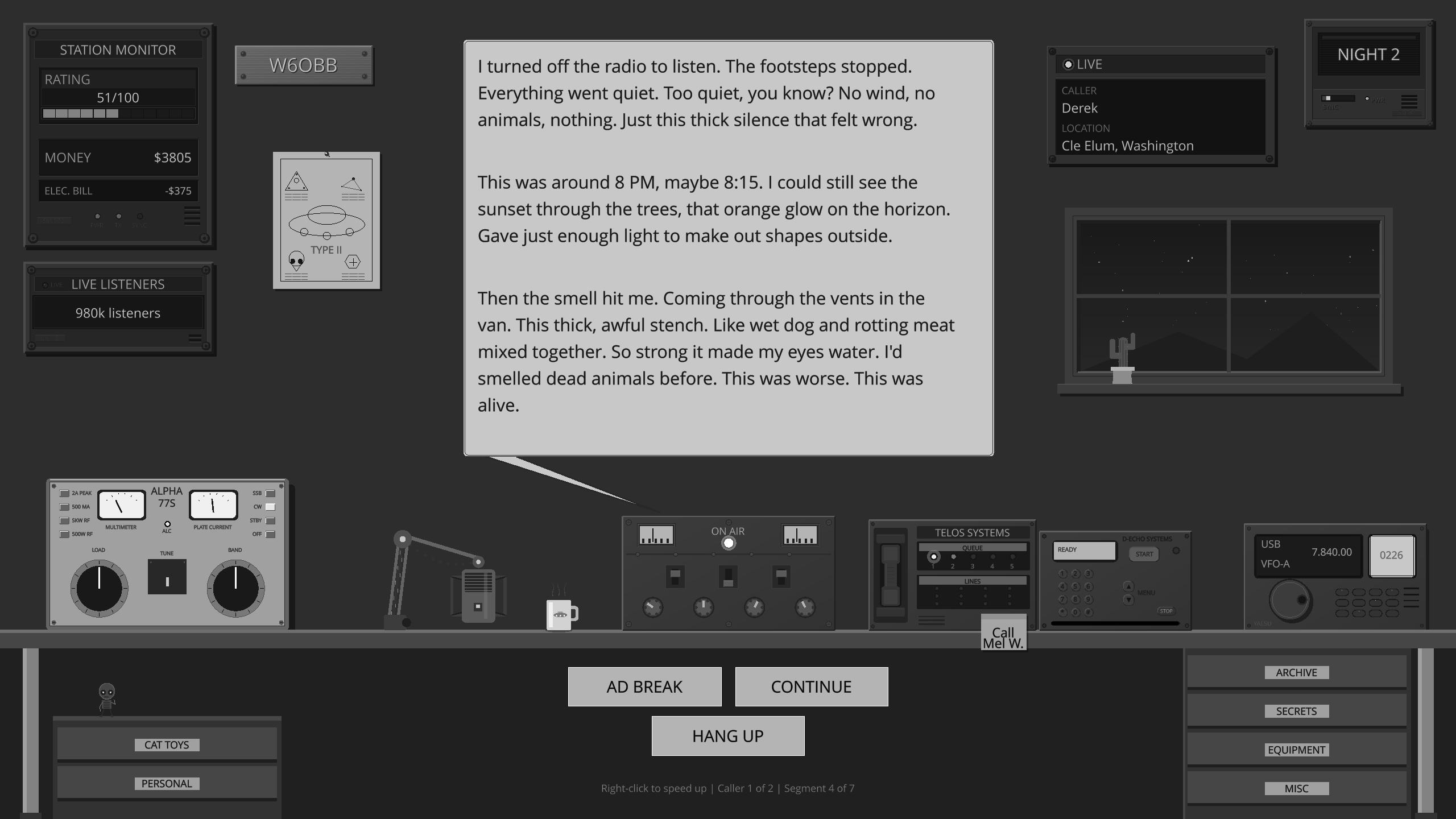
Ever wanted to host your own late-night paranormal radio show?
Across the Airwaves
You're on the air. Callers bring Mothman, Fresno Nightcrawlers, UFO sightings, reptilian autopsies, and whispers about AATIP and Project Blue Book. Every reply shapes how the night goes.

AI-Generated Summary
This document is a 2010 Defense Intelligence Agency reference report evaluating the theoretical feasibility of antigravity for aerospace propulsion. It concludes that while the physics is sound, current engineering limitations make practical application unlikely in the near term.
This Defense Intelligence Reference Document, produced in FY 2009 under the Advanced Aerospace Weapon System Applications (AAWSA) Program, provides a technical review of theoretical approaches to antigravity for aerospace propulsion. The document examines the possibility of controlling gravity by generating forces that counteract or modify it, utilizing frameworks from Newtonian physics, Einstein's General Theory of Relativity, and quantum theory. The introduction highlights the limitations of current aerospace propulsion, which relies on expending energy to overcome the Earth's gravitational pull, and posits that active control of gravity could eliminate the need for propellant and structural mass associated with traditional rockets. The report details several concepts, including the use of ultradense matter to nullify gravitational fields, the application of gravitomagnetic forces through Lense-Thirring effects, and the potential for negative energy-induced antigravity. It explores the role of dark energy and the cosmological constant as sources of gravitational repulsion, though it notes that harnessing these on a solar system scale is highly unlikely. Furthermore, the document reviews quantum antigravity concepts, such as the Casimir effect and nonretarded quantum interatomic dispersion forces, noting that while these effects are theoretically present, they are currently too feeble for practical propulsion applications. The report concludes that while the physics of antigravity is theoretically grounded, the engineering requirements—such as the need for massive, high-velocity, or kilometer-scale apparatus—remain daunting. It suggests that future research should focus on experimental programs to better understand negative energy generation and the potential for amplifying these effects at the laboratory scale.
To date, there is no technology that can achieve the active control of gravity.
PDF not loading? Download the PDF directly
Official Assessment
The report concludes that while plausible mechanisms for antigravity exist within Newtonian and general relativistic theories, there are significant technical challenges to implementation, including the requirement for kilometer-sized apparatus, astronomical-sized masses, or extreme velocities and accelerations.
Key Persons
- Heaviside, O.Researcher
- Thirring, H.Researcher
- Lense, J.Researcher
- Forward, R. L.Researcher
- Felber, F. S.Researcher
- Calloni, E.Researcher
- Pinto, F.Researcher