Declassified UFO / UAP Document
Advanced Space Propulsion Based on Vacuum (Spacetime Metric) Engineering
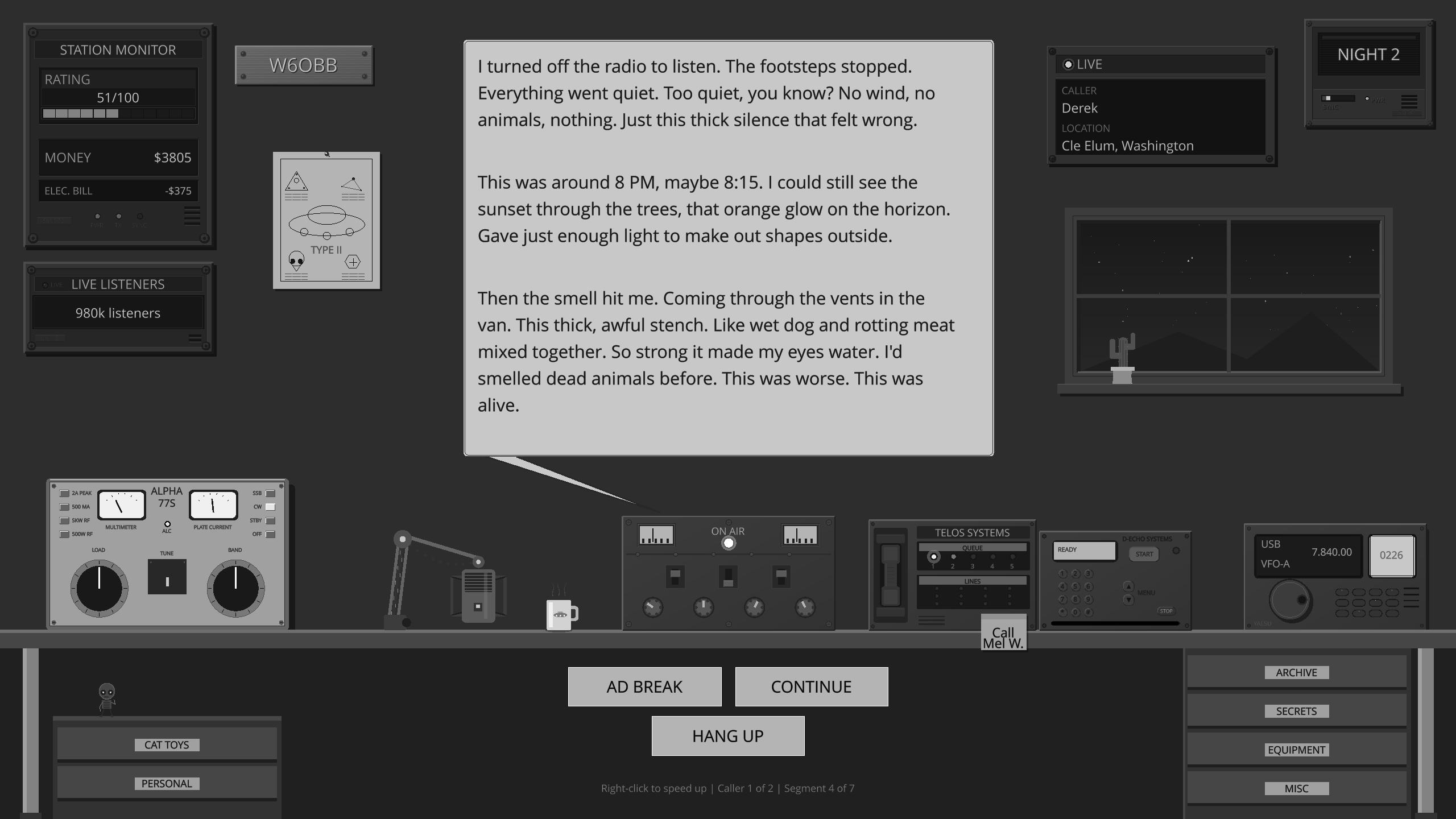
Ever wanted to host your own late-night paranormal radio show?
Across the Airwaves
You're on the air. Callers bring Mothman, Fresno Nightcrawlers, UFO sightings, reptilian autopsies, and whispers about AATIP and Project Blue Book. Every reply shapes how the night goes.

AI-Generated Summary
This DIA reference document explores the theoretical feasibility of using vacuum or spacetime metric engineering for advanced space propulsion. It analyzes how manipulating spacetime could theoretically enable superluminal travel and antigravitational effects based on principles of general relativity.
This Defense Intelligence Reference Document, produced by the Defense Intelligence Agency in March 2010 as part of the Advanced Aerospace Weapon System Applications (AAWSA) program, provides a theoretical assessment of 'vacuum engineering' for space propulsion. The document posits that the quantum vacuum, or spacetime metric, is not merely an empty stage but an energetic, structured medium that could, in principle, be manipulated to provide thrust for future spacecraft. The author employs a 'general-relativity-for-engineers' approach, utilizing the metric tensor to model how alterations in spacetime intervals—such as those found near dense masses—could be engineered to produce specific physical effects. These effects include time alteration, frequency shifting (redshifting or blueshifting), changes in effective mass, and the modification of the velocity of light within the altered region. The paper discusses how these principles could theoretically lead to advanced propulsion technologies, including the Alcubierre warp drive, which would allow a spacecraft to 'surf' on a wave of spacetime geometry, potentially achieving superluminal travel relative to an external observer. The document emphasizes that while the energy densities required for such engineering are currently beyond reach, the underlying physics is consistent with general relativity. The paper concludes that while the development of such technologies remains a long-term challenge, the theoretical framework provides a valid basis for investigating the potential for future aerospace advancements.
The concept of "engineering the vacuum" found its first expression in the mainstream physics literature when it was introduced by Nobelist T. D. Lee in his textbook Particle Physics and Introduction to Field Theory.
PDF not loading? Download the PDF directly
Official Assessment
The document explores the theoretical possibility of engineering the vacuum (spacetime metric) to provide propulsion for advanced aerospace vehicles. It utilizes a metric tensor approach to analyze how altering spacetime intervals could result in effects such as time dilation, frequency shifting, and effective mass changes, potentially allowing for superluminal travel or antigravitational effects. While acknowledging that current energy requirements are daunting, the paper concludes that such concepts are grounded in general relativity and warrant further inquiry.
Key Persons
- T. D. LeeNobelist
- Albert EinsteinPhysicist
- Frank Wilczek2004 Nobelist
- John WheelerGeneral Relativity theorist
- Miguel AlcubierrePhysicist