Declassified UFO / UAP Document
Maverick Inventor Versus Corporate Inventor: Where Will the Next Major Innovations Arise?
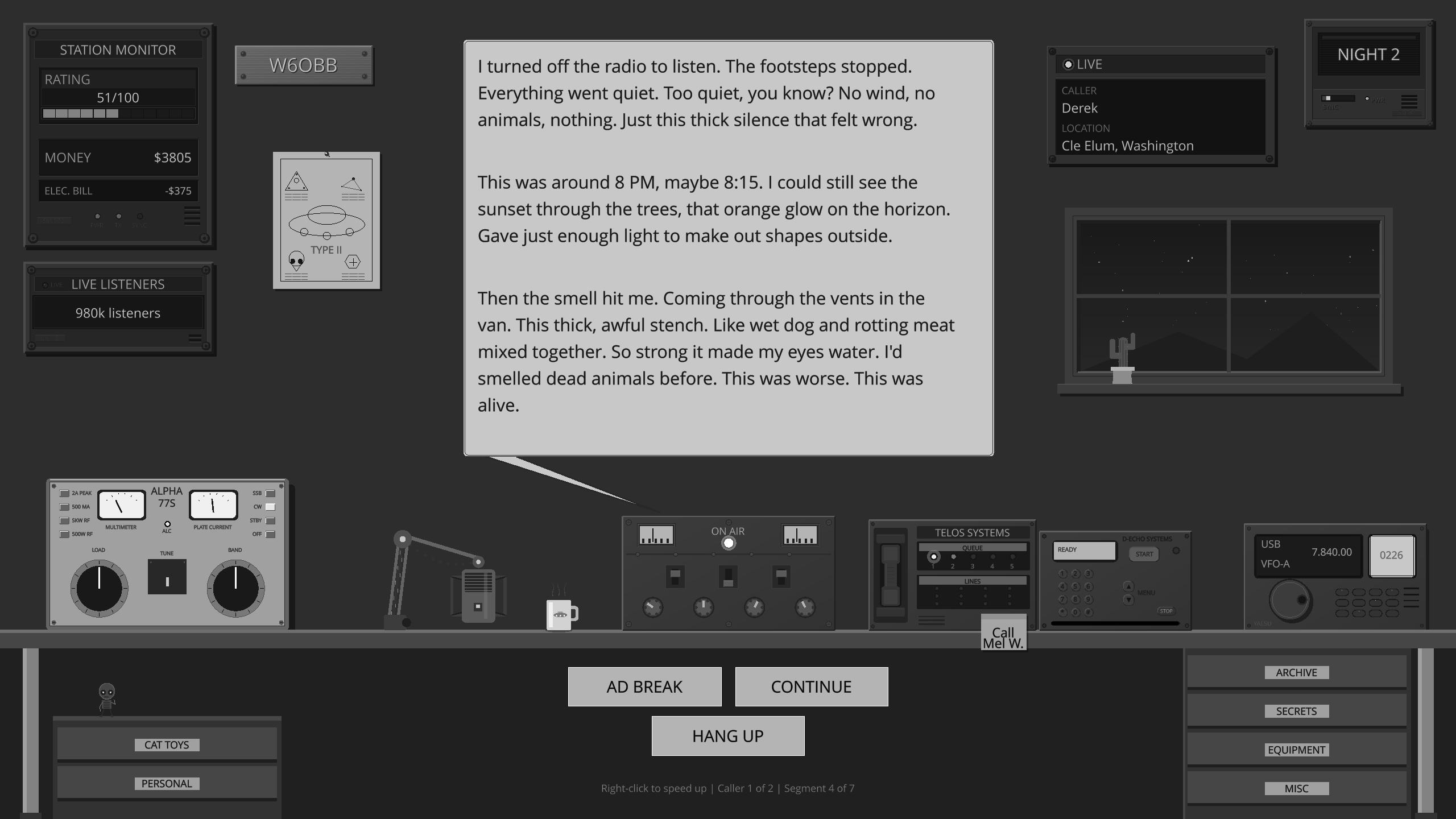
Ever wanted to host your own late-night paranormal radio show?
Across the Airwaves
You're on the air. Callers bring Mothman, Fresno Nightcrawlers, UFO sightings, reptilian autopsies, and whispers about AATIP and Project Blue Book. Every reply shapes how the night goes.

AI-Generated Summary
This 2010 DIA report evaluates the efficacy of different inventor types in achieving breakthroughs in energy and propulsion. It concludes that inventors with formal scientific training (Types 3 and 4) are the most likely to succeed, while untrained independent inventors are generally ineffective.
This Defense Intelligence Reference Document, produced in March 2010 for the Advanced Aerospace Weapon System Applications (AAWSA) program, provides an analytical framework for evaluating the potential for technological innovation from different types of inventors. The document distinguishes between the 'maverick inventor'—typically an independent individual or small group—and the 'corporate inventor,' who operates within large, well-funded organizations such as government laboratories, universities, or private think tanks. The author categorizes maverick inventors into five distinct types based on their level of formal training, financial resources, and group size. Types 1 and 2 are characterized as having little to no formal training and often pursue speculative, 'free-energy' or 'antigravity' concepts, frequently failing due to a lack of scientific rigor, poor measurement techniques, and reliance on non-peer-reviewed media. Types 3 and 4 are identified as having higher levels of education and a more realistic, staged approach to experimentation, making them more likely to produce viable scientific advancements. Type 5 inventors represent a hybrid, operating in small groups within larger organizational structures. The document compares these groups across several metrics, including motivation, realism, bureaucracy, and lab skills. It concludes that while corporate environments provide access to resources and business acumen, they are often stifled by internal bureaucracy and 'Not Invented Here' syndrome. Conversely, the maverick inventor is often unconstrained but lacks the necessary infrastructure for complex, high-cost research. The assessment ultimately suggests that Types 3 and 4 inventors represent the best candidates for future breakthroughs in energy and propulsion, provided they are monitored and supported with appropriate financial and technical incentives. The document emphasizes that the complexity of modern aerospace and propulsion research has shifted the burden of innovation away from the lone, untrained inventor toward those with the capacity to conduct rigorous, systematic research.
It's not that they're brilliant or well-educated...They work all the time. They don't let failure demoralize or destroy them. They pick themselves up and keep going and eventually, every once in a while, one of your ideas actually breaks through and works, and it makes all that stuff seem worthwhile.
PDF not loading? Download the PDF directly
Official Assessment
The document concludes that Types 3 and 4 inventors are the most promising for future innovations in energy and propulsion, as they possess the necessary education and scientific rigor while maintaining flexibility. Corporate inventors are hindered by internal dogma, and Types 1 and 2 inventors lack the necessary technical foundation and discipline. Type 5 inventors are considered a secondary option.
Key Persons
- Michael FaradayHistorical reference for inventor inspiration
- Dean KamenExperienced inventor
- Guy KawasakiFormer Apple executive and entrepreneur
- TajmarResearcher
- TeslaMaverick inventor
- FlynnMaverick inventor
- TsiolkovskyMaverick inventor
- GoddardMaverick inventor
- OvshinskyInventor
- MillisResearcher