Declassified UFO / UAP Document
Aneutronic Fusion Propulsion
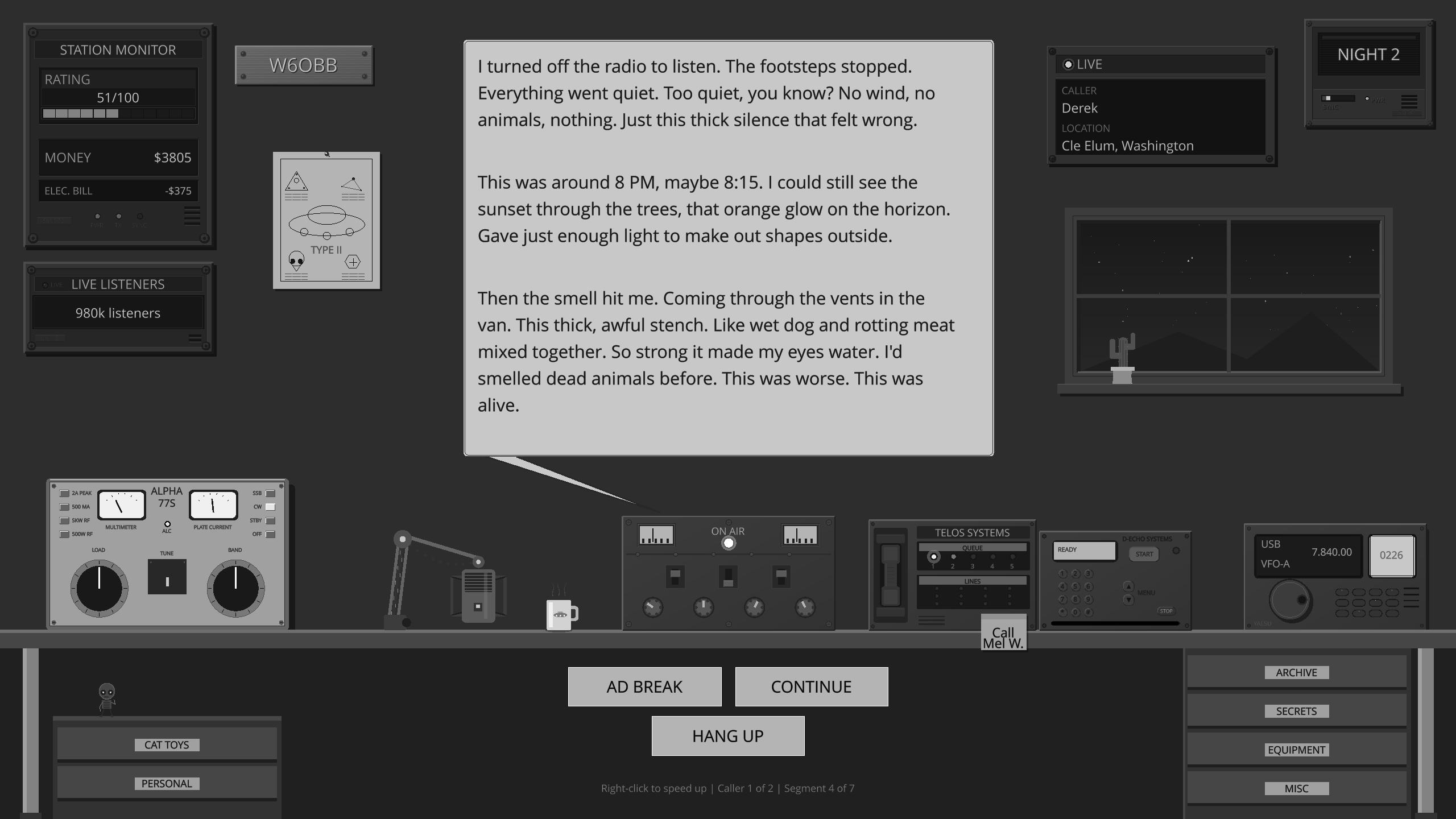
Ever wanted to host your own late-night paranormal radio show?
Across the Airwaves
You're on the air. Callers bring Mothman, Fresno Nightcrawlers, UFO sightings, reptilian autopsies, and whispers about AATIP and Project Blue Book. Every reply shapes how the night goes.

AI-Generated Summary
This 2010 DIA reference document evaluates the feasibility of aneutronic fusion for aerospace propulsion. It outlines technical challenges, current research programs, and a development roadmap for future space applications.
This Defense Intelligence Reference Document, dated 01 November 2010, provides a comprehensive overview of aneutronic fusion propulsion technology. The document outlines the history of controlled fusion research, beginning with the work of Lyman Spitzer in 1951 and the subsequent development of various confinement concepts, including magnetic, inertial, electrostatic, and magneto-inertial confinement. The primary objective of the report is to assess the viability of these technologies for aerospace propulsion, specifically for applications in near-space, Earth orbit, interplanetary, and interstellar environments. The report highlights that while traditional deuterium-tritium fusion presents significant challenges due to neutron radiation and shielding requirements, aneutronic fusion—which utilizes fuels like hydrogen and Boron-11—offers a more promising path for space applications. The document reviews current national and international programs, including those funded by the U.S. Department of Energy, NASA, and various private capital investment startups. It provides a roadmap for future development, categorizing milestones into near-term (2010-2020), mid-term (2020-2030), and far-term (2030-2050) phases. Key technical hurdles identified include the need for lightweight, high-strength magnets, efficient plasma injection schemes, and advanced energy conversion systems. The report concludes that while significant engineering challenges remain, the transition of these concepts to space is a critical objective for future military and commercial space operations, particularly for high-power satellites and manned interplanetary missions.
Whether it is reducing rows and rows of capacitor banks to pulse generators, shrinking immense superconducting magnets to a more compact and lightweight geometry, or engineering integrated fusion propulsion systems to fit onto a booster rocket, the physicists who pioneered much of the reactor and propulsion technology must now work side-by-side with the space systems companies to explore viable propulsion systems from implementation to on-orbit maintenance and attitude control.
PDF not loading? Download the PDF directly
Official Assessment
Aneutronic fusion propulsion offers significant potential for space and near-space applications, exceeding the performance of conventional electric thrusters. Development is currently focused on overcoming technical challenges in plasma confinement, pulsed power, and ion fuel beam accelerators. Near-term applications include satellite station keeping and antisatellite threat avoidance, while far-term goals include interplanetary and interstellar travel.
Key Persons
- Lyman SpitzerInventor of the Stellarator
- Robert BussardInventor of the Fusor
- Philo FarnsworthInventor of the Fusor
- Robert HirschAuthor of 1966 Ph.D. thesis
- KnechtResearcher