Declassified UFO / UAP Document
Soviet Public Treatment of President Reagan
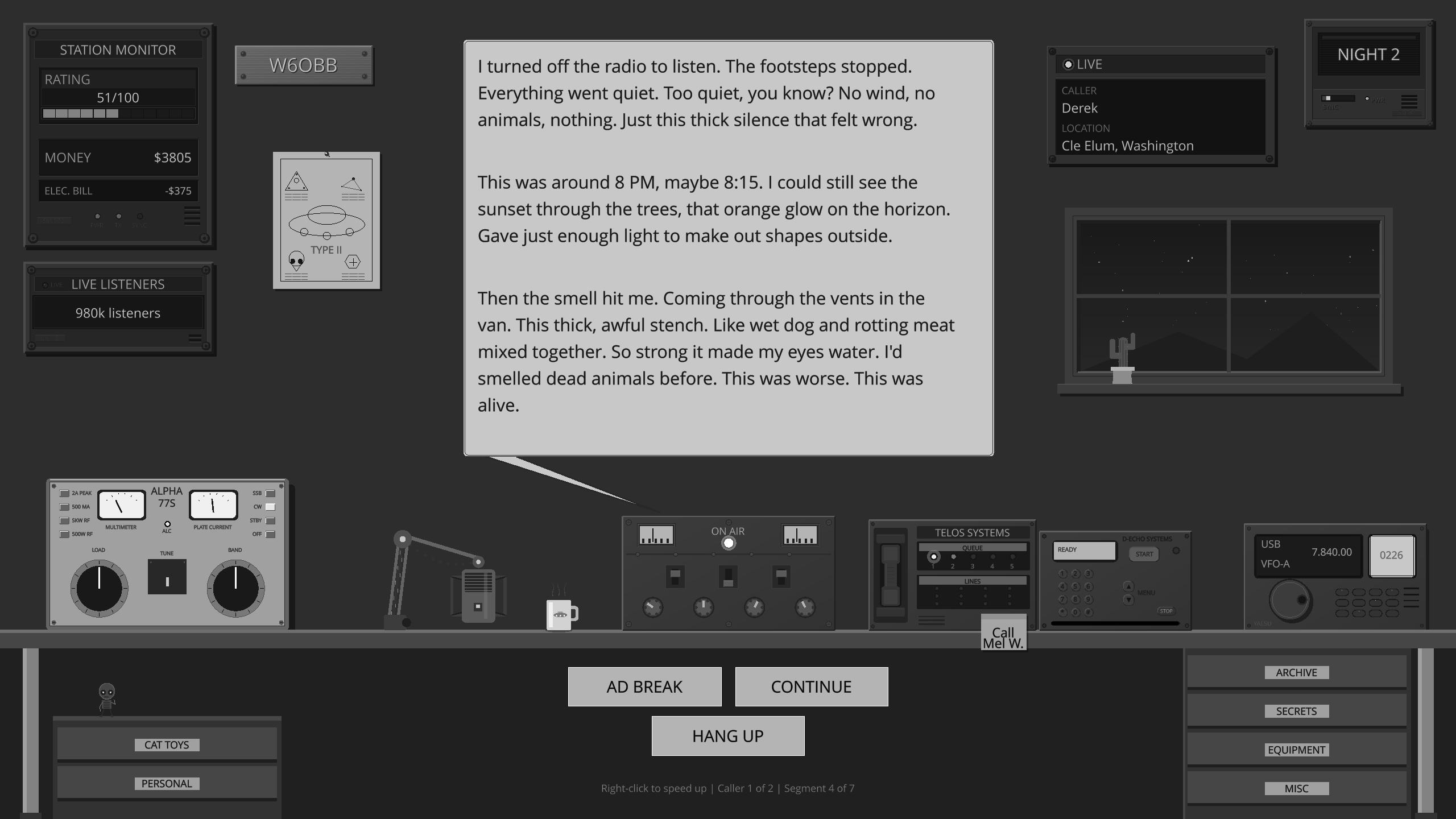
Ever wanted to host your own late-night paranormal radio show?
Across the Airwaves
You're on the air. Callers bring Mothman, Fresno Nightcrawlers, UFO sightings, reptilian autopsies, and whispers about AATIP and Project Blue Book. Every reply shapes how the night goes.

AI-Generated Summary
This document is an intelligence assessment from June 1984 analyzing the evolution of Soviet rhetoric toward President Ronald Reagan from 1980 to 1984. It serves as a historical record of how Soviet leadership and media perceived and responded to U.S. foreign policy during the early Reagan years.
This intelligence report provides a comprehensive compilation and analysis of Soviet authoritative statements and media commentary regarding U.S. President Ronald Reagan between November 1980 and May 1984. The document serves as a baseline for analysts to gauge Soviet perceptions of bilateral relations. The report identifies a cyclical pattern in Soviet rhetoric, which often fluctuated based on the state of U.S.-Soviet relations and specific international crises. Initially, following Reagan's election, Soviet media expressed cautious optimism, hoping for a reversal of the tensions that characterized the Carter Administration. However, this was quickly replaced by strident criticism as the Soviet leadership perceived the new administration as pursuing a policy of confrontation and military superiority. The report details how Soviet rhetoric intensified during periods of heightened tension, such as the imposition of martial law in Poland, the deployment of intermediate-range nuclear forces (INF) in Europe, and the 1983 shooting down of a South Korean airliner. The analysis distinguishes between three levels of Soviet discourse: top political leadership, mid-level officials, and routine media commentators. It notes that while top leadership often maintained a degree of diplomatic distance and avoided direct personal attacks on the President until 1983, mid-level officials and commentators were frequently more aggressive and served as early indicators of shifting Soviet perceptions. The document highlights that the Soviet leadership viewed the Reagan Administration's policies as a deliberate attempt to undermine the socialist system and achieve global dominance, frequently drawing parallels between U.S. actions and the aggressive policies of Nazi Germany. Despite these harsh assessments, the report notes occasional, brief periods of moderation, particularly following the accessions of Andropov and Chernenko, which were often interpreted by the Soviets as opportunities for the U.S. to demonstrate a more constructive approach. Ultimately, the report concludes that by mid-1984, the Soviet view of the Reagan Administration remained deeply negative, characterized by a belief that the U.S. was committed to a course of confrontation and that any U.S. rhetoric regarding a desire for dialogue was merely a tactical maneuver to camouflage its true intentions.
As the Los Angeles Times notes, Reagan does not have an inquiring mind. Eyewitnesses invariably stress that he has more horses in his stables than books in his library. He believes in flying saucers, assiduously reads horoscopes, and believes in the actions of secret evil spirits.
PDF not loading? Download the PDF directly
Official Assessment
The report analyzes the evolution of Soviet rhetoric toward President Reagan from November 1980 to May 1984, noting that Soviet commentary serves as a barometer for bilateral relations. It identifies distinct phases of moderation and hostility, often linked to major international events such as the shooting down of a South Korean airliner, the deployment of INF missiles, and the deaths of Soviet leaders Brezhnev and Andropov. The document concludes that Soviet leadership generally maintained a posture of avoiding direct personal attacks on the President until 1983, while mid-level officials and media commentators were often more critical.
Key Persons
- Ronald ReaganPresident of the United States
- Leonid BrezhnevGeneral Secretary of the CPSU
- Yuriy AndropovGeneral Secretary of the CPSU
- Konstantin ChernenkoGeneral Secretary of the CPSU
- Nikolay TikhonovPremier
- Dmitriy UstinovDefense Minister
- Andrey GromykoForeign Minister
- George BushVice President of the United States
- Alexander HaigU.S. Secretary of State