Declassified UFO / UAP Document
Aneutronic Fusion Propulsion
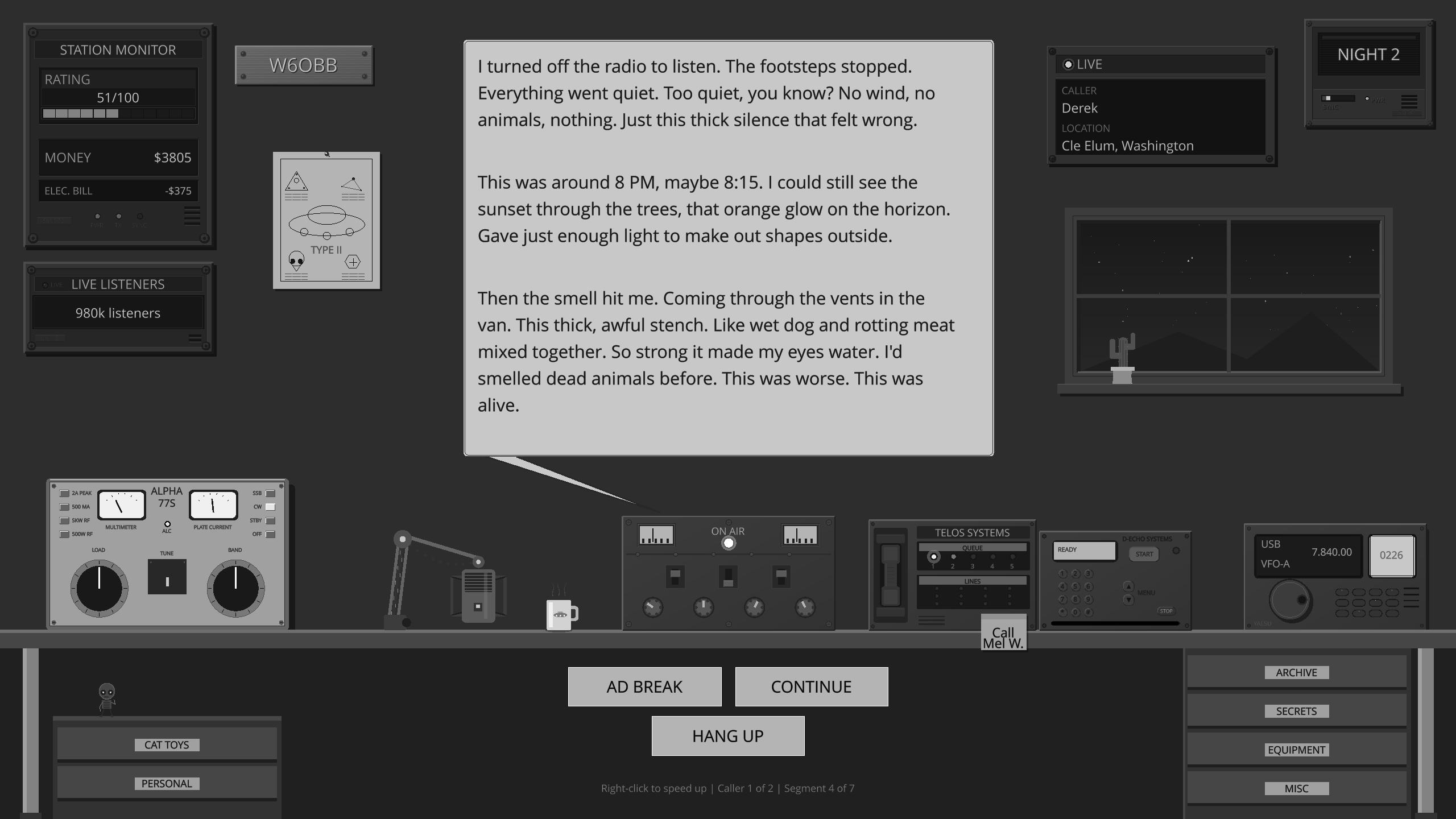
Ever wanted to host your own late-night paranormal radio show?
Across the Airwaves
You're on the air. Callers bring Mothman, Fresno Nightcrawlers, UFO sightings, reptilian autopsies, and whispers about AATIP and Project Blue Book. Every reply shapes how the night goes.

AI-Generated Summary
This document is a 2010 Defense Intelligence Agency reference report evaluating advanced propulsion technologies, specifically aneutronic fusion and antimatter, for future deep space missions. It serves as a technical assessment of the feasibility of these systems compared to conventional chemical and nuclear fission rockets.
This Defense Intelligence Reference Document, dated November 1, 2010, provides a technical overview of aneutronic fusion propulsion as a potential solution for the limitations of existing chemical and nuclear fission rocket technologies. The document outlines the theoretical foundations of space propulsion, emphasizing the constraints imposed by the Tsiolkovsky rocket equation and the relativistic mass increases encountered as objects approach the speed of light. It evaluates various propulsion methods, including chemical rockets, ion drives, and nuclear fission, noting that while fission rockets provide significant thrust, they present severe radiation hazards and radioactive contamination issues. The core of the report focuses on aneutronic fusion—fusion reactions that do not produce neutrons—as a cleaner, more efficient alternative for long-duration spaceflight. The document details several fusion initiation methods, such as gravitational, magnetic, and inertial confinement, and highlights specific aneutronic schemes, particularly those involving hydrogen-1 and boron-11. It also discusses the potential of antimatter propulsion, noting its superior energy density but acknowledging the extreme difficulty in generating and storing sufficient quantities of antimatter. The report reviews several commercial and research-led projects, including the work of Dr. Robert Bussard and the EMC2 Fusion Development Corporation, as well as concepts from the European Space Agency and various U.S. government entities. The document concludes that while these technologies are currently in the conceptual or experimental stage, they represent the necessary path forward for human exploration of the solar system and beyond, provided that significant research is conducted over the next 20 to 30 years to overcome challenges in fusion initiation, material science, and high-tesla electromagnet generation.
The focus of this study is on aneutronic fusion propulsion. Integral to this study are the topics of fuel, rocket design, and the organizations that research aneutronic fusion development.
PDF not loading? Download the PDF directly
Official Assessment
Aneutronic fusion and antimatter propulsion are identified as the most promising technologies for future deep space exploration, though significant technical hurdles regarding fuel initiation, material durability, and energy generation remain.
Key Persons
- Albert EinsteinPhysicist
- Edward TellerPhysicist
- Stanislow UlamPhysicist
- Steven JonesResearcher
- John D. LawsonPhysicist
- Robert BussardDesigner and author
- Moacir FerreiraInventor
- Eugen SangerEngineer
- Franklin Chang-DiazPhysicist