Declassified UFO / UAP Document
Inertial Electrostatic Confinement Fusion
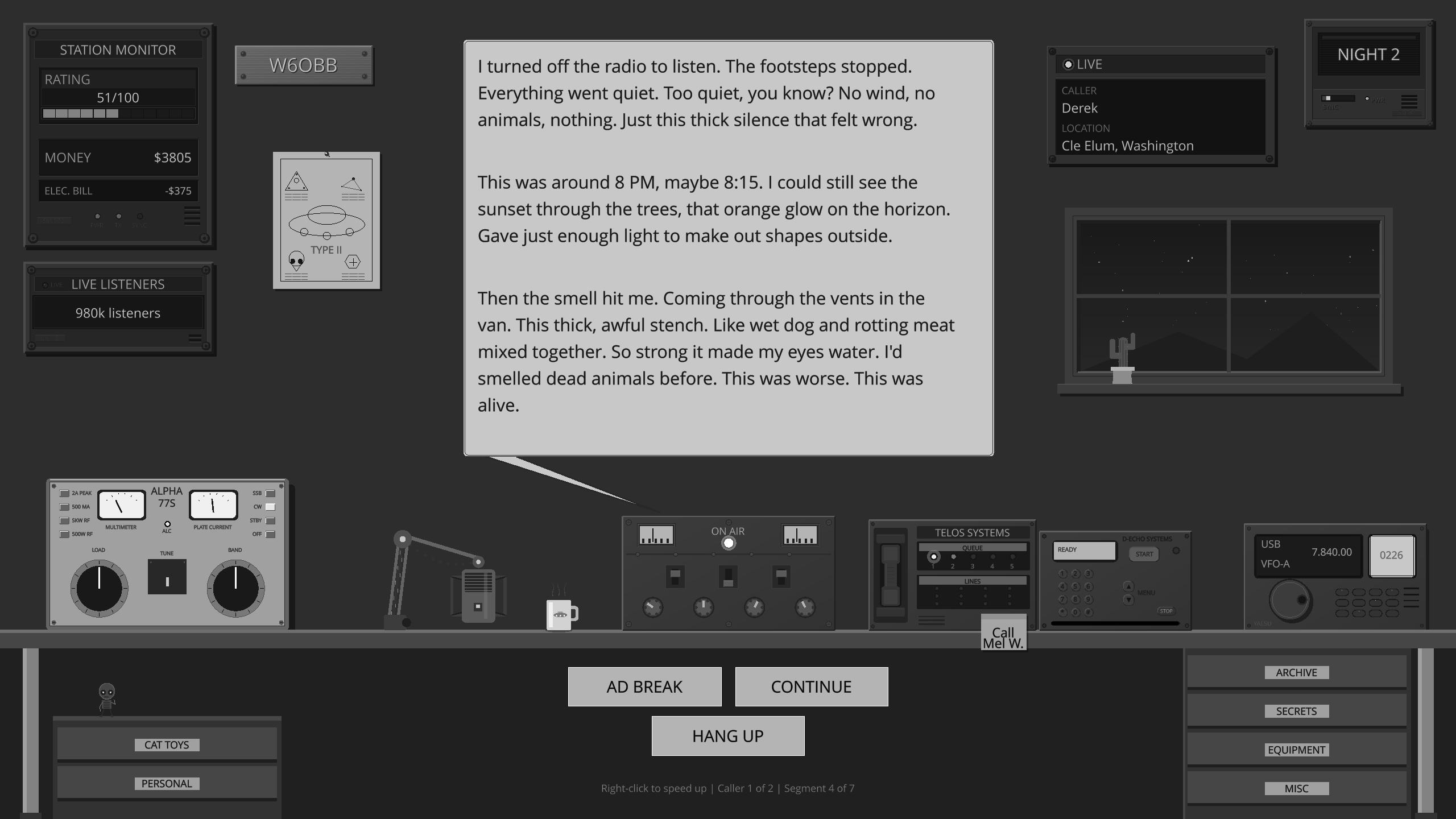
Ever wanted to host your own late-night paranormal radio show?
Across the Airwaves
You're on the air. Callers bring Mothman, Fresno Nightcrawlers, UFO sightings, reptilian autopsies, and whispers about AATIP and Project Blue Book. Every reply shapes how the night goes.

AI-Generated Summary
This document provides a technical overview of Inertial Electrostatic Confinement (IEC) fusion, detailing its history, physics, and potential applications ranging from security inspection systems to deep space propulsion and future power generation. It highlights the technology's potential for using aneutronic fuels and outlines a roadmap for achieving energy breakeven.
This Defense Intelligence Reference Document, produced in 2010 for the Advanced Aerospace Weapon System Applications (AAWSA) Program, provides a comprehensive overview of Inertial Electrostatic Confinement (IEC) fusion. The document details the history, theoretical foundations, experimental status, and potential applications of IEC technology, with a primary focus on research conducted at the University of Illinois Urbana-Champaign.
Historically, IEC was conceived by Philo Farnsworth in 1955 as an alternative to magnetic or inertial confinement fusion. The document explains that IEC uses electrostatic fields to confine ions, creating a high-density plasma region. While early research faced challenges regarding stability and electron losses, subsequent developments—such as the hybrid magnetic-IEC approach pioneered by R. W. Bussard and the ion-injected grid designs studied by G. Miley—have sought to overcome these limitations.
The report categorizes IEC applications into two main areas: near-term 'spin-off' technologies and long-term power production. Near-term applications include the development of compact neutron, proton, and x-ray sources for security inspection, such as landmine detection and cargo scanning. The document describes integrated inspection systems that combine these sources with fuzzy logic analysis to improve detection capabilities. Additionally, the report explores the use of IEC for space propulsion, specifically proposing electrically-driven thrusters for satellites and fusion-powered deep space propulsion systems, such as the conceptual 'Fusion Ship II.'
Regarding power production, the document argues that IEC is well-suited for burning aneutronic fuels like p-11B (hydrogen-boron 11), which significantly reduces neutron radiation and simplifies reactor design. Although current experimental devices remain several orders of magnitude below the energy breakeven point, the author contends that the small scale of IEC reactors allows for rapid, cost-effective experimentation. The report concludes by proposing a near-term breakeven experiment using a hydrogen plasma to demonstrate the physics required for future p-11B fusion power plants. The document emphasizes that there are no fundamental 'show stoppers' to this technology, and the primary challenge remains securing the necessary funding to proceed with development.
Inertial Electrostatic Confinement (IEC) was conceived of by Philo Farnsworth, the inventor of electronic television, as an approach to fusion using electrostatic fields for confinement.
PDF not loading? Download the PDF directly
Official Assessment
The document concludes that IEC technology is a unique approach to fusion with potential for both near-term 'spin-off' applications (neutron, proton, and x-ray sources for security and inspection) and long-term power production. It emphasizes that while current devices are below breakeven, the ability to study physics in small-volume plasmas allows for rapid investigation of scale-up to power-producing devices, particularly using aneutronic fuels like p-11B.
Key Persons
- Philo FarnsworthInventor of electronic television and conceiver of IEC
- R. W. BussardResearcher who revived the concept with the hybrid IEC magnetic approach
- G. MileyAuthor and researcher at University of Illinois Urbana-Champaign
- R. NebelResearcher who took over work from LANL
- Joe KhachanResearcher at University of Sydney