Declassified UFO / UAP Document
Traversable Wormholes, Stargates, and Negative Energy
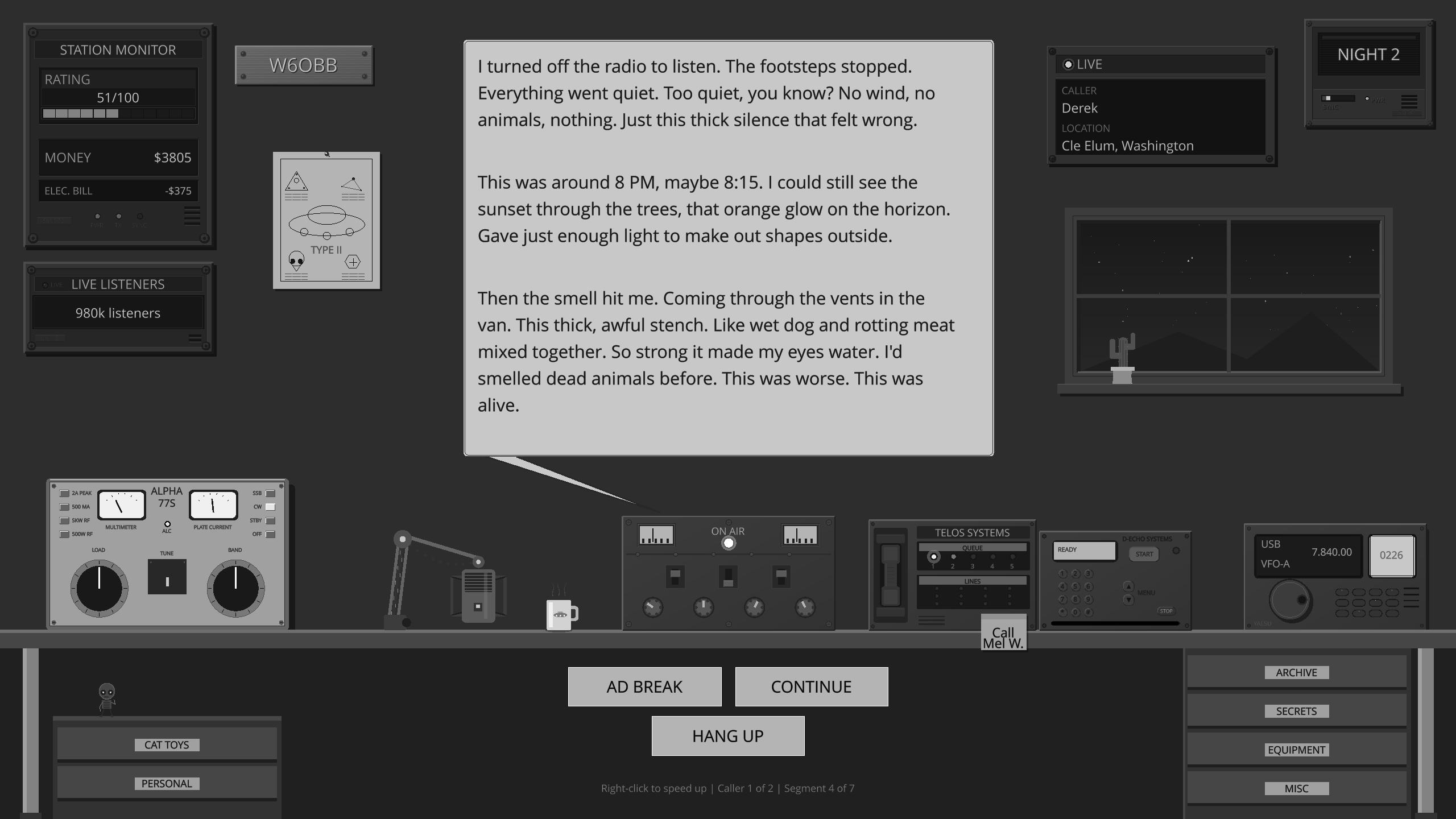
Ever wanted to host your own late-night paranormal radio show?
Across the Airwaves
You're on the air. Callers bring Mothman, Fresno Nightcrawlers, UFO sightings, reptilian autopsies, and whispers about AATIP and Project Blue Book. Every reply shapes how the night goes.

AI-Generated Summary
This document is a technical assessment of the theoretical physics required to construct traversable wormholes using negative energy. It concludes that while the physics is theoretically sound under General Relativity, the practical engineering of such structures remains a significant future challenge.
This Defense Intelligence Reference Document, dated April 6, 2010, provides a technical overview of the physics surrounding traversable wormholes, stargates, and the necessity of negative energy. Produced under the Advanced Aerospace Weapon System Applications (AAWSA) program, the document explores the theoretical framework established by CalTech physicists M. Morris and K. Thorne in 1985, which was initially developed for Carl Sagan's novel, Contact. The report details the mathematical requirements for traversable wormholes, emphasizing that they function as hyperspace shortcuts through spacetime, connecting distant regions without the need for faster-than-light travel through conventional space, thereby avoiding relativistic time dilation. A central theme of the document is the requirement for 'exotic' matter—matter possessing negative energy density—to keep the wormhole throat open and stable against gravitational collapse. The report reviews various methods for generating negative energy, including static radial electric and magnetic fields, squeezed quantum vacuum states, gravitational squeezing of the vacuum, and the Casimir effect. It acknowledges that while these phenomena are observed in nature or can be produced in laboratory settings, the quantities are currently insufficient for engineering a traversable wormhole. The document also addresses the 'Quantum Inequalities' (QI) conjecture, which attempts to constrain the amount of negative energy available, and discusses the potential for future research into 'emergent' spacetime theories that might alter our understanding of gravity and the necessity of negative energy. The report concludes that while the construction of a traversable wormhole remains beyond current technological capabilities, continued research into quantum optics and advanced physics is essential for future progress.
The identification, magnitude, and production of exotic matter are seen to be a key technical challenge.
PDF not loading? Download the PDF directly
Official Assessment
The document reviews the theoretical physics of traversable wormholes, noting that while Einstein's General Theory of Relativity allows for such geometries, they require 'exotic' matter with negative energy density to remain stable. The report concludes that while small amounts of negative energy can be generated in laboratory settings, significant technical challenges remain in producing and storing the quantities required for macroscopic traversable wormholes. It suggests that future research should focus on quantum optics, Casimir effects, and potential 'emergent' spacetime theories to further explore these possibilities.
Key Persons
- M. MorrisCalTech physicist
- K. ThorneCalTech physicist
- Carl SaganNovelist
- VisserResearcher
- HochbergResearcher
- KephartResearcher
- FordResearcher
- DaviesResearcher
- OttewillResearcher
- Enrico FermiPhysicist
- Leo SzilardPhysicist