Declassified UFO / UAP Document
A Golden Age of General Relativity? Some remarks on the history of general relativity.
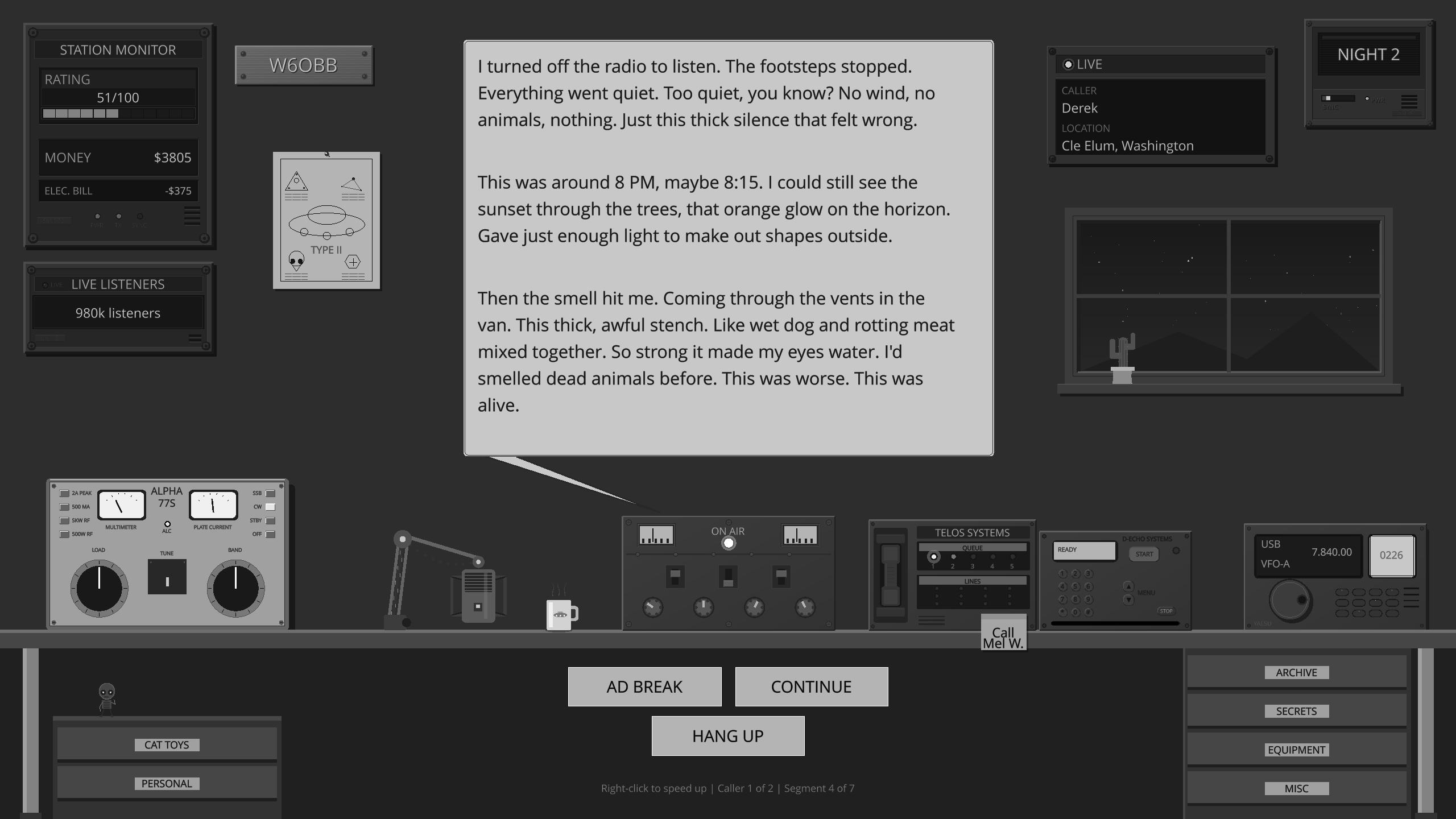
Ever wanted to host your own late-night paranormal radio show?
Across the Airwaves
You're on the air. Callers bring Mothman, Fresno Nightcrawlers, UFO sightings, reptilian autopsies, and whispers about AATIP and Project Blue Book. Every reply shapes how the night goes.

AI-Generated Summary
The paper critiques the historiographical labels of a 'low water mark' and 'Golden Age' in general relativity. It argues that the field's growth was driven by external factors like increased funding and the rise of relativistic astrophysics rather than an internal renaissance.
This academic paper by Hubert Goenner examines the historiography of general relativity, specifically challenging the common narrative that the field experienced a 'low water mark' between 1925 and 1955, followed by a 'Golden Age' or 'Renaissance' between 1960 and 1975. Goenner argues that these labels are problematic and rely on weak empirical evidence. He contends that the perceived decline in the mid-20th century is a projection from the present, and that the subsequent growth was not a sudden resurrection but rather a result of broader trends in physics, including increased military and private funding, the expansion of university research, and the birth of relativistic astrophysics. The author analyzes various activity indicators, such as the number of PhDs produced, the volume of publications, and the frequency of international conferences. He notes that while there was a significant increase in activity during the 1960s and 1970s, this was largely due to external factors like the 'Sputnik-shock' and the availability of new funding sources, rather than an internal conceptual breakthrough that suddenly made general relativity a mainstream subject. Goenner emphasizes that general relativity remained a relatively small field, or 'Little Science,' throughout much of the 20th century. He also points out that many of the key predictions of general relativity, such as gravitational waves, were not experimentally verified until decades after the supposed 'Golden Age,' further complicating the narrative of a sudden renaissance. Ultimately, the paper calls for more caution in using such historiographic catchwords and suggests that the history of general relativity is more complex and continuous than these simplified labels imply.
My aim here is to show that a label like “renaissance of general relativity” rests on weak empirical ground while “the golden age of general relativity” is an exaggerated description of a period of rapidly growing activity.
PDF not loading? Download the PDF directly
Official Assessment
The author argues that the labels 'low water mark' (1925-1955) and 'Golden Age' (1960-1975) for general relativity are historiographical constructs that lack strong empirical support. He suggests that the growth in the field was primarily driven by external factors, such as increased funding and the emergence of relativistic astrophysics, rather than an internal renaissance of the theory itself.
Key Persons
- Jean EisenstaedtHistorian of science
- Albert EinsteinPhysicist
- Peter G. BergmannPhysicist
- Kip ThornePhysicist