Declassified UFO / UAP Document
EPISTEMOLOGIE DE L'INSAISISSABLE
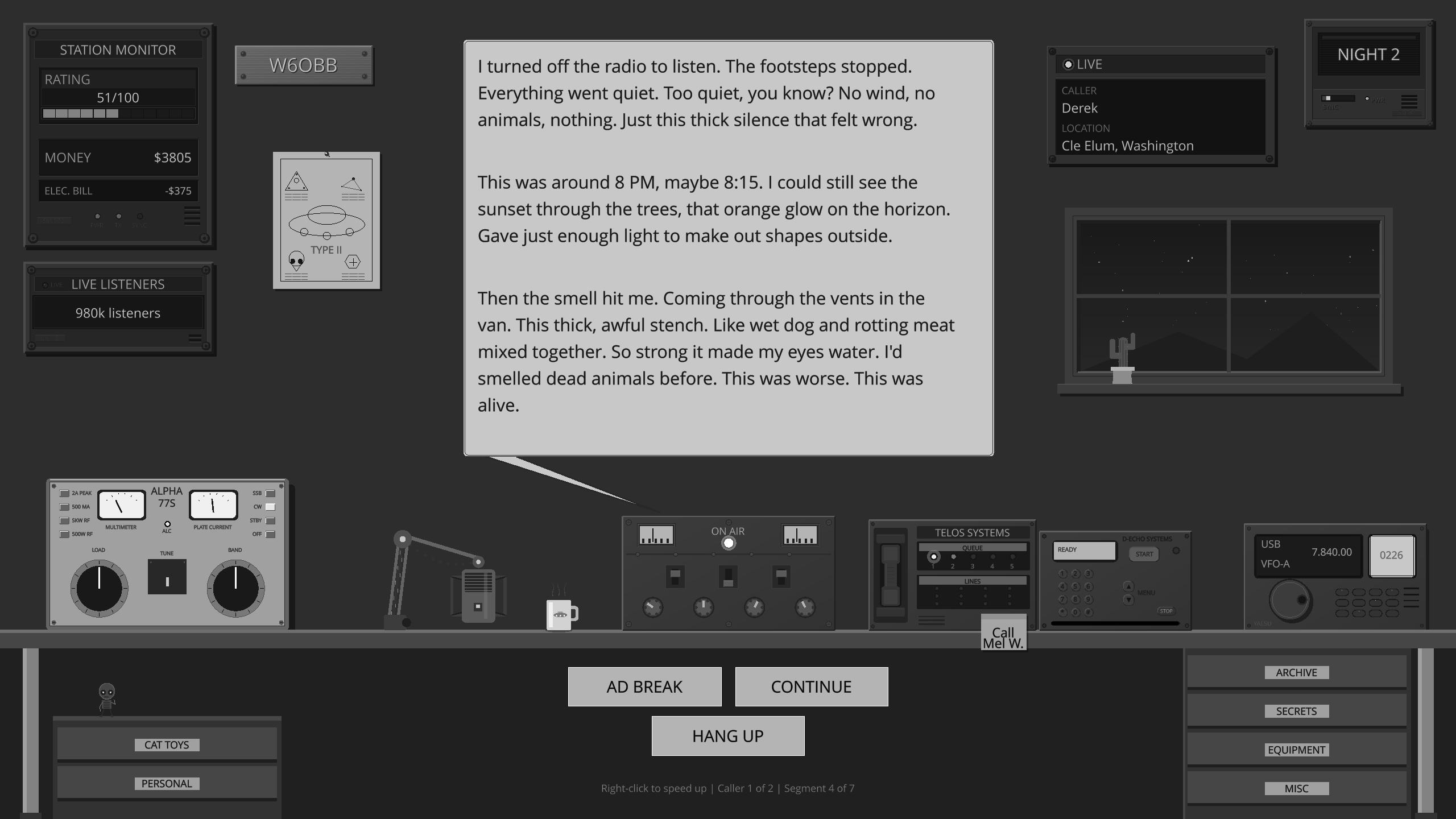
Ever wanted to host your own late-night paranormal radio show?
Across the Airwaves
You're on the air. Callers bring Mothman, Fresno Nightcrawlers, UFO sightings, reptilian autopsies, and whispers about AATIP and Project Blue Book. Every reply shapes how the night goes.
AI-Generated Summary
The document critiques the scientific validity of UFO case catalogs, arguing that the phenomenon is a complex, adaptive intelligence that manipulates human perception. It proposes shifting research focus from physical object analysis to the psychological state of witnesses and altered states of consciousness.
This academic paper, titled 'Epistemologie de l'insaisissable' by Fabrice Bonvin, provides a critical examination of the scientific methodology applied to UFO/UAP research over the preceding fifty years. Bonvin argues that while researchers have compiled extensive databases and statistical analyses—citing works by Zürcher, Figuet, Poher, Mancusi, and Vallée—these efforts are fundamentally limited by the lack of experimental control. The author posits that the UFO phenomenon is not merely a physical object to be studied like a standard scientific specimen, but rather a complex, adaptive, and mimetic intelligence that interacts with human consciousness.
Bonvin analyzes five common statistical findings from existing catalogs: the prevalence of spherical and saucer shapes, the nocturnal nature of sightings, the seasonal clustering in late summer and autumn, the geographic concentration in Europe and the United States, and the high frequency of single-witness reports. He argues that these patterns are more indicative of sociological and cultural factors—such as human activity cycles, reporting infrastructure, and observer bias—than the nature of the phenomenon itself.
To test his hypothesis that there is no correlation between the time of day, the number of witnesses, and the shape of the object, Bonvin conducts a descriptive statistical study of 30 cases randomly selected from the 1954 French wave. His analysis confirms that the data does not support a clear correlation, reinforcing his view that the phenomenon is 'staged' or 'selective.' He suggests that the intelligence behind the phenomenon may use a 'generator' and a 'test' to create appearances that are adapted to the socio-cultural context of the witness.
Ultimately, Bonvin concludes that UFO catalogs are not scientifically valid because the phenomenon can 'lure' human senses and manipulate the witness's psyche. He advocates for a new research direction that focuses on the witness as a 'keystone,' exploring traits like 'fantasy proneness,' altered states of consciousness (EMC), and the role of quantum physics. He contrasts the 'extraterrestrial hypothesis' (HET) with the 'ultraterrestrial hypothesis' (HUT), noting that both are currently matters of faith rather than falsifiable science. He calls for continued research into physical traces and the psychological/symbolic components of the phenomenon, despite the hostile climate toward such 'taboo' subjects.
Les OVNI sont des manifestations physiques impossibles à comprendre hors de leur réalité, psychique et symbolique
PDF not loading? Download the PDF directly
Official Assessment
The author concludes that current UFO case catalogs are insufficient for scientific study due to a lack of experimental control and the phenomenon's ability to manipulate human perception. He suggests shifting focus from the physical object to the witness's psychological state and potential altered states of consciousness.
Key Persons
- Jacques ValléeResearcher and author
- Peter A. SturrockAuthor of the Sturrock report
- Allen HynekResearcher
- Terence McKennaResearcher
- John MackResearcher