Declassified UFO / UAP Document
BELIEVIING IS SEEING: A question of perception
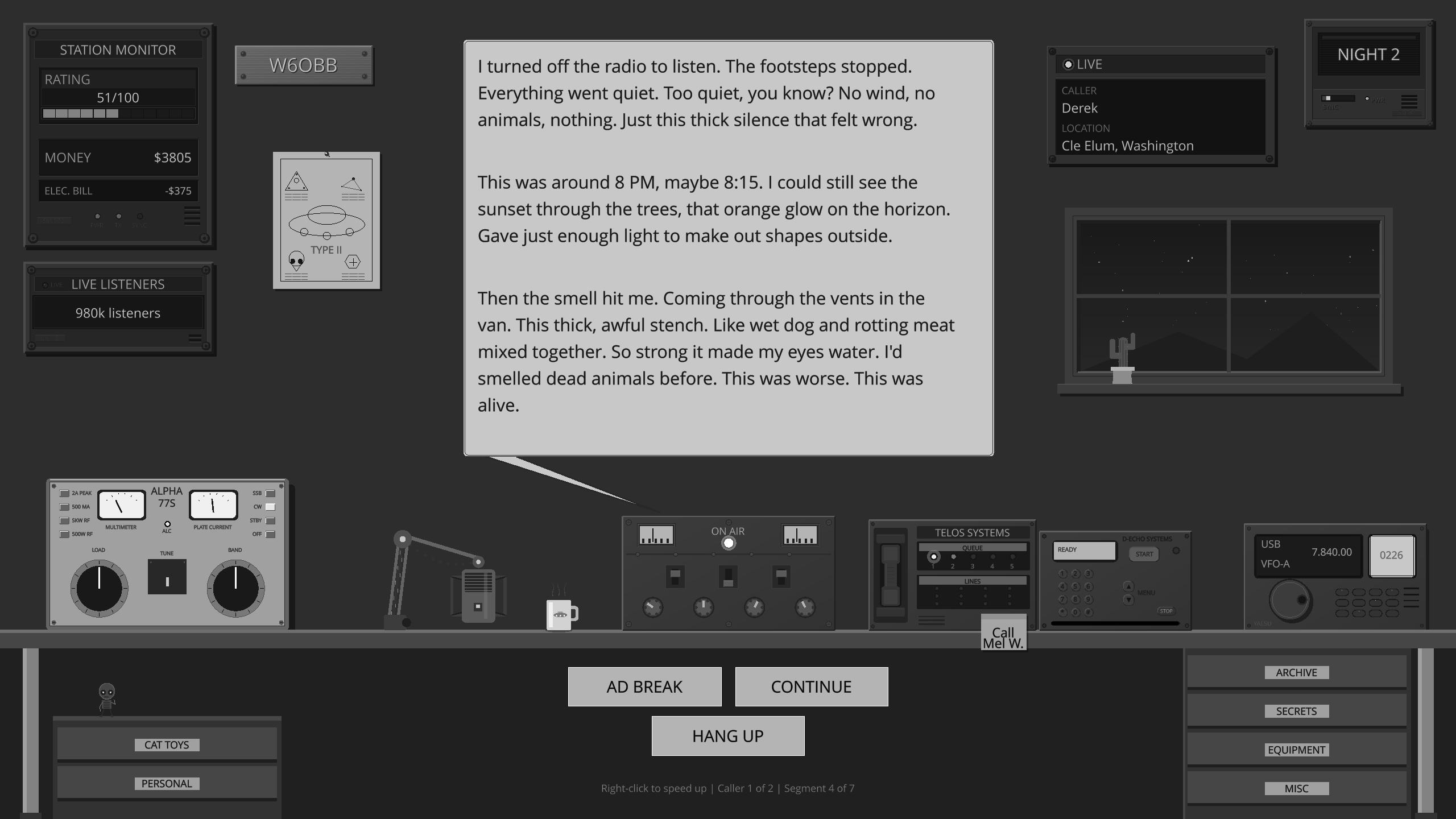
Ever wanted to host your own late-night paranormal radio show?
Across the Airwaves
You're on the air. Callers bring Mothman, Fresno Nightcrawlers, UFO sightings, reptilian autopsies, and whispers about AATIP and Project Blue Book. Every reply shapes how the night goes.
AI-Generated Summary
This article examines the psychological interpretation of UFO sightings, arguing that witness perception is heavily influenced by cultural context and personal belief. It uses a 1912 Scottish encounter as a primary example of how anomalous experiences are filtered through the observer's mind.
In this article, Janet Bord explores the psychological and perceptual dimensions of UFO and paranormal sightings. She posits that the human mind plays a significant role in shaping these experiences, often conforming them to pre-existing cultural or personal expectations. Bord references various researchers, including Lyall Watson, John Keel, and J. Allen Hynek, to support the idea that witnesses may unconsciously structure their observations to make sense of the unknown. A central case study discussed is an incident from approximately 1912 on the Island of Muck in the Inner Hebrides. Two young boys encountered a 'tiny boat' with a cabin, occupied by small entities who spoke English and Gaelic. The author suggests that the form of the craft—a boat—was a culturally appropriate manifestation for the islanders, rather than a literal representation of extraterrestrial technology. Bord argues that if we accept the possibility of faulty perception, many 'fairy' encounters of the past can be viewed as historical equivalents to modern UFO sightings. She concludes by advocating for a more active, multidisciplinary approach to UFO research that incorporates the study of human psychology and the limitations of objective observation.
The behaviour of all apparitions suggests that they obey laws not quite like those of conventional physics, and that they probably belong to a reality with slightly different space-time references.
PDF not loading? Download the PDF directly
Official Assessment
The author argues that UFO sightings and paranormal phenomena are heavily influenced by the observer's mind, cultural expectations, and psychological state, suggesting that witnesses often interpret anomalous experiences through the lens of their own belief systems.
Witnesses
Key Persons
- Lyall WatsonBiologist and author
- F.W. HolidayResearcher of unexplained phenomena
- John KeelResearcher
- G.N.M. TyrrellAuthor
- Alasdair Alpin MacGregorAuthor
- J. Allen HynekAuthor
- Charles T. TartDepartment of Psychology, University of California
- T.W. RollestonAuthor
- W.A. CraigieAuthor