Declassified UFO / UAP Document
Concatenated JPRS Reports, 1991
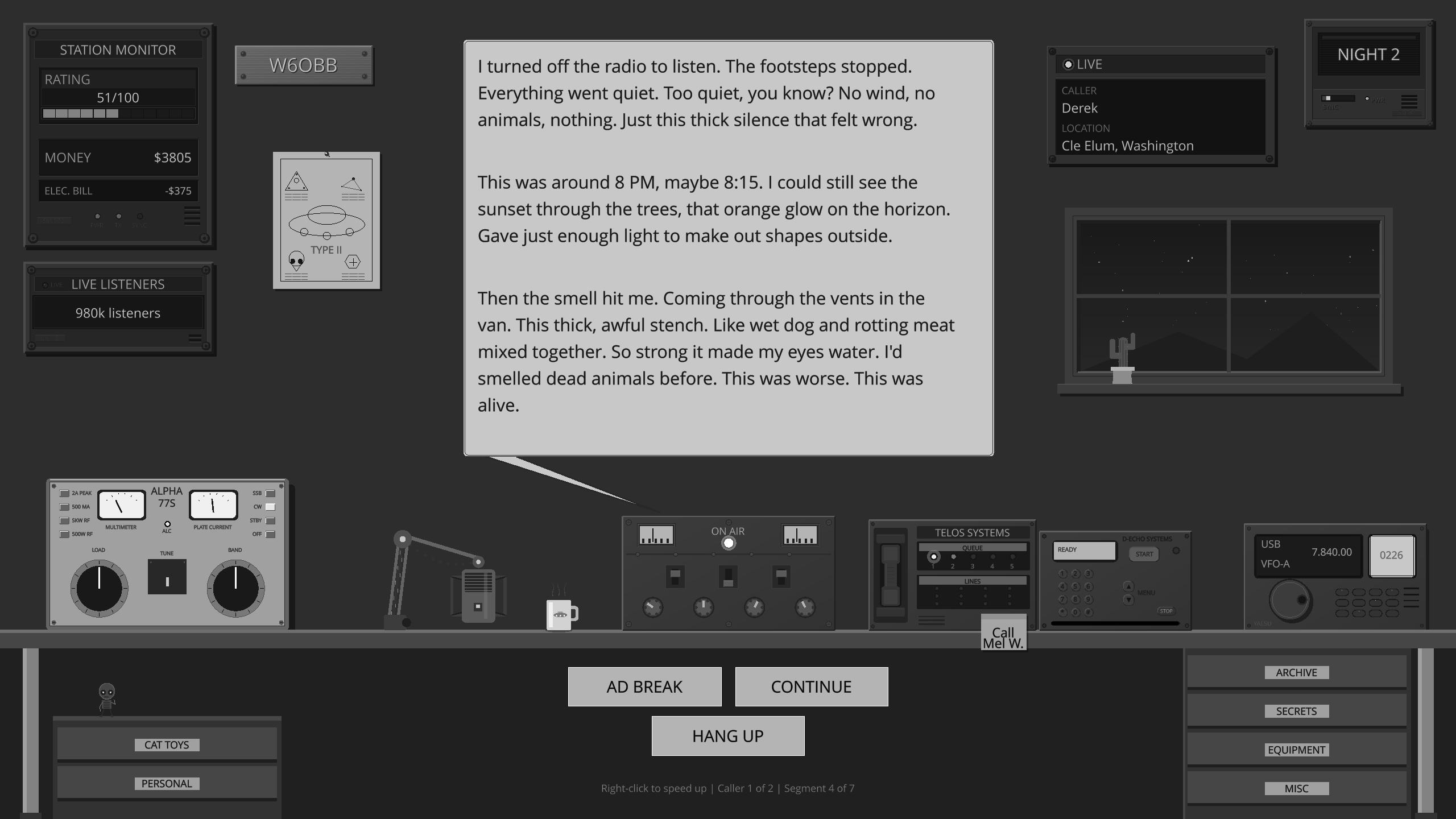
Ever wanted to host your own late-night paranormal radio show?
Across the Airwaves
You're on the air. Callers bring Mothman, Fresno Nightcrawlers, UFO sightings, reptilian autopsies, and whispers about AATIP and Project Blue Book. Every reply shapes how the night goes.

AI-Generated Summary
This 1991 JPRS report evaluates the history of space exploration and proposes future strategies, including reusable launch systems, orbital manufacturing, and international monitoring. It critiques past lunar missions as economically inefficient and advocates for practical, cost-effective space operations.
This document, a 1991 JPRS report, offers a comprehensive retrospective and prospective analysis of human space exploration. It begins by evaluating the achievements of the first thirty-three years of the space age, noting that while manned spaceflight has provided data on weightlessness and flight systems, it has not yet yielded fundamentally new scientific information. The author argues that the lunar program, while a significant historical and political achievement for the United States, provided little practical value beyond geological samples and served as a 'dead-end' after 1972. The report critiques the high costs of expendable launch vehicles and the inefficiency of the American Shuttle and Soviet Buran programs, calling for the development of truly reusable, inexpensive transport systems.
The document outlines a vision for the future of space operations, categorizing them into three groups: traditional environmental and communications monitoring; economically beneficial in-orbit production; and international systems for maintaining peace and stability. The author proposes the creation of 'cloud-stations'—modular, autonomous orbital units—as a more flexible alternative to large, rigid space stations like Freedom. Furthermore, the report discusses the potential for orbiting solar electric power plants to provide clean energy to Earth, though it acknowledges the immense technical challenges of constructing such large structures in orbit.
Regarding the exploration of the solar system, the report suggests that Mars missions should focus on searching for signs of life, but warns against the high costs and technical risks of current chemical-propellant methods. It advocates for the use of electric propulsion and reusable spacecraft to improve efficiency. The document also touches upon the concept of space settlements, referencing the work of J. O'Haley and the 'Stanford Torus' project, while expressing skepticism about their feasibility as a solution to Earth's overpopulation. Finally, the report addresses the challenges of interstellar travel, concluding that current mechanical transport methods are impractical due to the vast distances and energy requirements. It suggests that future 'travel' might instead involve the transmission of information packages representing an individual's consciousness, a concept the author links to philosophical discussions about the nature of the soul and human identity.
The landing of N. Armstrong and E. Aldrin on the Moon was the beginning of the lunar project. Between 1969 and 1972, the Americans delivered six missions to the Moon. What can be considered a plus about the lunar program?
PDF not loading? Download the PDF directly
Official Assessment
The document provides a retrospective analysis of space exploration achievements and proposes future directions, emphasizing the need for cost-effective, reusable launch systems, orbital manufacturing, and international monitoring systems. It critiques the lunar program as a dead-end for practical utility and advocates for shifting focus toward economically beneficial in-orbit activities and ecological monitoring.
Key Persons
- N. ArmstrongAstronaut
- E. AldrinAstronaut
- Sally RideAstronaut
- J. O'HaleyProponent of space settlements