Declassified UFO / UAP Document
Quantum Computing and Utilizing Organic Molecules in Automation Technology
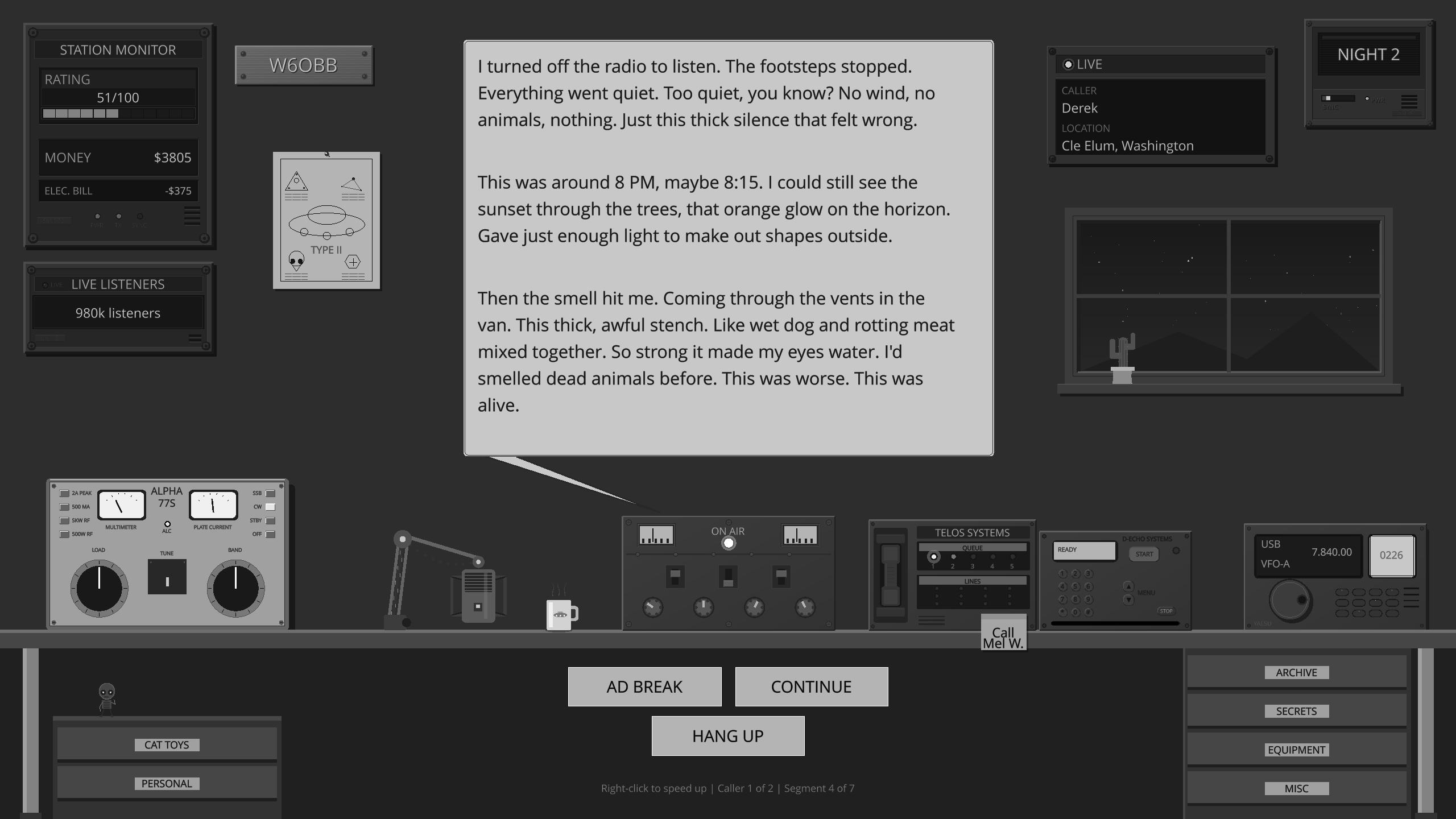
Ever wanted to host your own late-night paranormal radio show?
Across the Airwaves
You're on the air. Callers bring Mothman, Fresno Nightcrawlers, UFO sightings, reptilian autopsies, and whispers about AATIP and Project Blue Book. Every reply shapes how the night goes.

AI-Generated Summary
This 2010 DIA report evaluates quantum and DNA-based computing as solutions for radiation-hardened, miniaturized space-borne supercomputing. It concludes that hybrid quantum dot/photon systems and self-repairing DNA-based devices are promising technologies for future space exploration.
This Defense Intelligence Reference Document, dated 10 December 2010, provides an assessment of emerging computing technologies—specifically quantum computing and DNA-based molecular computing—and their potential applications for future space travel. The document highlights that current silicon-based computing hardware is ill-suited for space environments due to radiation sensitivity and the need for significant shielding, which adds weight and complexity to spacecraft. To overcome these limitations, the report explores non-traditional computing architectures that could provide robust, radiation-hardened, and miniaturized processing capabilities.
The report is divided into two primary technical sections. The first section examines quantum computing, detailing the challenges of decoherence and the necessity of the 'closed box' requirement for fault tolerance. It discusses various approaches to quantum bits (qubits), including ion traps, photon technologies, and specifically, the use of graphene quantum dots. The author notes that graphene is an ideal candidate for spin-based quantum computing due to its low intrinsic spin-orbit coupling and sparse nuclear spins. The document suggests that hybrid systems, utilizing arrays of quantum dots and photon communication channels, are likely to be the most viable path for space-based supercomputing on a 40-year timescale, as these systems can operate at attainable temperatures without the need for heavy cryogenic cooling.
The second section focuses on DNA-based designs for molecular computers. It outlines the fundamental principles of DNA as a building material, including base-pairing and self-assembly techniques. The document describes how DNA can be programmed to form complex nanostructures, logic gates, and even autonomous molecular 'robots' or nanomotors. These DNA-based systems are highlighted for their potential to perform simple distributed sensor data analyses and their unique ability to self-repair, which is a critical advantage for long-duration space missions where cosmic radiation may damage nanoscale components. The report concludes that while these technologies are currently in developmental stages, they represent a significant shift in computing paradigms that will eventually augment or replace general-purpose computers in mission-critical space applications.
These will not be the fastest systems in the astro-arsenal, but self-repair may make them the most robust.
PDF not loading? Download the PDF directly
Official Assessment
The document concludes that while traditional silicon-based computing faces radiation and miniaturization challenges for space travel, quantum computing and DNA-based molecular computing offer viable alternatives. Quantum computing, particularly using ion traps and later hybrid designs with quantum dots and photon communication, is projected for the 40-year horizon. DNA-based computing is expected to be useful within 20 years for robust, self-repairing sensor and analysis tools in space environments.
Key Persons
- TuringMathematician/Computer scientist
- Wolfgang PauliAustrian physicist
- LaddResearcher/Reviewer
- WatsonScientist
- CrickScientist
- Fred SangerScientist
- WinfreeResearcher
- SeemanResearcher
- GuResearcher
- StojanovicResearcher