Declassified UFO / UAP Document
Cognitive Limits on Simultaneous Control of Multiple Unmanned Spacecraft
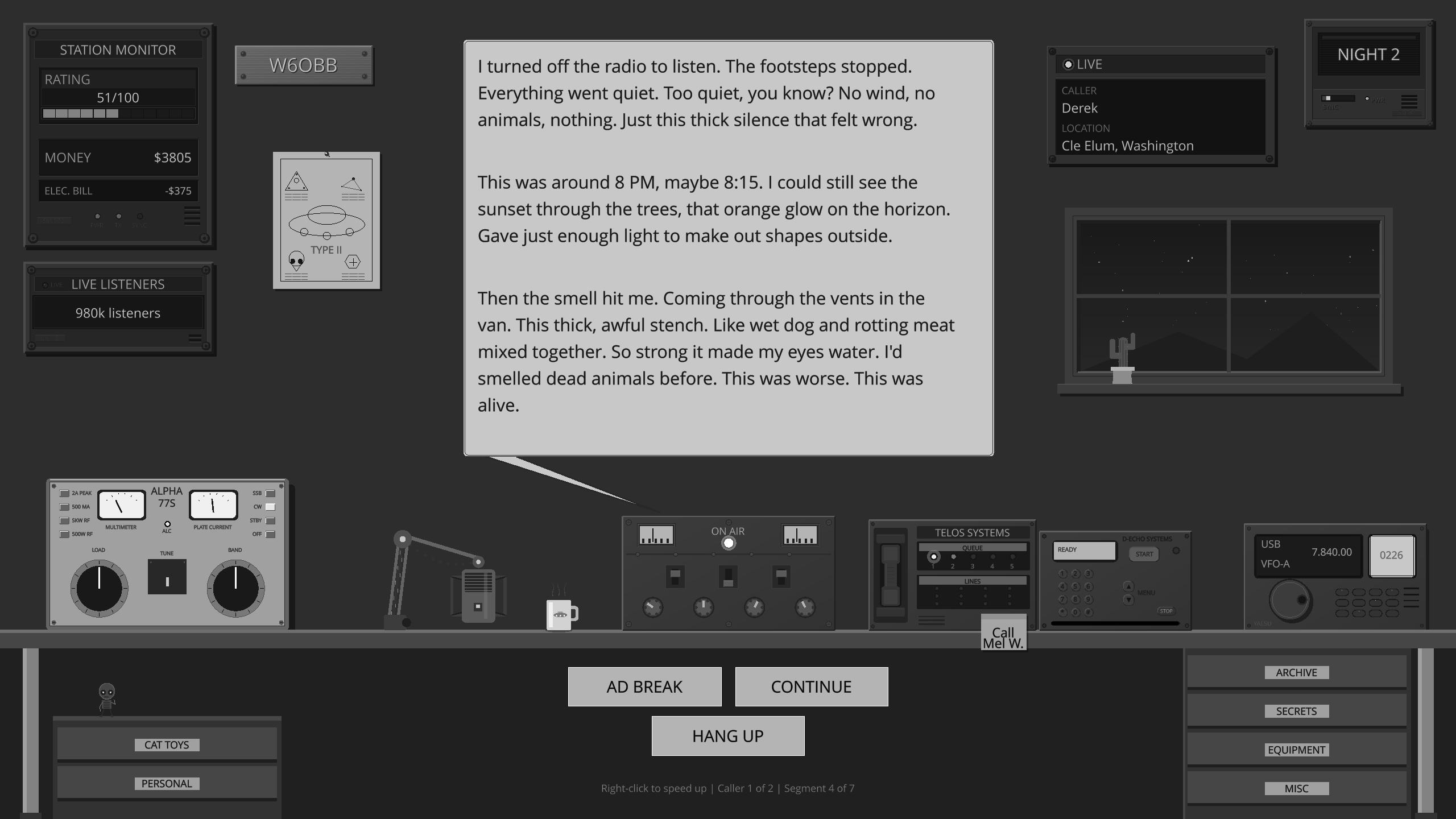
Ever wanted to host your own late-night paranormal radio show?
Across the Airwaves
You're on the air. Callers bring Mothman, Fresno Nightcrawlers, UFO sightings, reptilian autopsies, and whispers about AATIP and Project Blue Book. Every reply shapes how the night goes.

AI-Generated Summary
This DIA report examines the cognitive limits of human operators managing multiple unmanned spacecraft, establishing that human capacity is limited by working memory and task complexity. It suggests that physiological monitoring and adaptive automation are key to preventing operator overload in future aerospace missions.
This Defense Intelligence Reference Document, dated December 15, 2010, explores the cognitive limitations of human operators tasked with the simultaneous control of multiple unmanned spacecraft. Produced under the Advanced Aerospace Weapons System Applications (AAWSA) Program, the report addresses the future necessity of managing fleets of automated craft for deep-space exploration. The author posits that while future missions may involve complex, multi-vehicle fleets, the human capacity to maintain situational awareness—the 'big picture'—remains a critical bottleneck.
The document reviews extensive research from the fields of air traffic control (ATC) and unmanned aerial vehicle (UAV) operations to establish baseline cognitive thresholds. It highlights that human operators develop internal mental representations of mission parameters, which are susceptible to overload when the complexity of tasks or the number of tracked objects exceeds working memory capacity. The report synthesizes findings from various studies, noting that while automation can assist in managing these workloads, it introduces its own challenges, such as the need for 'noise' management (false alarms) to prevent automation bias.
Methodologically, the report examines how mental workload is measured, categorizing approaches into subjective self-reports (e.g., NASA-TLX), performance measures (e.g., reaction time, dual-task paradigms), and physiological measures (e.g., cardiac function, EEG, skin conductance, and hormone levels). The document emphasizes that physiological monitoring offers a promising, objective method for real-time workload assessment, potentially allowing for the prediction and prevention of operator overload.
Ultimately, the report concludes that while current research suggests a limit of approximately 16 objects for simple tasks, 7 for moderately complex tasks, and 4 for complex heterogeneous tasks, these limits are highly dependent on interface design and the level of automation. The author suggests that future advancements in human-automation consensus and anatomical understanding of the brain will be essential for managing the complexities of future space-based operations.
The primary research question we seek to answer is whether there is a cognitive limit to the number of objects that can be monitored and tracked within the big picture.
PDF not loading? Download the PDF directly
Official Assessment
The document concludes that cognitive limits for a single operator are approximately 16 objects for simple tasks, 7 for moderately complex tasks, and 4 for complex heterogeneous tasks. It suggests that physiological monitoring can help predict and prevent operator overload.