Declassified UFO / UAP Document
Cockpits in the Era of Breakthrough Flight
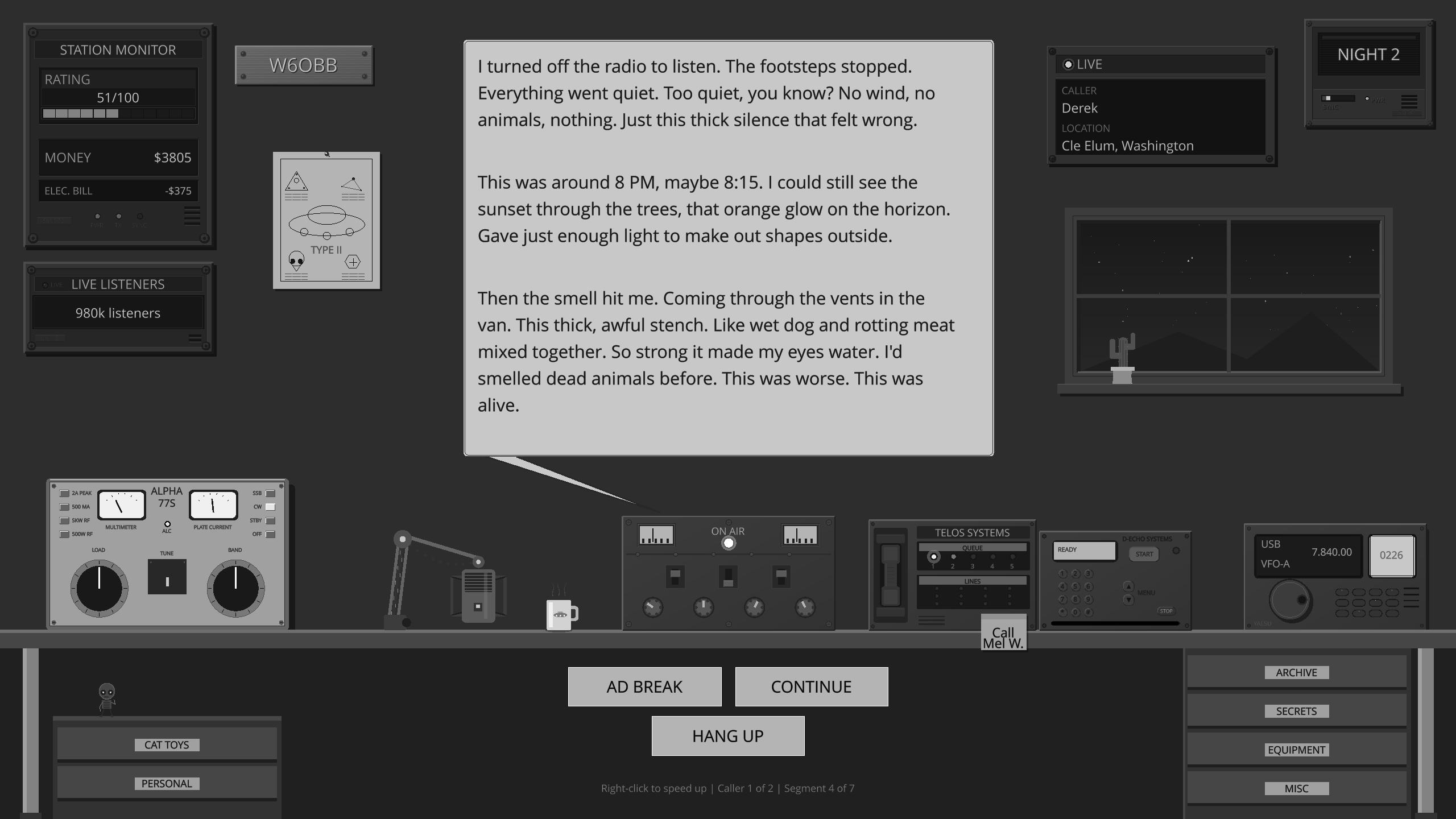
Ever wanted to host your own late-night paranormal radio show?
Across the Airwaves
You're on the air. Callers bring Mothman, Fresno Nightcrawlers, UFO sightings, reptilian autopsies, and whispers about AATIP and Project Blue Book. Every reply shapes how the night goes.

AI-Generated Summary
This DIA report outlines conceptual cockpit designs for future spacecraft utilizing breakthrough propulsion. It proposes a double-hull architecture to protect crews from extreme acceleration and suggests advanced virtual displays to replace traditional navigation cues.
This Defense Intelligence Reference Document, dated 1 November 2010, provides a conceptual framework for the design of cockpits intended for future vehicles capable of breakthrough propulsion. Produced under the Advanced Aerospace Weapon System Applications (AAWSA) Program, the report explores the implications of mastering gravitational and inertial forces, as well as the potential for faster-than-light travel. The document argues that such propulsion capabilities would necessitate a fundamental departure from legacy cockpit designs, which are currently constrained by terrestrial flight conventions. A central proposal is the 'double-hull' configuration, where an outer shell interacts with the external environment to manage propulsion and acceleration, while an inner shell maintains a safe, constant 1g environment for the crew. The report details the challenges of navigating in deep space, where traditional orientation cues are absent, and suggests that display systems must incorporate augmented reality and virtual surround projections to provide the pilot with reliable spatial awareness. Furthermore, the document addresses the human-machine interface, advocating for a 'design for stress' approach that prioritizes fixed, physical controls for critical functions while utilizing adaptive displays and gesture-based commands for less time-critical tasks. The report concludes that while these technologies are not yet mature, the proposed design serves as a baseline for future research, suggesting that advancements in gaming and science fiction simulation could provide valuable insights into the development of these guidance systems.
The craft is propelled by interacting with the properties of the space-time and/or inertial forces surrounding the craft—and can accelerate at g levels beyond human endurance.
PDF not loading? Download the PDF directly
Official Assessment
The report outlines a provisional cockpit design for vehicles utilizing breakthrough propulsion, such as gravitational or inertial control and faster-than-light travel. It emphasizes the need for a double-hull configuration to isolate the crew from extreme acceleration forces, the use of virtual surround displays to compensate for the loss of external visual cues, and the implementation of six-degree-of-freedom control methods tailored to human natural responses.