Declassified UFO / UAP Document
An Introduction to the Statistical Drake Equation
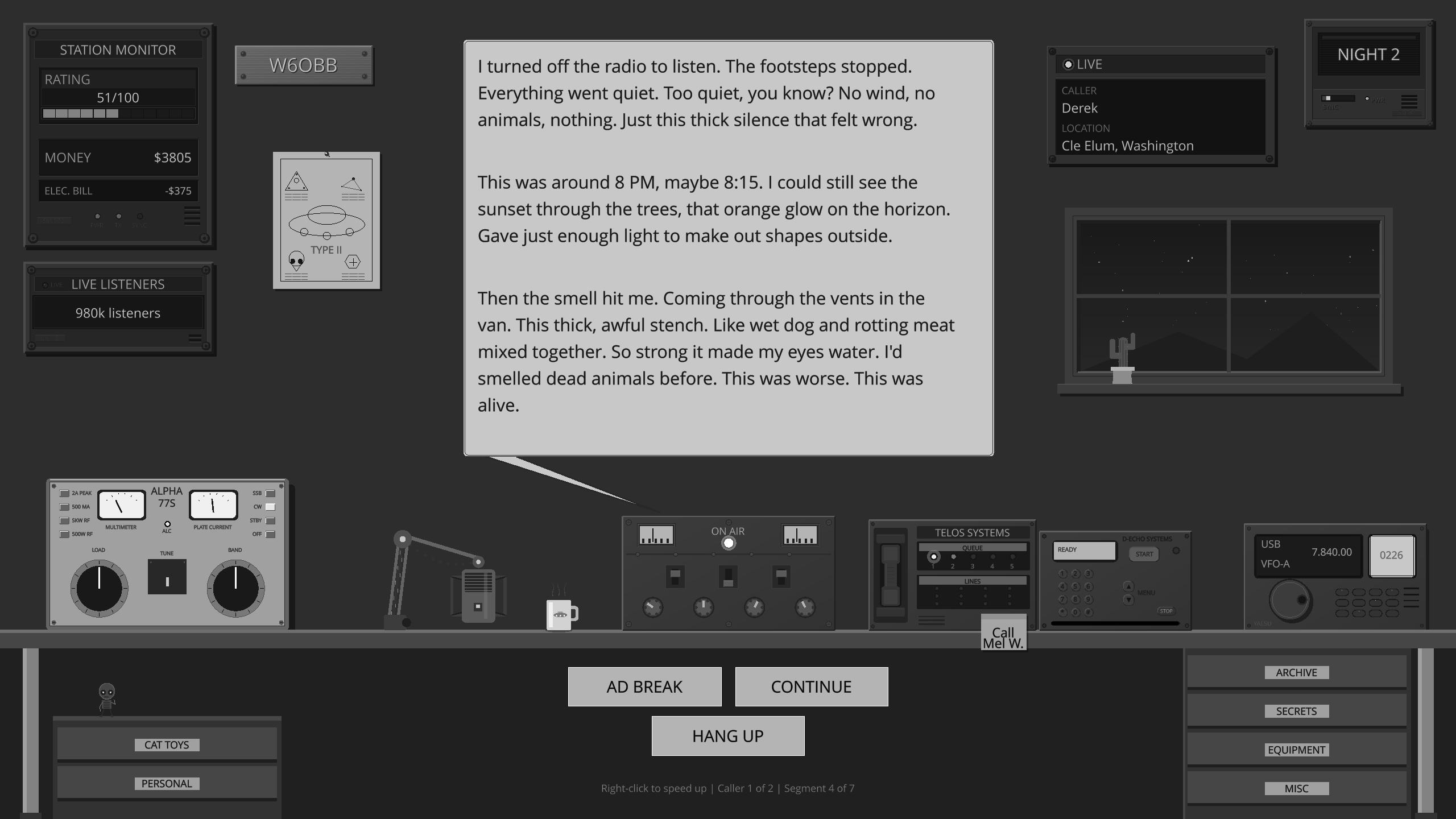
Ever wanted to host your own late-night paranormal radio show?
Across the Airwaves
You're on the air. Callers bring Mothman, Fresno Nightcrawlers, UFO sightings, reptilian autopsies, and whispers about AATIP and Project Blue Book. Every reply shapes how the night goes.

AI-Generated Summary
This document introduces a statistical refinement of the Drake Equation by replacing fixed variables with random variables to account for uncertainty. It utilizes the Central Limit Theorem to derive a lognormal distribution for the number of communicating civilizations in the galaxy.
This Defense Intelligence Reference Document, dated March 11, 2010, provides a technical introduction to the 'Statistical Drake Equation,' a mathematical framework developed by Claudio Maccone to refine the original Drake Equation used in the Search for Extraterrestrial Intelligence (SETI). The document argues that the classical Drake Equation, which relies on seven fixed numerical inputs to estimate the number of communicating civilizations (N) in the galaxy, is overly simplistic. Maccone proposes replacing these seven variables with random variables, each defined by a mean value and a standard deviation. By applying the Central Limit Theorem (CLT) of statistics, the author demonstrates that the product of these random variables tends toward a lognormal distribution. This transformation allows for a more rigorous statistical analysis, enabling the inclusion of uncertainty (error bars) and the potential for adding an unlimited number of new factors as scientific knowledge expands, a concept the author calls the 'Data Enrichment Principle.' The document includes detailed mathematical proofs, including the use of Shannon's Information Theory to justify the use of uniform distributions for the input variables, and provides numerical examples to illustrate how the statistical approach yields different results compared to the classical method. The author concludes that this statistical extension increases the probability of finding extraterrestrial civilizations by providing a more nuanced understanding of the variables involved. The document also derives a 'Maccone distribution' for the distance to the nearest extraterrestrial civilization, treating distance as a random variable. The paper concludes by suggesting that the Statistical Drake Equation could eventually evolve into a comprehensive 'Encyclopaedia Galactica' as more scientific data is incorporated.
The Statistical Drake Equation might just become a huge computer code, growing in size and especially in the depth of the scientific information it contains. It would thus be Humanity's first 'Encyclopaedia Galactica.'
PDF not loading? Download the PDF directly
Official Assessment
The author proposes a 'Statistical Drake Equation' that replaces the deterministic variables of the original Drake Equation with random variables, utilizing the Central Limit Theorem to derive a lognormal distribution for the number of communicating civilizations (N). This approach allows for the inclusion of error bars and an increasing number of factors, which the author terms the 'Data Enrichment Principle'.
Key Persons
- Frank Donald DrakeAstronomer and proposer of the Drake Equation
- Carl SaganAuthor of 'Cosmos'
- Claude ShannonInformation theorist
- Paul DaviesPhysicist and science author