Declassified UFO / UAP Document
Advanced Propulsion Study
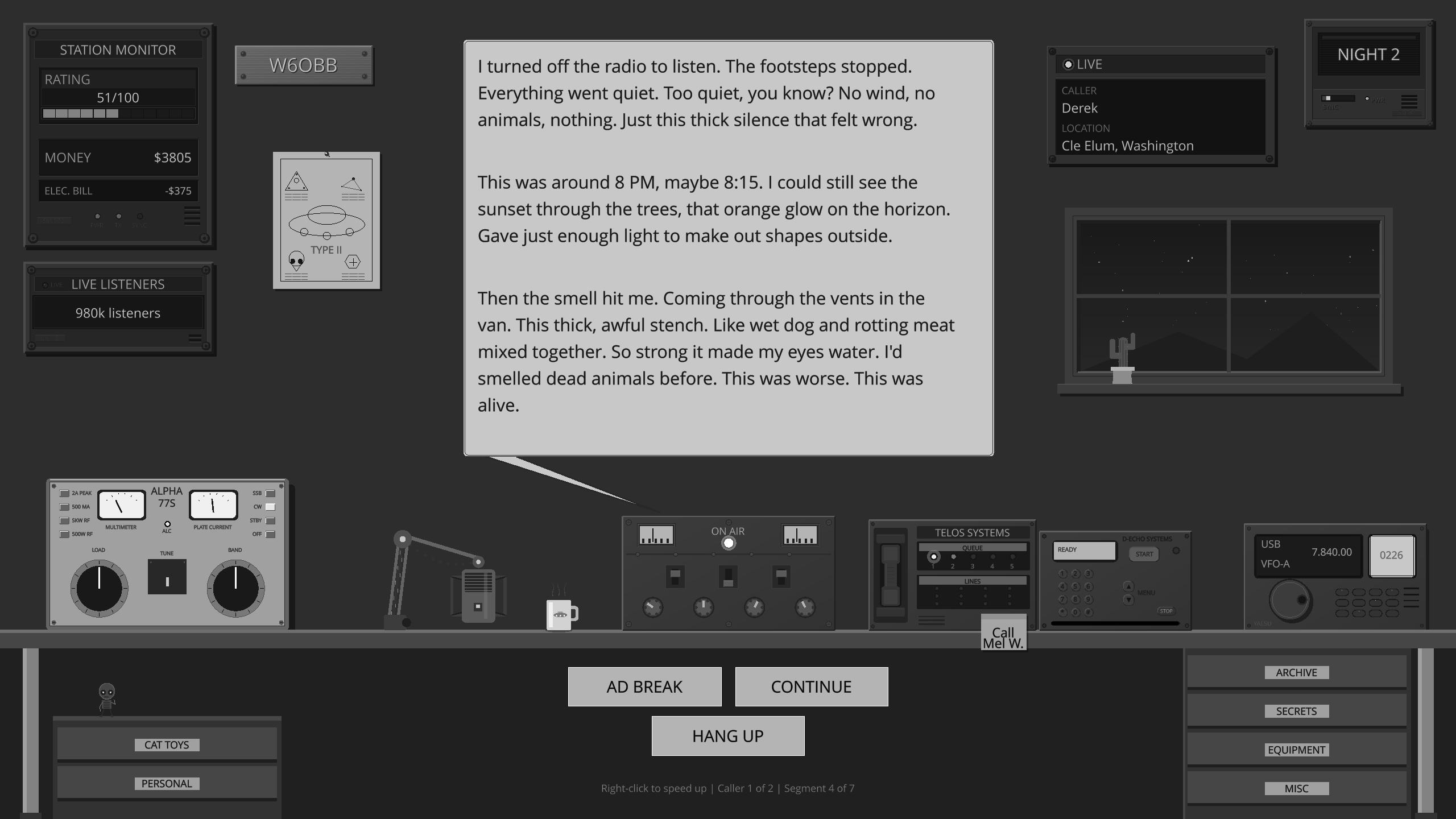
Ever wanted to host your own late-night paranormal radio show?
Across the Airwaves
You're on the air. Callers bring Mothman, Fresno Nightcrawlers, UFO sightings, reptilian autopsies, and whispers about AATIP and Project Blue Book. Every reply shapes how the night goes.

AI-Generated Summary
This 2004 AFRL report evaluates advanced propulsion technologies for Earth-to-orbit launch, recommending five specific concepts including blast-wave accelerators, beamed-power propulsion, and advanced nuclear fusion/fission systems. It emphasizes the necessity of disruptive innovation to reduce launch costs and enable routine space access.
This special technical report, titled 'Advanced Propulsion Study' and authored by Dr. Eric W. Davis for the Air Force Research Laboratory (AFRL), provides a comprehensive technical assessment of advanced propulsion concepts aimed at revolutionizing Earth-to-orbit (ETO) transportation. The study was conducted in two phases, with the primary objective of identifying and evaluating concepts that could lead to major advances in propulsion, specifically focusing on far-term breakthrough physics, gravity/inertia modification, spacetime metric modification, and energy extraction from the space vacuum. The report begins by establishing the current state of launch vehicle technology, noting that present-day systems are fragile, complex, and prohibitively expensive, with costs reaching $15,000/kg. The author argues that these operational and economic constraints are the primary obstacles to the routine use of space. To address this, the study adopts the 'Advanced Concepts Philosophy' advocated by Ivan Bekey and Robert L. Forward, which prioritizes disruptive innovation over incremental improvements. The report reviews a wide array of propulsion concepts, categorizing them into Relay Space Transportation, Suborbital Space Transportation, Orbital Space Transportation, and Terrestrial Space Transportation. After a rigorous evaluation process, the author selects five promising concepts for detailed technical analysis: Explosive Accelerators (specifically the Blast-Wave Accelerator), Beamed-Power Propulsion (RF-Powered Lenticular Craft and Laser-Powered Lightcraft), and Nuclear Propulsion (QED/ARC IEF Fusion Rockets and Nuclear Thermal Rockets, including the LANTR and Thin-Film Fission Fragment designs). Each of these concepts is evaluated for its potential to provide orders-of-magnitude improvements in launch costs and performance. The report also explores far-term concepts, including Quantum Vacuum Zero-Point Energy (ZPE), engineering the spacetime metric, and the use of traversable wormholes and antigravity fields. The author concludes that while many of these concepts are currently in the conceptual or early experimental stages, they represent credible and rigorous paths toward future space transportation. The report includes a detailed bibliography and a list of distribution recipients, underscoring the collaborative nature of the research involving various government agencies, academic institutions, and private industry partners. The document serves as a strategic roadmap for the AFRL to pursue high-leverage, unconventional propulsion technologies that could fundamentally transform space access.
Emphasis is NOT on incremental improvement but rather on disruptive innovation, which is defined as the generation of capability so great that revolutionary change occurs
PDF not loading? Download the PDF directly
Official Assessment
The study identified five promising advanced propulsion concepts for Earth-to-orbit (ETO) transportation: Blast-Wave Accelerators, RF-Powered Lenticular Craft, Laser-Powered Lightcraft, QED/ARC IEF Fusion Rockets, and Nuclear Thermal Rockets (specifically LANTR and Thin-Film Fission Fragment designs).
Key Persons
- Frank MeadPrincipal Investigator/Project Manager for the Air Force Research Laboratory
- Robert L. ForwardMentor and researcher in breakthrough propulsion physics
- Ivan BekeyAdvocate of Advanced Concepts Philosophy