Declassified UFO / UAP Document
PROJECT WINTERHAVEN: A PROPOSAL FOR JOINT SERVICES RESEARCH AND DEVELOPMENT CONTRACT
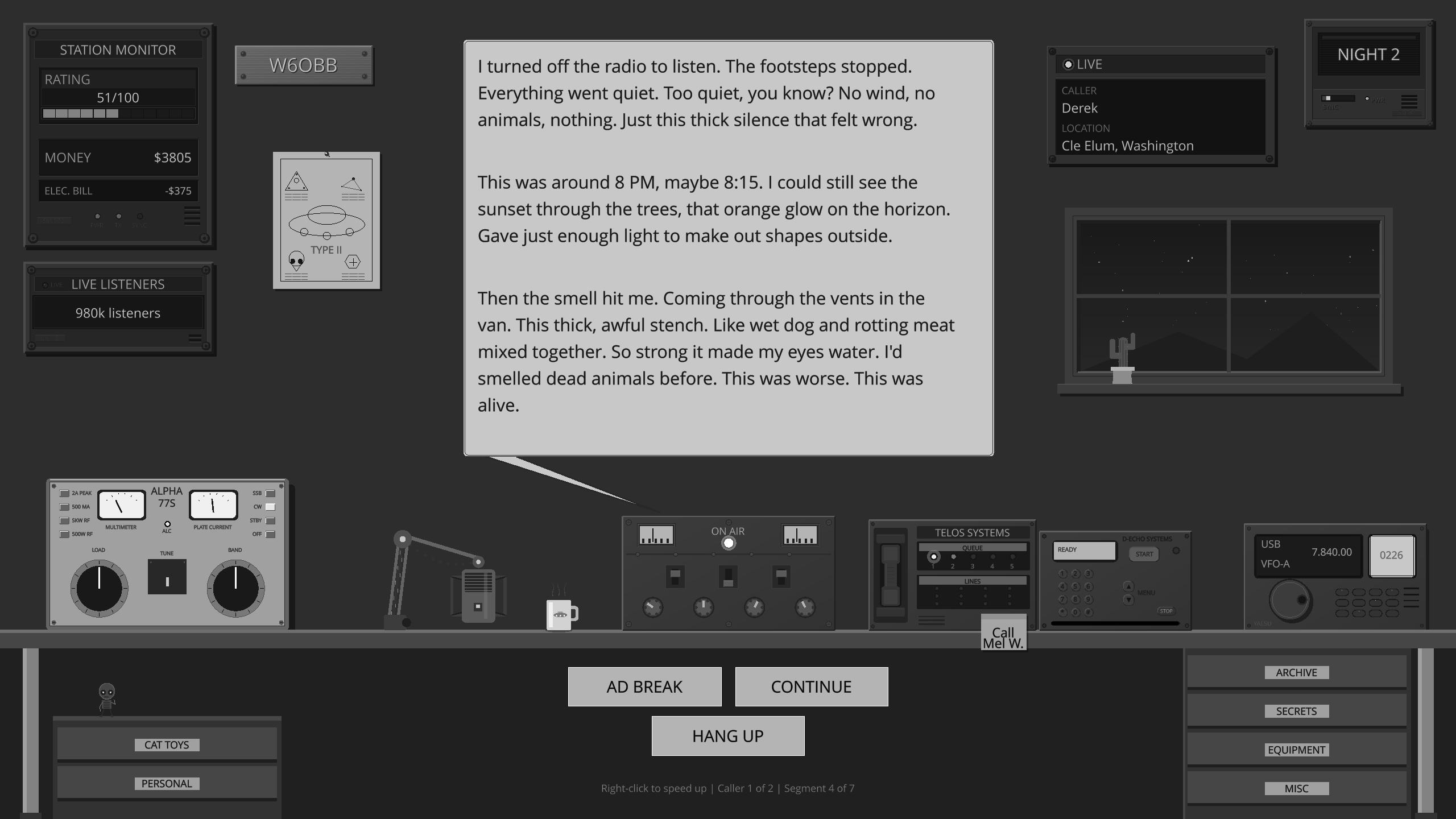
Ever wanted to host your own late-night paranormal radio show?
Across the Airwaves
You're on the air. Callers bring Mothman, Fresno Nightcrawlers, UFO sightings, reptilian autopsies, and whispers about AATIP and Project Blue Book. Every reply shapes how the night goes.

AI-Generated Summary
Project WINTERHAVEN was a 1952 proposal by Thomas Townsend Brown to the US military to develop 'electro-gravitic' propulsion and communication systems. The project aimed to utilize high-voltage capacitors and dielectric materials to manipulate gravitational fields, promising speeds exceeding 1,800 mph.
Project WINTERHAVEN is a formal proposal submitted by The Townsend Brown Foundation to the United States Department of Defense, dated January 1, 1953. The document outlines a comprehensive research and development program aimed at confirming and exploiting the suspected interrelationship between the electrodynamic and gravitational fields. The foundation argues that evidence gathered over several years suggests that this 'electro-gravitic' relationship can be manipulated to create a new form of propulsion and a revolutionary communication system. The proposal details a multi-institutional research effort involving four commercial corporations and four academic institutions, including Stanford Research Institute, the University of Chicago, and The Franklin Institute. The research program is divided into four main groups: field relationships, wave propagation, ponderomotive forces in solid dielectrics, and reactive forces in fluid dielectrics. A central component of the proposal is the development of disc-shaped airfoils that utilize high-voltage electrostatic charges to achieve thrust, which the authors claim could eventually lead to craft capable of exceeding 1,800 miles per hour. The document also discusses the potential for a new communication system that utilizes gravitational waves, which are described as being highly penetrating, capable of passing through steel shielding and concrete, and potentially useful for secure military communications. The proposal includes detailed appendices outlining specific fundamental research tasks, such as the repetition of the Trouton-Noble experiment and the use of liquid-helium cryostats to study low-temperature physics and dielectric properties. The document emphasizes the urgency of this research, comparing it to the Manhattan Project in its potential to revolutionize science and technology, and argues that the United States must prioritize the conquest of space through the control of gravitation.
It is the purpose of Project WINTERHAVEN to compile and study this evidence and to perform certain critical or definitive experiments which will serve to confirm or deny the relationship.
PDF not loading? Download the PDF directly
Official Assessment
The document proposes that a fundamental relationship exists between the electrodynamic and gravitational fields, which can be exploited for propulsion and communication. It suggests that high-K dielectric materials can be used to generate significant forces, potentially leading to a new form of prime mover.
Key Persons
- Thomas Townsend BrownPhysicist, biophysicist, and founder of The Townsend Brown Foundation
- Paul Alfred BiefeldProfessor of astronomy at Denison University and colleague of Albert Einstein
- Albert EinsteinPhysicist
- W. F. G. SwannChairman, Board of Technical Advisers
- Nicol H. SmithExecutive Director, The Franklin Institute
- Imre PataiResearcher at The Bartol Foundation of The Franklin Institute