Declassified UFO / UAP Document
SYSTEM FOR INCREASING THE AERODYNAMIC AND HYDRODYNAMIC EFFICIENCY OF A VEHICLE IN MOTION
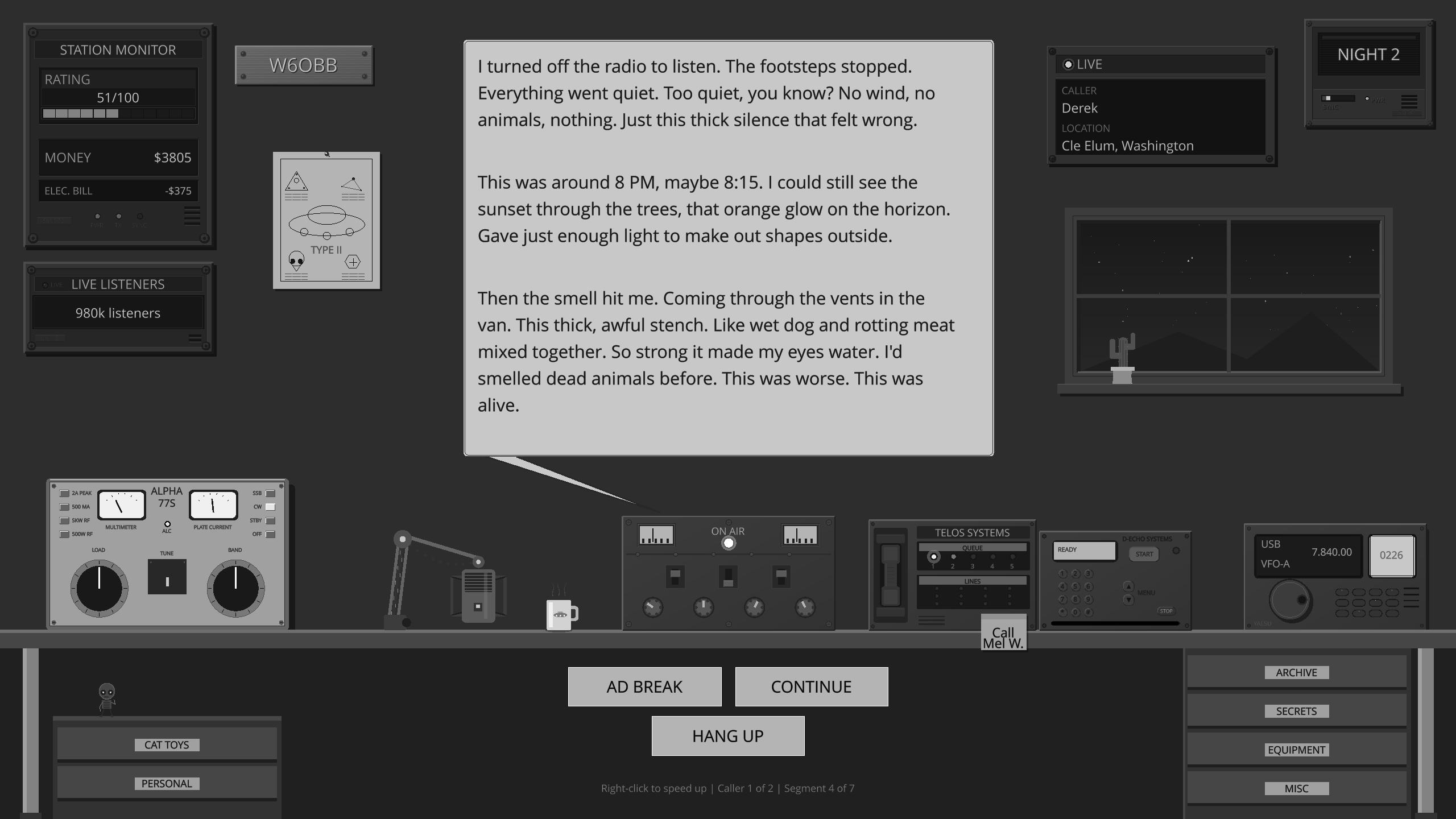
Ever wanted to host your own late-night paranormal radio show?
Across the Airwaves
You're on the air. Callers bring Mothman, Fresno Nightcrawlers, UFO sightings, reptilian autopsies, and whispers about AATIP and Project Blue Book. Every reply shapes how the night goes.

AI-Generated Summary
This document is a 1998 U.S. patent for a system that uses microwave radiation to heat and ionize the air or water around a vehicle, creating a low-density 'bubble' to reduce drag and eliminate sonic booms. It details the use of gyrotrons and magnetic fields to manage the ionized plasma and improve vehicle efficiency.
This document is United States Patent 5,797,563, issued on August 25, 1998, to inventors Ronald F. Blackburn, Barry M. Warmkessel, and Sonja M. Kawamoto. The patent describes a system designed to increase the aerodynamic and hydrodynamic efficiency of a vehicle in motion, such as an aircraft, by reducing the mass density of the fluid medium (air or water) through which the vehicle travels. The system achieves this by using radiation generation and transmission components to radiate tuned microwave electromagnetic energy outwardly from the vehicle into the fluid medium. This radiation is tuned to the harmonic resonance frequency of the molecules of the medium, specifically targeting oxygen or water molecules, to produce efficient heating and ionization. This process creates a 'hot air bubble' or rarefied region around the vehicle, which reduces drag forces and the intensity of shock waves, thereby mitigating or eliminating the sonic boom associated with supersonic flight. The system also includes a magnetic field subsystem, utilizing coiled wires or magnetic slabs, to propel the heated, ionized molecules away from the vehicle's outer surfaces, preventing excessive heat transfer and further enhancing the rarefaction effect. The patent details two primary embodiments for implementation in jet aircraft, involving the integration of microwave generators (specifically gyrotrons) within the engine assembly to facilitate heat exchange and improve overall energy efficiency. The document includes extensive technical descriptions, mathematical calculations for power requirements, and numerous figures illustrating the components, such as the gyrotron, antenna configurations, and the orientation of magnetic fields relative to the vehicle's surfaces. The invention is noted as being particularly suitable for both subsonic and supersonic aircraft, as well as for waterborne and underwater vehicles like torpedoes and surface ships, by allowing them to move through a reduced-density medium.
The system of the invention essentially produces a 'hot air bubble' around the aircraft which reduces the expended power at true supersonic speeds because the coherent addition of pressure waves around the aircraft is degraded.
PDF not loading? Download the PDF directly
Key Persons
- Ronald F. BlackburnInventor
- Barry M. WarmkesselInventor
- Sonja M. KawamotoInventor
- Chris PapageorgeAttorney, Agent, or Firm
- Andres KashnikowPrimary Examiner
- Tien DinhAssistant Examiner