Declassified UFO / UAP Document
United States Patent: Air-Buoyant Structures and Vehicles
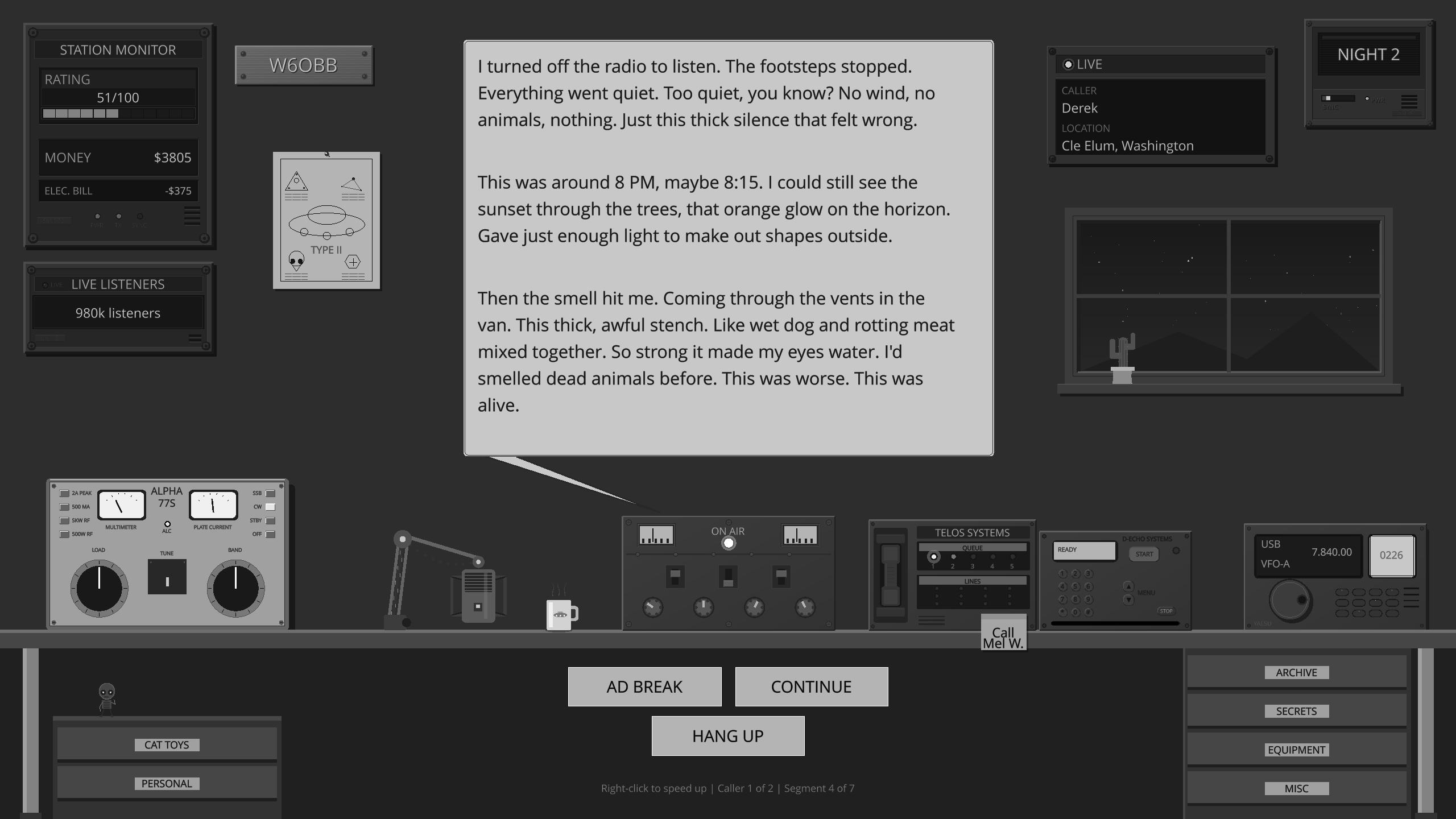
Ever wanted to host your own late-night paranormal radio show?
Across the Airwaves
You're on the air. Callers bring Mothman, Fresno Nightcrawlers, UFO sightings, reptilian autopsies, and whispers about AATIP and Project Blue Book. Every reply shapes how the night goes.

AI-Generated Summary
This patent details a method for achieving air buoyancy using vacuum-filled hollow shells constructed from ultra-low density aerogel materials, eliminating the need for traditional lifting gases. The technology is intended for various applications, including high-altitude platforms and delivery vehicles, and utilizes active vacuum pumping to control buoyancy.
This document is a United States Patent (US 11,027,816 B1) granted on June 8, 2021, to Triad National Security, LLC, for an invention titled 'Air-Buoyant Structures and Vehicles.' The inventors listed are Miles Frank Beaux, II, Igor Olegovich Usov, and Brian M. Patterson. The patent outlines a technology for creating air-buoyant structures that do not rely on traditional lifting gases like helium, which are noted as becoming increasingly expensive and scarce. Instead, the invention utilizes hollow structures with internal cavities maintained under reduced pressure or vacuum conditions. The shell of these structures is constructed from ultra-low density materials such as aerogels, foam, or vapor-expanded materials, which are described as being strong and stiff enough to withstand atmospheric pressure while remaining lightweight. The shell may be reinforced with materials like helical nanofibers. The system includes integrated vacuum pumps and valves that allow for the active control of buoyancy by adjusting the internal pressure. The patent details various geometries for these structures, including torus, spherical, cylindrical, and pill shapes, as well as complex interconnected tube configurations. The document discusses the potential applications for this technology, including balloon-suspended Wi-Fi hotspots, floating warehouses, delivery vehicles, and high-altitude platforms for launching space vehicles. It also provides technical data, including stress-strain graphs for various aerogel materials and tables detailing minimum hoop stresses required for buoyancy at an altitude of 36,090 feet. The patent includes 19 claims defining the scope of the invention, covering both the structures themselves and vehicles incorporating them, as well as the method of using vacuum pumps to maintain buoyancy.
Indeed, no gas is cheaper than nothing at all.
PDF not loading? Download the PDF directly
Official Assessment
The patent describes air-buoyant structures and vehicles that achieve buoyancy through the use of hollow shells under reduced pressure (vacuum) conditions, rather than using lighter-than-air gases like helium. These structures utilize ultra-low density aerogel materials, foam, or vapor-expanded materials, reinforced with nanofibers, and are equipped with vacuum pumps and valves to control buoyancy.
Key Persons
- Miles Frank Beaux, IIInventor
- Igor Olegovich UsovInventor
- Brian M. PattersonInventor
- Valentina XavierPrimary Examiner
- Michael A. Leonard, IIAttorney, Agent, or Firm
- Sheetal S. PatelAttorney, Agent, or Firm