Declassified UFO / UAP Document
HUNT FOR ALIEN WORLDS
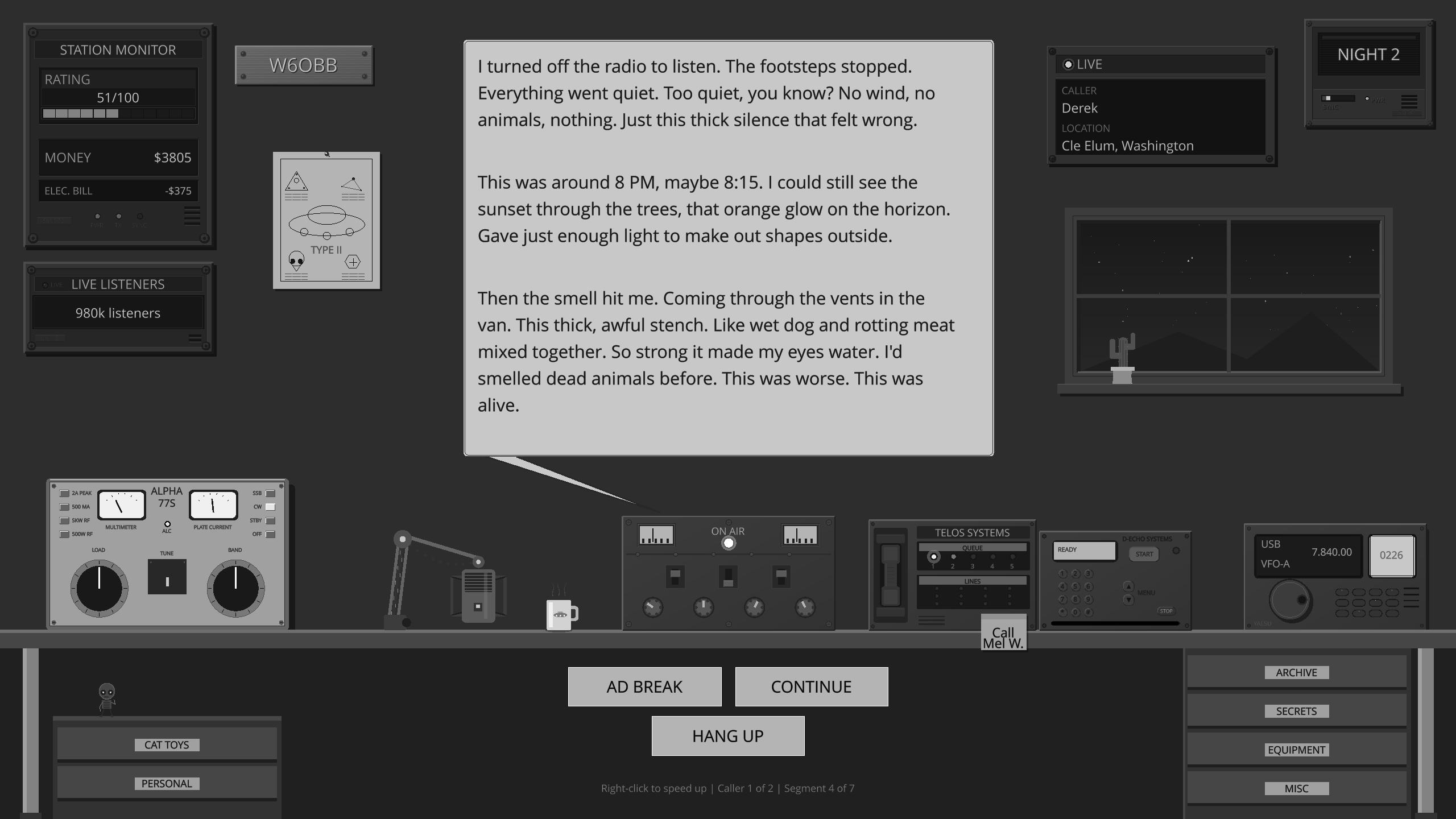
Ever wanted to host your own late-night paranormal radio show?
Across the Airwaves
You're on the air. Callers bring Mothman, Fresno Nightcrawlers, UFO sightings, reptilian autopsies, and whispers about AATIP and Project Blue Book. Every reply shapes how the night goes.

AI-Generated Summary
This transcript documents the 1997 scientific state of extrasolar planet detection, highlighting the transition from radio-based SETI searches to gravitational wobble detection methods. It chronicles the discovery of the first planets around solar-type stars and the technological roadmap for future direct imaging.
This document is a transcript of the PBS NOVA programme 'Hunt for Alien Worlds,' aired on February 18, 1997. It provides a comprehensive overview of the state of astronomy regarding the search for extrasolar planets at that time. The narrative begins by contrasting the long-standing human desire to know if we are alone in the universe with the technological limitations that historically prevented the direct observation of planets beyond our solar system. Astronomers such as Geoff Marcy, George Gatewood, and Fritz Benedict discuss the primary methods used to detect these distant worlds, specifically focusing on the 'wobble' effect caused by a planet's gravity on its parent star. The transcript details the shift from astrometry to spectroscopy and the Doppler effect as more precise tools for detecting these subtle gravitational influences. A significant portion of the document is dedicated to the history of false starts and breakthroughs, including the erroneous report of a planet around a pulsar by Andrew Lyne, which was later corrected to be an error in accounting for the Earth's own motion. This is contrasted with the successful detection of a planetary system around a pulsar by Alex Wolszczan. The document also covers the discovery of the planet around 51 Pegasi by the Swiss team of Michel Mayor and Didier Quelloz, noting the initial skepticism and the eventual consensus that it was indeed a planet, despite its unexpected proximity to its star. The narrative further explores the search for habitable worlds, mentioning the discovery of planets around 47 Ursa Majoris and 70 Virginis, and the theoretical potential for liquid water on moons orbiting giant planets. The document concludes by discussing the future of the field, specifically the development of interferometers to enable the direct imaging of distant planets and the analysis of their atmospheres for chemical signatures of life, such as oxygen and methane. Throughout the transcript, the contributors emphasize the importance of scientific rigor, the impact of technological advancements like faster computers and better spectrometers, and the profound philosophical implications of discovering other planetary systems.
The beauty of the planetary detection problem is that a no result does constrain your understanding. If we don't find the signals down to the level of capability of the telescopes, the planets aren't there, the massive planets, or however low the mass would be based on the technique, just don't exist.
PDF not loading? Download the PDF directly
Official Assessment
The document details the scientific evolution of planet hunting, moving from the search for intelligent life via radio signals (SETI) to the detection of extrasolar planets through astrometry and spectroscopy. It highlights the discovery of planets around pulsars and the subsequent confirmation of planets around solar-type stars like 51 Pegasi, 47 Ursa Majoris, and 70 Virginis. It emphasizes the technological challenges of direct imaging and the potential for future interferometry to detect signs of life.
Key Persons
- Geoff MarcyAstronomer
- Daniel GoldinNASA Administrator
- George GatewoodAstronomer at Allegheny Observatory
- Fritz BenedictAstronomer using Hubble Space Telescope
- Andrew LyneAstronomer
- Alex WolszczanAstronomer
- Didier QuellozAstronomer
- Michel MayorAstronomer
- David BlackAstronomer
- Frank DrakeAstronomer