Declassified UFO / UAP Document
Electric Propulsion Study
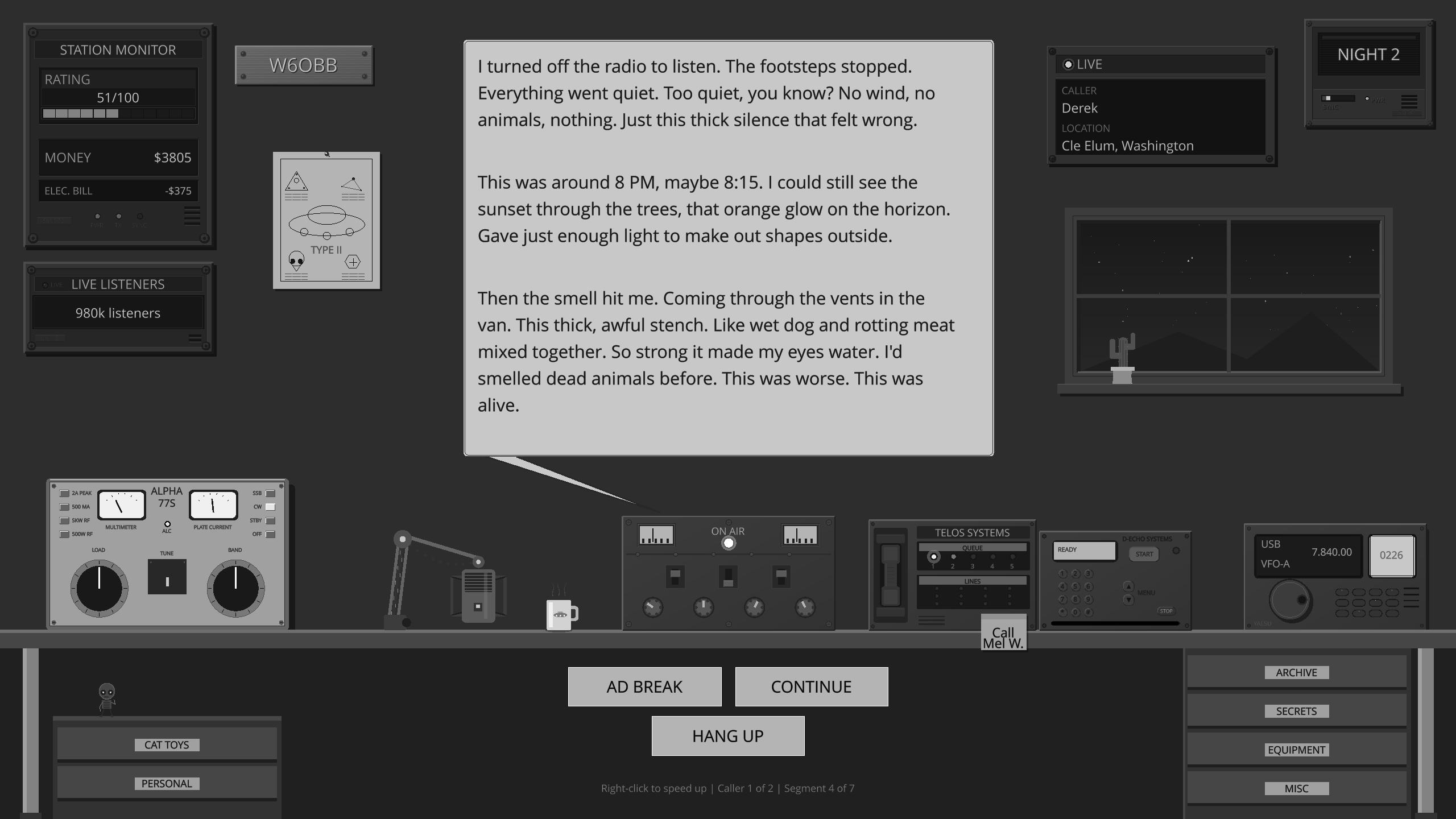
Ever wanted to host your own late-night paranormal radio show?
Across the Airwaves
You're on the air. Callers bring Mothman, Fresno Nightcrawlers, UFO sightings, reptilian autopsies, and whispers about AATIP and Project Blue Book. Every reply shapes how the night goes.

AI-Generated Summary
This 1990 Air Force report investigates 5-D unified field theories as a basis for revolutionary space propulsion. It evaluates various experimental methods, recommending radiation pressure and Biefield-Brown effect studies as the most promising for verifying electromagnetic-gravitational coupling.
This document is a final report titled 'Electric Propulsion Study,' prepared by Science Applications International Corporation (SAIC) for the Astronautics Laboratory (AFSC) of the U.S. Air Force. The study, conducted between September 1988 and November 1989, explores the feasibility of using inductive coupling between electromagnetic and gravitational forces for advanced space propulsion. The author, D.L. Cravens, argues that traditional chemical rockets are approaching their theoretical limits and that nonconventional approaches are necessary for future mission advancements. The report reviews various multidimensional theories, specifically focusing on 5-D theories that allow for nonzero coupling between gravity and electrical effects. The theoretical section develops a general relativistic five-dimensional theory, emphasizing modifications to classical Maxwell equations and field vector equations. The report suggests that if such interconversion is possible, the power density available would be ten orders of magnitude beyond nuclear events. The author notes that historical gravitational studies were most fruitful in the 1930s and 1940s, and there is now a slow resurgence in interest. The report evaluates several experimental approaches, including radiation pressure experiments, Biefield-Brown effect studies, conductive submarine experiments, and gravitational rotors. The author recommends the radiation pressure experiment as the most theoretically satisfying and clean approach, while noting that Biefield-Brown effect studies, particularly those by Dr. J. Woodward, are the most direct approach to verifying nonzero coupling. The document also discusses the role of Mach's Principle and vacuum fluctuations in the context of gravity. It concludes that while the theoretical section was complex, the potential for revolutionary propulsion systems justifies further research. The report includes several appendices detailing tensor notation, specific experimental designs, and a review of other theories, including scalar-tensor theories and Finsler geometry. The document is approved for public release with unlimited distribution.
The author wishes to thank Dr. Pharis Williams and other tireless theoreticians who have spent years slowly working and removing the rocks from the difficult path to the unified field theory as others idly stand by complaining that the road is too rough to travel and may never lead anywhere.
PDF not loading? Download the PDF directly
Official Assessment
The report concludes that while 5-D theories offer a theoretical framework for potential interconversion of electromagnetic and gravitational forces, there is a lack of reliable experimental results. It recommends further study of radiation pressure and Biefield-Brown effects as the most promising avenues for verifying nonzero coupling.
Key Persons
- Franklin B. Mead, Jr.AL Project Manager / Air Force Task Manager
- Pharis E. WilliamsConsultant / Technical Contributor
- Lawrence QuinnAir Force Project Manager
- Robert Long, Jr.SAIC Program Manager
- Clarence C. ColemanChief, Advanced Concepts Branch
- Robert C. CorleyDirector, Astronautical Sciences Division