Declassified UFO / UAP Document
¿Para qué Vivimos? (What Are We Living For?)
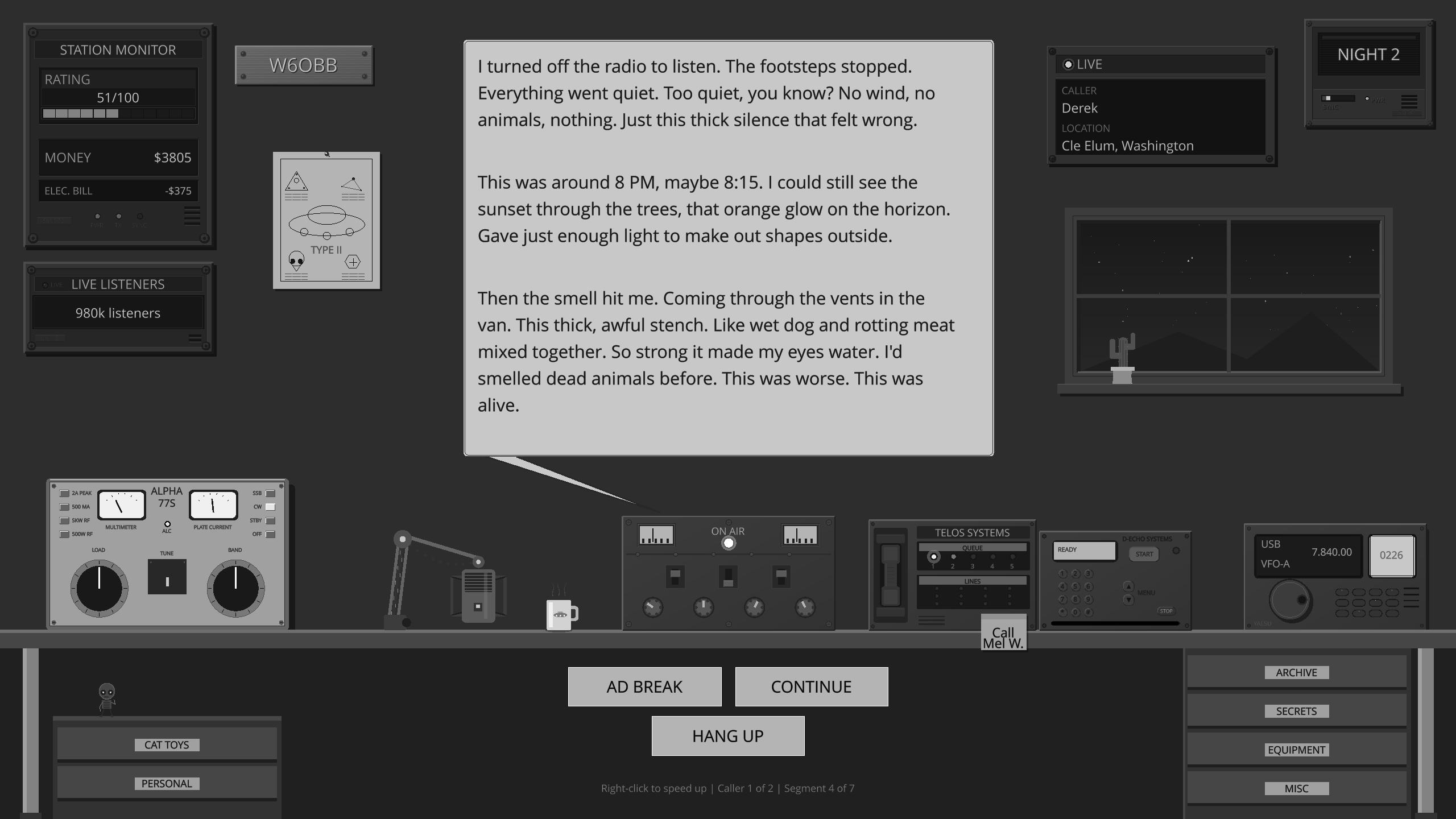
Ever wanted to host your own late-night paranormal radio show?
Across the Airwaves
You're on the air. Callers bring Mothman, Fresno Nightcrawlers, UFO sightings, reptilian autopsies, and whispers about AATIP and Project Blue Book. Every reply shapes how the night goes.

AI-Generated Summary
This book is a philosophical treatise by J. G. Bennett arguing that humanity's primary crisis is a lack of internal development and self-awareness. It posits that modern society keeps individuals in a 'mechanical' state, and that true progress requires conscious, intentional self-transformation.
This document is the Spanish translation of J. G. Bennett's work, 'What Are We Living For?', published by Librería Hachette S. A. in Argentina. The text serves as a philosophical critique of contemporary human society, focusing on the disparity between humanity's technological and material advancements and its lack of internal, moral, or spiritual development. Bennett argues that humans are largely 'mechanical' beings, driven by ego, social conditioning, and external pressures rather than genuine self-awareness or independent will. He contends that current educational systems and religious institutions fail to address the core problem of human existence, which is the need for a fundamental change in the 'being' of the individual. The author draws heavily on the ideas of Gurdjieff and Ouspensky, suggesting that the path to a meaningful existence involves moving beyond the 'animal' state of humanity. This requires a conscious, intentional effort to achieve self-observation and to break free from the automatic, conditioned responses that dictate human behavior. Bennett explores the concepts of 'being', the 'three brains' (or centers) of the human organism, and the necessity of developing a true 'I' or 'self' that is capable of independent judgment and action. He warns that without this internal transformation, humanity remains vulnerable to the cycles of destruction, war, and social manipulation. The book concludes that the current state of human affairs is a result of this failure to address the internal life, and that the only way to ensure a better future is through the development of individuals who are truly free and responsible, capable of acting with objective understanding rather than being mere products of their environment.
Aun no hemos llegado a ninguna reconciliación entre la historia y el pensamiento moderno, estamos únicamente a mitad de camino entre la historia y el pensamiento.
PDF not loading? Download the PDF directly
Official Assessment
The book argues that humanity is currently trapped in a state of mechanical existence, lacking true self-awareness or 'being'. It posits that modern education and social systems fail to develop the individual's capacity for independent thought or internal change, instead reinforcing egoism and external conditioning. The author suggests that true human progress requires a conscious effort to achieve internal transformation, moving beyond the limitations of the 'animal' nature to attain a higher state of being, often referencing the teachings of Gurdjieff and Ouspensky.
Key Persons
- Gabriela de CivinyTranslator
- Albert SchweitzerAuthor of quoted work
- GurdjieffPhilosophical influence
- Peter Damián OuspenskyPhilosophical influence