Declassified UFO / UAP Document
El Hombre, Dios y el Universo
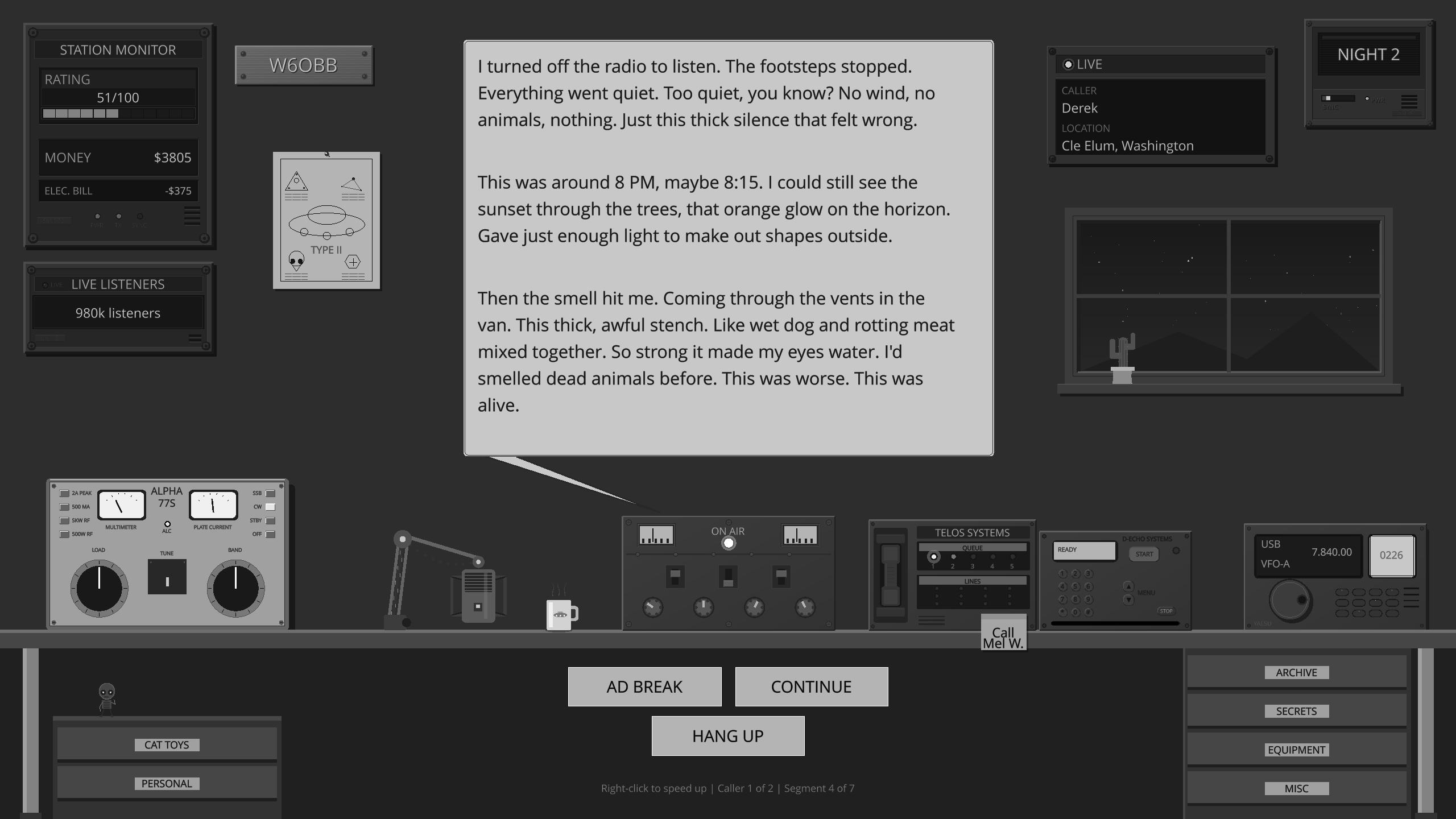
Ever wanted to host your own late-night paranormal radio show?
Across the Airwaves
You're on the air. Callers bring Mothman, Fresno Nightcrawlers, UFO sightings, reptilian autopsies, and whispers about AATIP and Project Blue Book. Every reply shapes how the night goes.
AI-Generated Summary
This document is a theosophical treatise by I.K. Taimni that argues for the synthesis of science, philosophy, and religion to understand the nature of reality. It posits that the material universe is a manifestation of a deeper, divine consciousness and that true knowledge is achieved through direct spiritual experience.
This document, titled 'El Hombre, Dios y el Universo' (Man, God and the Universe) by I.K. Taimni, published in 1979 by the Inter-American Theosophical Federation, serves as a philosophical and occult treatise. The author, a former chemistry professor at the University of Allahabad, seeks to bridge the gap between materialist science and spiritual philosophy. Taimni argues that the modern scientific worldview, while successful in technological and physical domains, is fundamentally incomplete and dangerous because it ignores the spiritual and mental dimensions of existence. He contends that the universe is not a random collection of atoms in a hostile environment, but a manifestation of a deeper, divine reality. The text is structured into various chapters that explore concepts such as the Absolute (Parabrahman), the Cosmic Logos, the nature of consciousness, the role of the Monad, and the relationship between the manifest and unmanifest worlds. Taimni emphasizes the necessity of an 'integral approach' to knowledge, suggesting that religion, philosophy, and science are complementary paths that must be synthesized. He criticizes the 'compartmentalization' of these fields, arguing that true understanding of the universe's mysteries requires direct experience, which he identifies with the practice of Yoga and the insights of occultism. Throughout the book, Taimni utilizes analogies from physics and mathematics—such as the dispersion of light through a prism, the properties of zero and infinity, and the nature of vibrations—to illustrate metaphysical concepts. He argues that these scientific phenomena are 'shadows' or reflections of higher, spiritual realities. A significant portion of the text is dedicated to the concept of 'Maya' (the Great Illusion), which Taimni defines not as the non-existence of the world, but as the incorrect perception of it. He asserts that the material world is a mental phenomenon, and that by purifying the mind and transcending intellectual limitations, one can perceive the underlying divine reality. The document also addresses the nature of the Monad, its origin in the divine, and its evolutionary journey through various planes of existence. Taimni maintains that the individual soul is eternal and retains its uniqueness even when reabsorbed into the Absolute during cosmic dissolution (Pralaya). The book concludes by reinforcing the idea that the ultimate goal of human existence is the realization of this divine nature, a process that requires patience, perseverance, and the abandonment of superficial, materialist pursuits. The text includes a glossary of Sanskrit terms to assist the reader in navigating the complex metaphysical terminology used throughout the work.
“En verdad, todo esto es Brahman”
PDF not loading? Download the PDF directly
Official Assessment
The document argues for an integral approach to understanding the universe, combining science, philosophy, and religion through the lens of occultism. It posits that the material world is a manifestation of a deeper, mental, and spiritual reality, and that true understanding requires direct experience rather than mere intellectual speculation.
Key Persons
- Roberto Jorge MinerviniTranslator
- BuddhaGreat soul/intellectual and spiritual colossus
- ChristGreat soul/intellectual and spiritual colossus
- ShankaracaryaGreat soul/intellectual and spiritual colossus
- PatanjaliGreat soul/intellectual and spiritual colossus
- Sri KrishnaReligious figure
- H. P. BlavatskyAuthor of The Secret Doctrine
- Sir James JeansScientist/Author
- A. BesantAuthor