Declassified UFO / UAP Document
Personnel Statements Regarding Japan Airlines Flight 1628 Incident
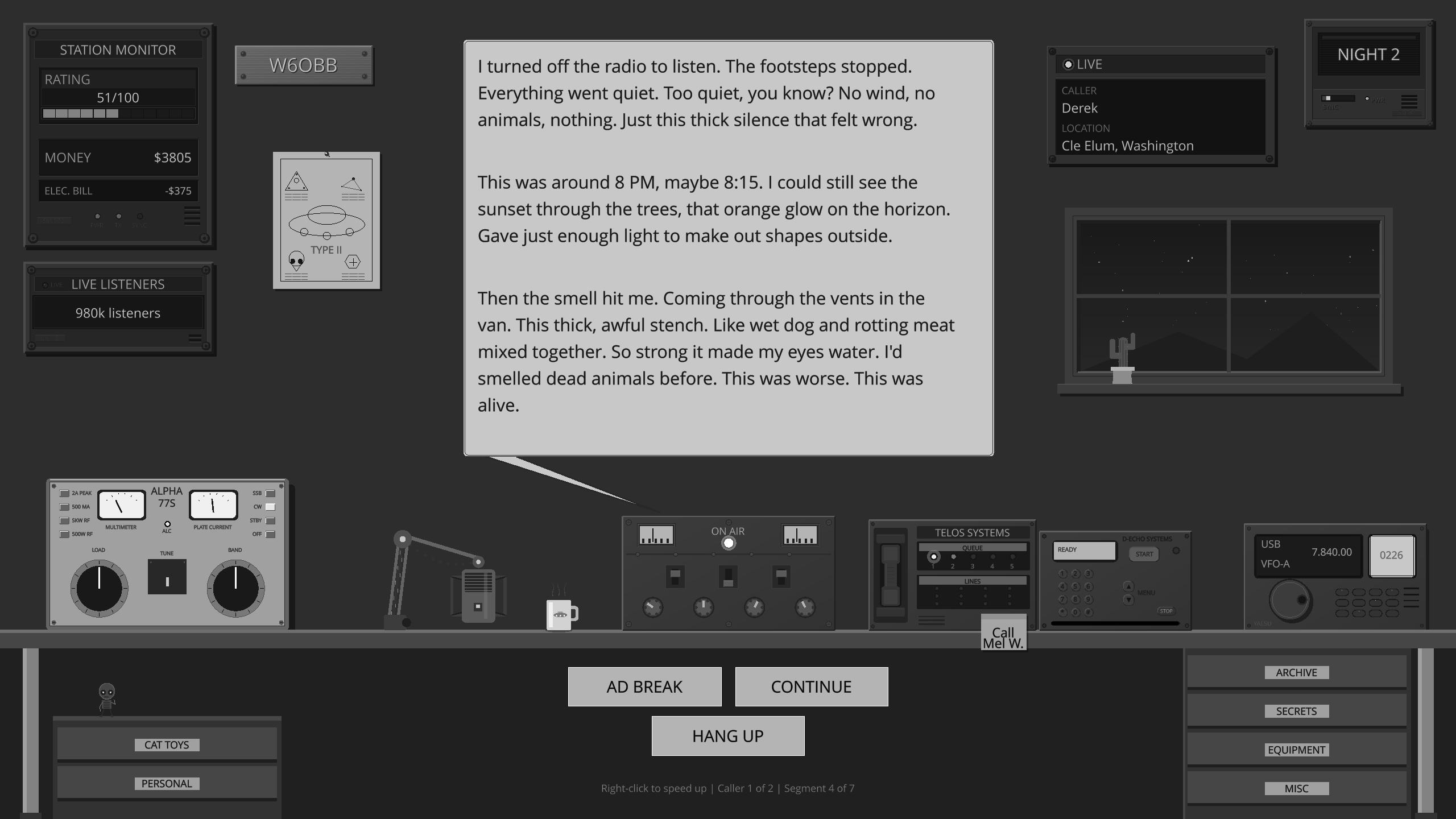
Ever wanted to host your own late-night paranormal radio show?
Across the Airwaves
You're on the air. Callers bring Mothman, Fresno Nightcrawlers, UFO sightings, reptilian autopsies, and whispers about AATIP and Project Blue Book. Every reply shapes how the night goes.
AI-Generated Summary
This document contains personnel statements from FAA controllers at the Anchorage ARTCC regarding an unidentified aerial phenomenon reported by Japan Airlines Flight 1628 on November 18, 1986. The reports detail conflicting observations of radar data and the attempts made by controllers to identify the object.
This document consists of a series of personnel statements from employees of the Federal Aviation Administration at the Anchorage Air Route Traffic Control Center (ARTCC). The statements were written in late 1986 and early 1987 regarding an incident involving Japan Airlines Flight 1628 (JL1628) that occurred on November 18, 1986. The pilot of JL1628 reported observing unidentified traffic at his altitude, described as a large aircraft with white and yellow strobe lights. The controllers on duty, including Carl E. Henley, Samuel J. Rich, and John L. Aarnink, reported varying experiences. Some controllers observed primary radar returns that appeared to correlate with the pilot's reports, while others, such as Joseph Rollins, Manfred F. Keller, and Anthony M. Wylie, stated that they did not observe conclusive radar data or could not find target information upon reviewing recorded data. The controllers coordinated with the Regional Operational Control Center (ROCC) and other aircraft in the vicinity to attempt to identify the traffic, but no positive identification was made. The pilot eventually lost visual contact with the object, and the ROCC lost radar contact shortly thereafter. The statements provide a detailed account of the operational procedures followed by the controllers during the event, including the use of radar, coordination with military authorities, and the subsequent internal review of radar data.
He could not identify but reported white and yellow strobes.
PDF not loading? Download the PDF directly
Official Assessment
Controllers reported conflicting observations regarding radar data; some observed primary targets while others found no target information upon review of recorded data.
Witnesses
- Carl E. HenleyAir Traffic Control SpecialistFederal Aviation Administration, Anchorage Air Route Traffic Control Center
- Samuel J. RichAir Traffic Control SpecialistFederal Aviation Administration, Anchorage Air Route Traffic Control Center
- John L. AarninkAir Traffic Control SpecialistFederal Aviation Administration, Anchorage Air Route Traffic Control Center
- Joseph RollinsArea SupervisorFederal Aviation Administration, Anchorage Air Route Traffic Control Center
- Erland D. StephensAir Traffic Control SpecialistFederal Aviation Administration, Anchorage Air Route Traffic Control Center
- Manfred F. KellerAutomations SpecialistFederal Aviation Administration, Anchorage Air Route Traffic Control Center
- Anthony M. WylieQuality Assurance SpecialistFederal Aviation Administration, Anchorage Air Route Traffic Control Center
Key Persons
- John Greenewald, Jr.Creator of The Black Vault