Declassified UFO / UAP Document
Project 10073 Record Card and Evaluation — Melville AS, Labrador, 5 August 1963
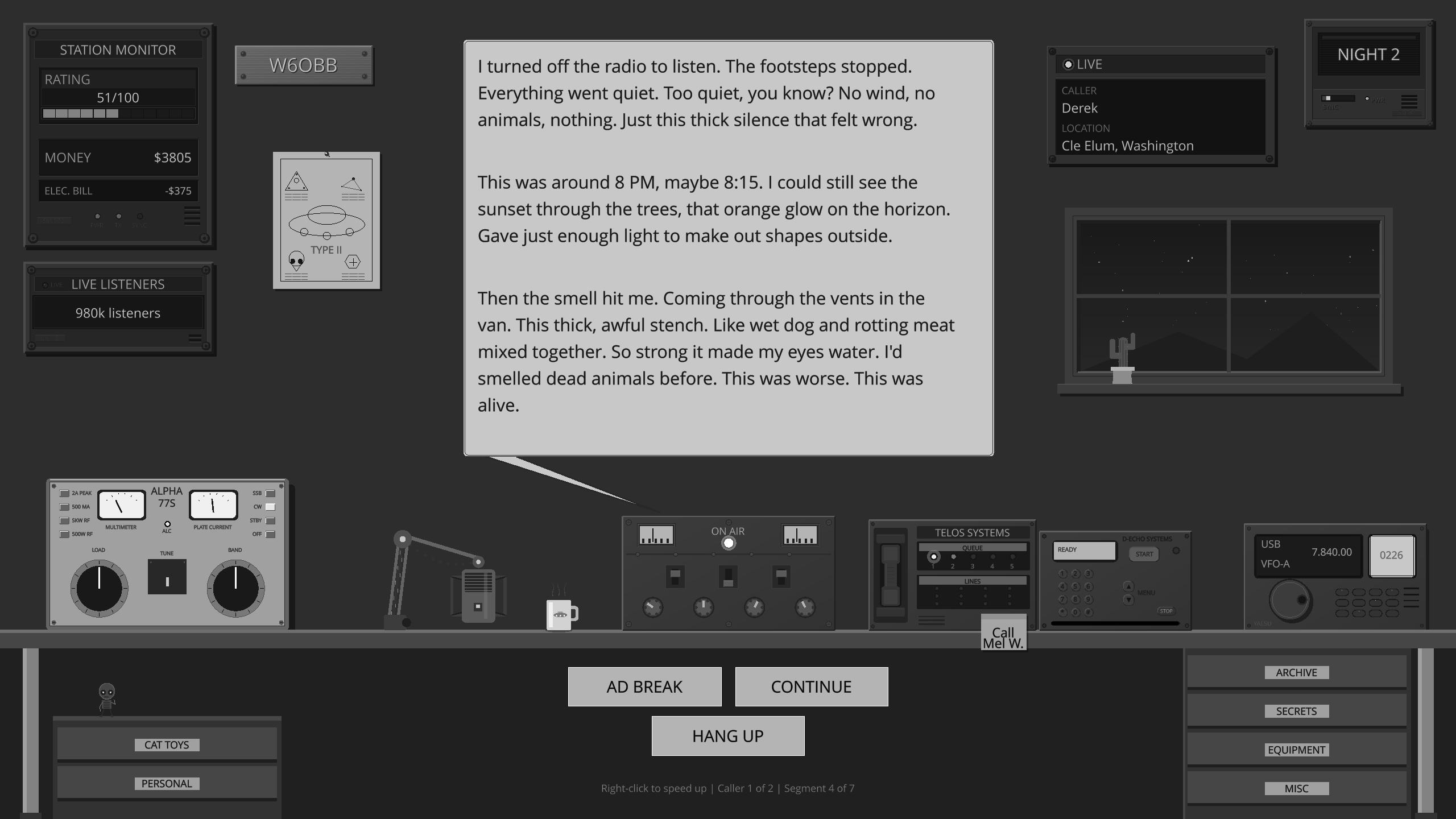
Ever wanted to host your own late-night paranormal radio show?
Across the Airwaves
You're on the air. Callers bring Mothman, Fresno Nightcrawlers, UFO sightings, reptilian autopsies, and whispers about AATIP and Project Blue Book. Every reply shapes how the night goes.
AI-Generated Summary
On August 5, 1963, radar at Melville AS, Labrador, tracked two unidentified objects for nearly 10 hours. Despite multiple intercept attempts by military aircraft, no visual contact was made, and the Foreign Technology Division concluded the objects were likely balloons carrying radar reflectors.
On August 5, 1963, at 1827Z, the 641st Aircraft Control and Warning Squadron at Melville Air Station, Labrador, detected two unidentified objects on radar. The objects were observed for 9 hours and 53 minutes. The radar returns indicated the objects were approximately two miles apart, with a size estimated at one-quarter that of a standard aircraft. The objects exhibited vertical movement, with altitudes fluctuating between 60,000 and 80,000 feet. Despite multiple attempts to intercept the objects using T-33 and F-106 aircraft, no visual contact was ever established. The 641st ACW Squadron forwarded radar scope negatives and photographs to the Foreign Technology Division at Wright-Patterson Air Force Base for evaluation. Vincent D. Bryant of the Foreign Technology Division concluded that the most logical explanation for the radar returns was a balloon, possibly equipped with a radar corner reflector. The report notes that such a balloon could have traveled hundreds of miles and that its small lateral movement and altitude variations were consistent with balloon behavior. The report further suggests that if the balloon were small and silver or transparent, it would be nearly impossible to see visually from a high-speed aircraft, yet it would be easily detected by radar. The evaluation explicitly ruled out equipment malfunction, as multiple radars displayed the same target, and deemed anomalous propagation unlikely. The documentation includes the original Project 10073 record card, correspondence from Major Donald T. Evans, and a photo service request for the processing of 11 negatives and 24 photographs.
From the activity of the target it appears that the most logical explanation is a balloon, possibly carrying a radar corner reflector.
PDF not loading? Download the PDF directly
Official Assessment
From the activity of the target it appears that the most logical explanation is a balloon, possibly carrying a radar corner reflector.
The target was likely a balloon with a radar corner reflector. It was not visually identified despite multiple intercept attempts by T-33 and F-106 aircraft. The lack of visual contact made it impossible to state with certainty what caused the radar returns, but the altitude and movement were consistent with a balloon.
Witnesses
- James E. CraveyA1C641 ACW Squadron
Key Persons
- Donald T. EvansMajor, Assistant Operations Officer
- QuintanillaCapt