Declassified UFO / UAP Document
UFO Reports by Time of the Day
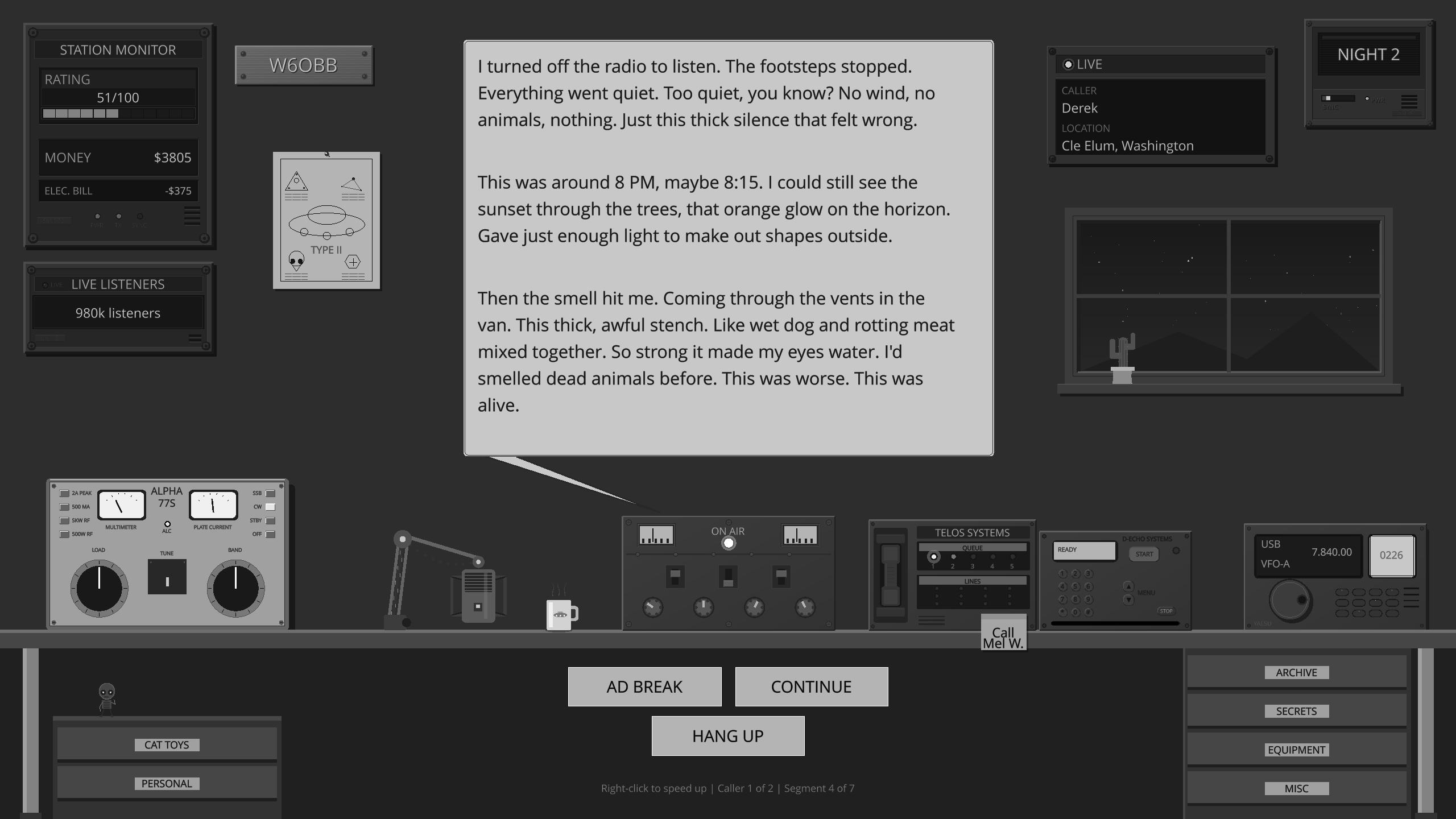
Ever wanted to host your own late-night paranormal radio show?
Across the Airwaves
You're on the air. Callers bring Mothman, Fresno Nightcrawlers, UFO sightings, reptilian autopsies, and whispers about AATIP and Project Blue Book. Every reply shapes how the night goes.

AI-Generated Summary
This paper analyzes the temporal distribution of UFO reports, finding a consistent 'law of the times' pattern that peaks in the evening. The author concludes this pattern is primarily driven by sociological factors rather than the nature of the phenomenon itself.
This document, authored by V.J. Ballester Olmos, presents a statistical analysis of UFO and IFO (Identified Flying Object) reports distributed by time of day, utilizing data from the FOTOCAT collection and comparing it with other datasets such as ALLCAT, CUCO, and catalogs by Jacques Vallee and Larry Hatch. The author examines the 'law of the times,' a recurring pattern in UFO landing reports characterized by a minimum rate of cases between 5 AM and 5 PM, a marked increase during evening hours peaking between 9 and 10 PM, and a secondary peak observed between 2 and 3 AM.
Through the comparison of various catalogs, the author demonstrates that this temporal distribution is remarkably consistent across different datasets, regardless of the geographic scope or the specific nature of the reports (landings versus all-category sightings). The author argues that this consistency is largely driven by sociological factors, specifically the daily routines of the working population. By overlaying a graph of the working population at home, the author illustrates that the dramatic drop in reporting coincides with hours when people are indoors and sleeping.
The paper concludes that the observed patterns in UFO studies are heavily influenced by the internal quality and size of the samples used. The author suggests that the 'law of the times' is not a specific characteristic of the phenomenon itself, but rather a reflection of human observation and reporting habits. The author emphasizes the need for building wide, reliable databases to better test theories and search for patterns, noting that the time-of-the-event is universal, objective information that warrants further study, including potential correlations with sidereal time and other astronomical magnitudes.
Apparently, it is the available number of reports-not their nature-that is the important factor in the mutual resemblance of resulting curves.
PDF not loading? Download the PDF directly
Official Assessment
The author concludes that the time distribution of UFO reports is heavily influenced by sociological factors, such as the working population's schedule, rather than being purely indicative of the phenomenon's nature. Statistical analysis shows a consistent pattern of reports peaking in the evening hours (8-10 PM) and a secondary peak around 2 AM, which appears across various datasets regardless of whether the reports are explained or unexplained. The author suggests that the similarity between curves in different datasets is more dependent on sample size than on the specific nature of the reports.
Key Persons
- Julio Plaza del OlmoContributor/Acknowledged
- Juan P. GonzálezContributor/Acknowledged
- Isaac KoiContributor/Acknowledged
- Martin ShoughContributor/Acknowledged
- J. Allen HynekAuthor cited
- Jacques ValleeAuthor cited
- Claude PoherAuthor cited
- Miguel GuaspAuthor cited
- Eric GregorAuthor cited
- Henri TickxAuthor cited
- J.A. Fernández PerisAuthor cited
- J.A. Cezón AlonsoAuthor cited
- Peter A. SturrockAuthor cited
- Massimo TeodoraniAuthor cited