Declassified UFO / UAP Document
COLLECTED IMAGERY AND CLASSIFICATION OF UAP SHAPES
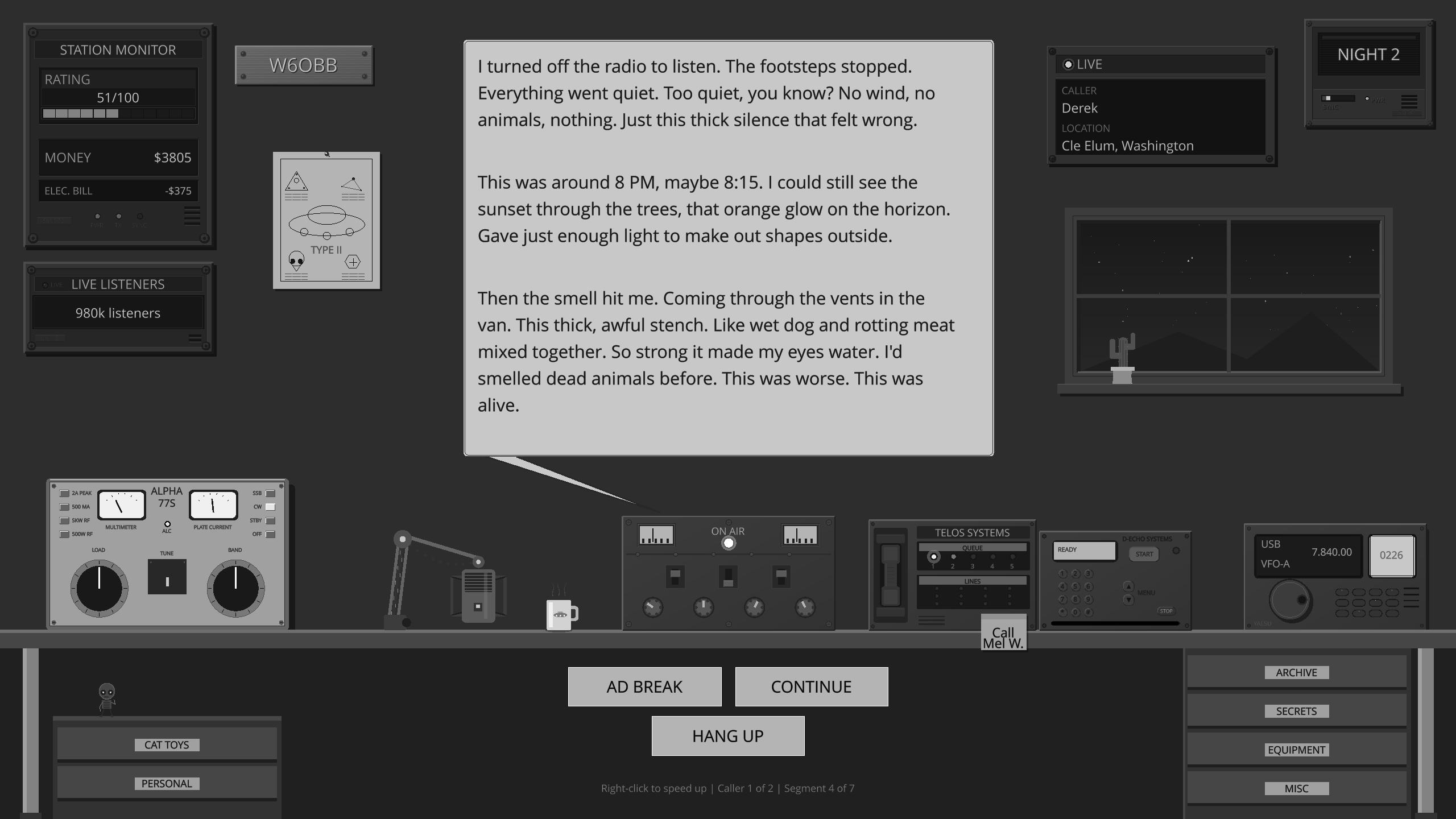
Ever wanted to host your own late-night paranormal radio show?
Across the Airwaves
You're on the air. Callers bring Mothman, Fresno Nightcrawlers, UFO sightings, reptilian autopsies, and whispers about AATIP and Project Blue Book. Every reply shapes how the night goes.

AI-Generated Summary
This document is a 2000 DIS working paper that establishes a classification system for UAP shapes based on historical imagery. It serves as a reference tool to help analysts distinguish between explainable and inexplicable aerial phenomena.
This document, titled 'Collected Imagery and Classification of UAP Shapes' and designated as Working Paper No. 11 under DIS Scientific & Technical Memorandum 55/2/00, dated January 26, 2000, provides a structured framework for categorizing Unidentified Aerial Phenomena (UAP). The primary objective of this compilation is to establish a reference and correlation catalogue to assist in distinguishing explainable events from those that remain inexplicable. The authors emphasize that the material is sourced from a variety of origins, including news reports, photography, and video records. The document outlines a classification system based on visual shapes, including spheres (which encompass 'BOLs' and multiple spherical lights), discs, cigars, star/point objects, ovals, and complex geometric shapes like triangles, pyramids, cones, rectangles, and cylinders. It also notes the existence of boomerang or arc-shaped phenomena. The paper acknowledges that the advent of personal video cameras has provided more source material, though it cautions that many reports are purely descriptive and lack the necessary data—such as angles, sizes, sounds, smells, or velocities—required for rigorous analysis. The document includes a series of figures (1 through 36) illustrating various UAP sightings from locations including Kent, UK (1993), Mexico (1991), Lowestoft (1997), the Gulf of Mexico (featuring an F15 aircraft), France (1974), Lake Coniston, England (1954), Japan (1958), Australia (1972), Austria (1971), and Oregon, USA (1950). The document concludes that while shape and light patterns serve as an initial filter, they are only the first step in a broader analytical process described in other working papers within the same volume.
As can be seen (Vol. 1 Tables 1 and 2) certain combinations of shapes and lights can be attributed to definite causes. Shapes and lights are the initial key to filtering the known from the inexplicable.
PDF not loading? Download the PDF directly
Official Assessment
The document serves as a reference catalogue for UAP shapes to assist in filtering explainable phenomena from the inexplicable. It notes that shapes and lights are the initial key to filtering reports, though little is gained from purely descriptive reports without additional data such as imagery, multiple witness correlation, or physical measurements.