Declassified UFO / UAP Document
UFOs: What to Do?
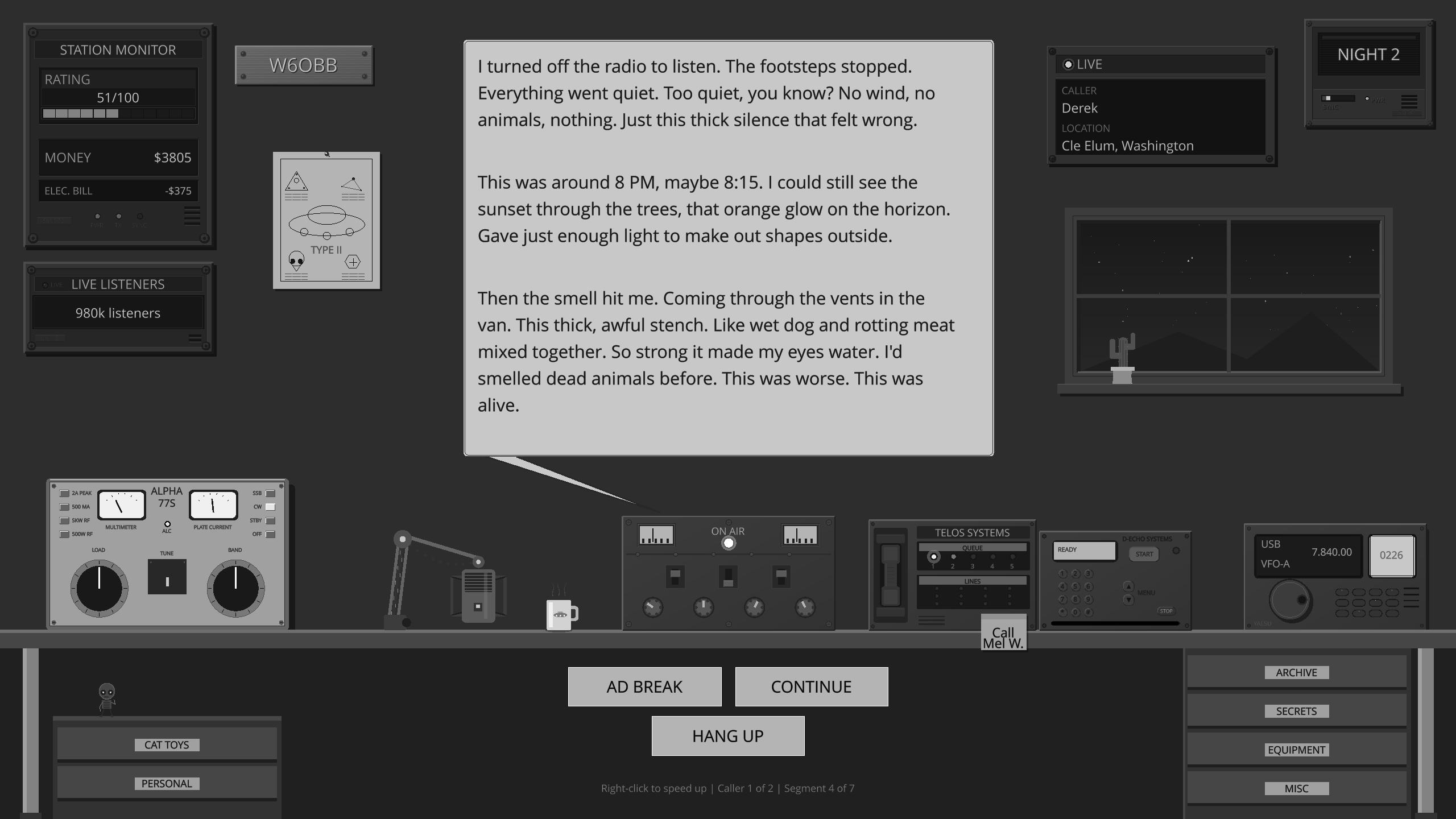
Ever wanted to host your own late-night paranormal radio show?
Across the Airwaves
You're on the air. Callers bring Mothman, Fresno Nightcrawlers, UFO sightings, reptilian autopsies, and whispers about AATIP and Project Blue Book. Every reply shapes how the night goes.
AI-Generated Summary
This 1968 RAND Corporation paper by George Kocher argues that UFOs are a legitimate subject for scientific inquiry. It provides a historical and phenomenological overview of the phenomenon and proposes a structured system for future data collection and investigation.
This document, titled 'UFOs: What to Do?' and authored by George Kocher for the RAND Corporation in November 1968, serves as a comprehensive overview of the UFO phenomenon from a scientific perspective. The paper is structured into five parts: historical aspects, astronomical aspects, the character of reports, phenomenological aspects, and a final section on how to proceed. Kocher begins by noting that despite 22 years of public interest, little progress has been made in understanding UFOs, largely due to misinformation and a lack of rigorous scientific study. He adopts J. A. Hynek's definition of a UFO as a reported aerial or radar return that remains unexplained after examination by competent persons.
In the historical section, Kocher argues that UFO reports are not a modern invention, citing historical documents and sightings dating back to 1917 and earlier. He discusses the modern era beginning with Kenneth Arnold in 1947 and the subsequent Air Force investigative efforts. Kocher is critical of the Air Force and CIA's handling of the subject, suggesting that official policy often aimed to debunk reports rather than investigate them, which led to the formation of civilian groups like NICAP. He also discusses the Condon Committee study at the University of Colorado, expressing hope that it would bring scientific respectability to the field.
In the astronomical section, Kocher explores the statistical likelihood of extraterrestrial life, concluding that it is highly probable that advanced civilizations exist and that interstellar travel may be possible, even if it currently exceeds our understanding of physics. The report then details the character of UFO reports, providing several case studies, including sightings in Pennsylvania, Illinois, and California. Kocher emphasizes that while many reports are 'noise,' a significant percentage (5-20%) are highly credible and warrant serious investigation. He details the phenomenological aspects, noting common shapes (discs, spheres, cigars) and behaviors (erratic movement, high acceleration, and electromagnetic interference).
Finally, Kocher proposes a plan for future study. He suggests that the transient nature of UFOs requires a responsive, central reporting agency staffed by experienced investigators who can be dispatched to 'flap' areas. He advocates for the use of existing sensor records, the encouragement of accurate press reporting, and the involvement of local scientists. The document concludes that the UFO phenomenon is a legitimate scientific problem that, if identified, could have profound implications for society.
Common sense is the quintessence of the experiences and prejudices of its time. It is a most unreliable advisor when one is confronted with a perfectly new situation.
PDF not loading? Download the PDF directly
Official Assessment
The author argues that UFOs are a legitimate subject for scientific inquiry, noting that while many reports are noise, a subset of high-quality reports suggests the presence of anomalous, machine-like objects that defy current physical theory.
Witnesses
- J. A. Gasslein, Jr.Lt. Colonel, USAR Ret.
- P. T. Scattergood
- Mrs. Olavick
- Mrs. Down
- Jay Mungeroperator of an all-night bowling alley
- James OvertonCorning force
- Frank RakesOrland force
- Paul Heideman
- Robert King
- Mrs. A
- Mrs. B
Key Persons
- J. A. HynekAstronomer and consultant to the Air Force
- E. U. CondonPhysicist leading the University of Colorado study
- James E. McDonaldAtmospheric physicist