Declassified UFO / UAP Document
UFOs: What to Do?
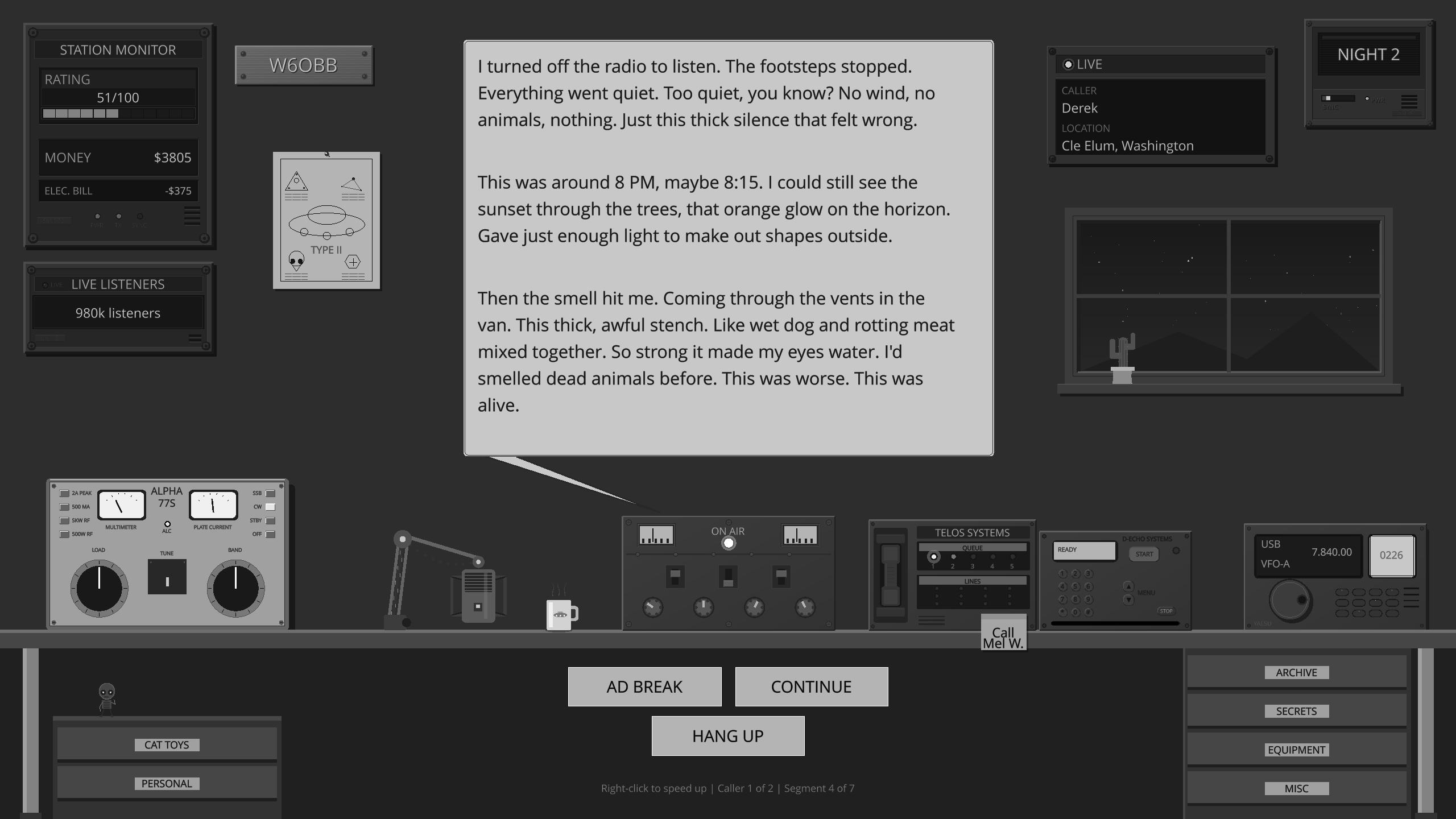
Ever wanted to host your own late-night paranormal radio show?
Across the Airwaves
You're on the air. Callers bring Mothman, Fresno Nightcrawlers, UFO sightings, reptilian autopsies, and whispers about AATIP and Project Blue Book. Every reply shapes how the night goes.
AI-Generated Summary
This 1968 RAND paper by George Kocher argues that UFOs are a legitimate subject for scientific inquiry, citing the existence of unexplained, machine-like reports. It advocates for a centralized, rigorous data collection and analysis system to move beyond anecdotal evidence.
This document, titled 'UFOs: What to Do?' and authored by George Kocher for RAND in November 1968, serves as an analytical overview of the Unidentified Flying Object (UFO) phenomenon. The paper is structured into five parts, covering historical aspects, astronomical considerations, the character of reports, phenomenological aspects, and recommendations for future study. Kocher begins by adopting a definition of UFOs based on J. A. Hynek's work, focusing on observations that remain unexplained after competent examination. He argues that while many reports are misidentifications or noise, a significant subset of sightings—estimated at 5 to 20 percent—exhibits extraordinary, machine-like characteristics that defy conventional explanation.
In the historical section, the author notes that UFO sightings are not a modern invention but have been documented throughout history, often interpreted through religious lenses, such as the 1917 Fatima event. He discusses the modern era of sightings, beginning with Kenneth Arnold in 1947, and the subsequent involvement of the U.S. Air Force and the CIA. Kocher is critical of the official handling of the subject, suggesting that the CIA's 1953 recommendation to 'debunk' UFO reports to discourage public interest led to a lack of serious scientific investigation.
Regarding astronomical aspects, Kocher explores the statistical likelihood of extraterrestrial life, concluding that it is highly probable that advanced civilizations exist in the galaxy. He challenges the 'speed of light' limitation as a barrier to interstellar travel, suggesting that if such a restriction can be circumvented, it has likely already been achieved by other civilizations.
Kocher provides detailed case studies of specific sightings, including reports from Pennsylvania, Tucson, and California, to illustrate the 'character of reports' and the importance of quantitative data. He highlights the role of civilian organizations like NICAP in collecting and analyzing these reports. The phenomenological section categorizes UFOs by shape (discs, spheres, ovals, etc.), color, and behavior, noting that erratic, high-velocity maneuvers are the most difficult to explain with current physical theory. He also discusses environmental interactions, such as electromagnetic disturbances and physiological effects on witnesses.
In his final recommendations, Kocher advocates for a more rigorous, scientific approach to the subject. He proposes the creation of a central, accessible reporting agency, the involvement of qualified scientists in local investigations, and the systematic analysis of sensor data to identify patterns and predict future appearances. He concludes that the subject is finally being regarded as a legitimate area of scientific inquiry and that the potential value to society of identifying the phenomenon is of the highest urgency.
Common sense is the quintessence of the experiences and prejudices of its time. It is a most unreliable advisor when one is confronted with a perfectly new situation.
PDF not loading? Download the PDF directly
Official Assessment
The author argues that UFOs are a fit subject for scientific inquiry and that current reports, particularly those involving machine-like behavior, warrant serious investigation.
Witnesses
- J. A. Gasslein, Jr.Lt. Colonel, USAR Ret.
- P. T. Scattergood
- Mrs. Olavick
- Mrs. Down
- Jay Mungeroperator of an all-night bowling alley
- James OvertonCorning force
- Frank RakesOrland force
- Paul Heideman
- Robert King
- Mrs. A
- Mrs. B
Key Persons
- J. A. HynekAstronomer and UFO researcher
- Gustav NaanQuoted author
- B.L.P. TrenchResearcher
- Dr. A. GarrettScientist at University of Coimbra
- C. G. JungPsychologist
- Kenneth ArnoldSighting witness
- BloecherResearcher
- E. U. CondonPhysicist, leader of Condon Committee
- James E. McDonaldAtmospheric physicist
- Jean CocteauQuoted author
- LaplaceQuoted author