Declassified UFO / UAP Document
The “Tomato Man” in Retrospective
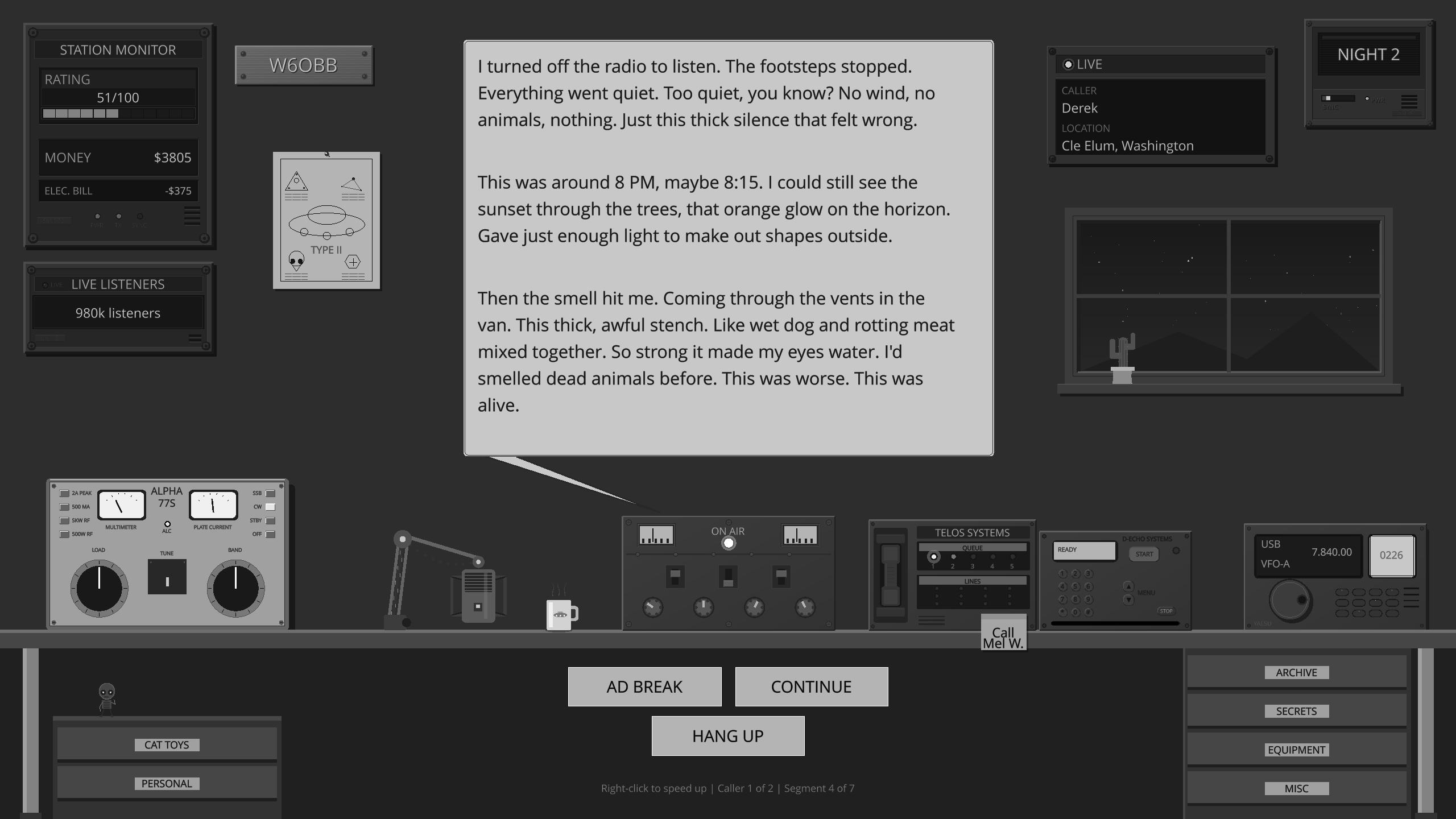
Ever wanted to host your own late-night paranormal radio show?
Across the Airwaves
You're on the air. Callers bring Mothman, Fresno Nightcrawlers, UFO sightings, reptilian autopsies, and whispers about AATIP and Project Blue Book. Every reply shapes how the night goes.
AI-Generated Summary
The document analyzes the 'Tomato Man' case, where photographs of a burned body were falsely presented as an alien recovery from a 1948 UFO crash. Investigations by various groups concluded the images were either a burned laboratory monkey or a human accident victim, exposing the case as a hoax.
This document, authored by V.J. Ballester-Olmos, provides a retrospective analysis of a controversial set of photographs known as the 'Tomato Man' case. The story originated in late 1980 when the Coalition of Concerned Ufologists—comprising MARCEN, UFOIN, and OUFOIL—published a report claiming to possess photographs of an alien body recovered from a 1948 UFO crash in Mexico. The narrative, provided by an anonymous source, alleged that a Navy photographer had documented the crash of a 90-foot disc and the recovery of a small, burned humanoid body. The Coalition initially promoted these images as authentic, citing analyses by Eastman Kodak and others to support their claims. However, the case quickly became a source of intense debate within the ufological community. Ground Saucer Watch (GSW) conducted an independent analysis, concluding that the images actually depicted a badly burned laboratory monkey, likely used in U.S. military rocket tests. This conclusion was met with hostility by the Coalition, who accused GSW of manipulating evidence to fit a mundane theory. Further investigations by other groups, including the Scientific Bureau of Investigation (SBI) and an internal review by OUFOIL, cast significant doubt on the Coalition's claims. OUFOIL, in particular, released a 53-page report identifying numerous flaws in the original story, including the impossibility of the radar tracking claims, the incorrect uniform worn by the officer in the photos, and the lack of evidence for the alleged source. Experts from the Shriners Hospital for Crippled Children suggested the photos showed a human accident victim. Ballester-Olmos concludes that the entire affair was a hoax or a misidentification of a mundane accident, fueled by the 'pitiful eagerness of belief' among ufologists. He highlights the irony that the recipients of the photos, despite initial skepticism, abandoned rational evaluation in favor of an unverified, sensationalist narrative. The document serves as a cautionary tale regarding the lack of critical rigor in UFO research and the ease with which fabricated stories can be propagated.
Little did we know or visualize the explosion that would really come or who would detonate it.
PDF not loading? Download the PDF directly
Official Assessment
The photographs depict a human accident victim, likely from a plane or motorcycle crash, misidentified as an alien.
The photographs were part of a hoax or misinterpretation; the 'alien' is likely a human accident victim or a laboratory monkey used in rocket tests.
Key Persons
- Williard McIntyreLeader of the Coalition of Concerned Ufologists
- Dennis PilichisLeader of the UFO Information Network (UFOIN)
- Charles J. WilhelmLeader of the Ohio UFO Investigators League (OUFOIL)
- William H. SpauldingGround Saucer Watch (GSW) report signer
- Leonard H. StringfieldUfologist and author
- Timothy Green BeckleyFounder of OUFOIL
- Andrés DuarteConsulting expert