Declassified UFO / UAP Document
Are UFOs from Outer Space?
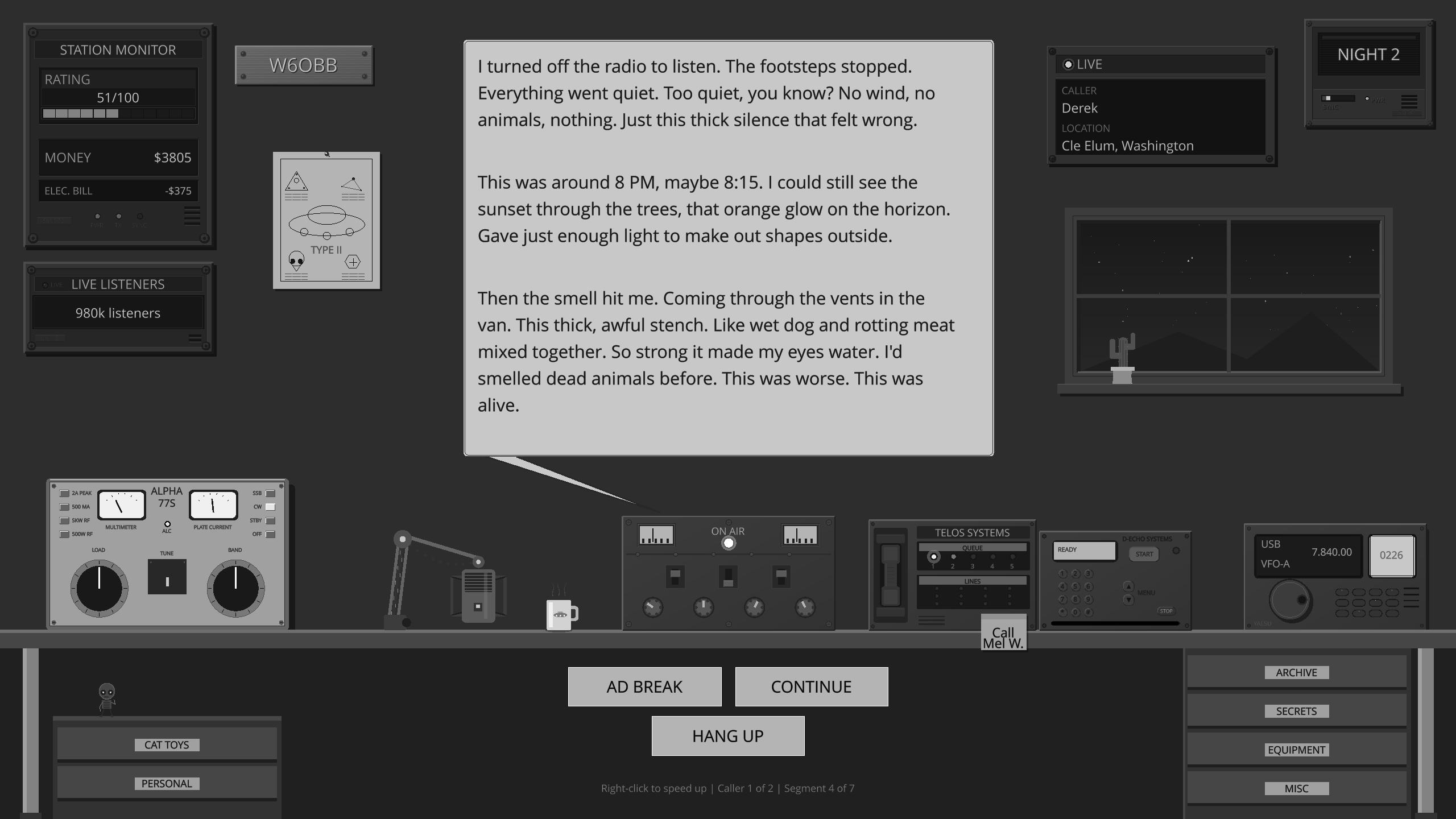
Ever wanted to host your own late-night paranormal radio show?
Across the Airwaves
You're on the air. Callers bring Mothman, Fresno Nightcrawlers, UFO sightings, reptilian autopsies, and whispers about AATIP and Project Blue Book. Every reply shapes how the night goes.
AI-Generated Summary
This document is a chapter from the 1980 'Proceedings of the First International UFO Congress' written by Frank B. Salisbury. It provides a critical analysis of the scientific methods used to investigate UFO sightings, challenging both the extraterrestrial hypothesis and the dismissive tactics of prominent skeptics.
This document is a chapter titled 'Are UFOs from Outer Space?' by Frank B. Salisbury, published in the 1980 compilation 'Proceedings of the First International UFO Congress.' Salisbury, a scientist, explores the scientific validity of the extraterrestrial hypothesis regarding Unidentified Aerial Phenomena (UAP). He begins by discussing the difficulty of proving or disproving the hypothesis, noting that skeptics often attempt to 'solve' cases by dismissing evidence that does not fit their preferred explanations. He cites several examples, including the planet Venus being mistaken for a UFO, and the Mantell skyhook balloon incident, to illustrate how some sightings have prosaic explanations. However, he also examines more complex cases, such as the Travis Walton incident in Snowflake, Arizona, and sightings in the Uintah Basin, which he finds more difficult to dismiss as simple hoaxes or misidentifications. Salisbury critiques prominent UFO skeptics like Philip Klass, Donald Menzel, and Ernest Taves, arguing that their approach of declaring cases as hoaxes based on perceived motives is unscientific and often ignores contradictory evidence, such as polygraph results. He also touches upon the 'contactee' phenomenon, referencing figures like George Adamski and Antonio Villas-Boas, and expresses skepticism toward their claims. Throughout the text, Salisbury maintains a balanced, albeit cautious, perspective. He admits that he is not convinced that UFOs are extraterrestrial machines, but he is equally unconvinced by the dismissive 'debunking' methods employed by some researchers. He concludes that while science should be applied to the study of UFOs, the current data is insufficient to reach a definitive conclusion, and the phenomenon remains a complex, frustrating, and potentially profound mystery that requires more rigorous and open-minded investigation.
Often the most rewarding thing science can do in relation to any hypothesis is to try to disprove it. If this succeeds, the hypothesis then probably can be restated in a form that comes closer to the truth.
PDF not loading? Download the PDF directly
Official Assessment
The author argues that while many UFO cases can be explained as misidentified natural phenomena (like Venus or weather balloons), some cases remain unexplained and defy simple debunking. He expresses skepticism toward both the 'extraterrestrial machine' hypothesis and the 'hoax' explanations provided by skeptics like Philip Klass.
Key Persons
- Philip KlassUFO skeptic/investigator
- Donald MenzelUFO skeptic/investigator
- Ernest TavesUFO skeptic/investigator
- Alistair B. FraserResearcher/Author
- Lawrence CoyneCaptain
- William MarkowitzAuthor/Scientist
- Garrett HardinAuthor
- Carl SaganScientist
- Joseph Junior HicksUintah Basin UFO researcher
- John KeelAuthor
- George AdamskiContactee
- Antonio Villas-BoasContactee