Declassified UFO / UAP Document
THE RELIGIOUS DIMENSION TO THE UFO PHENOMENON
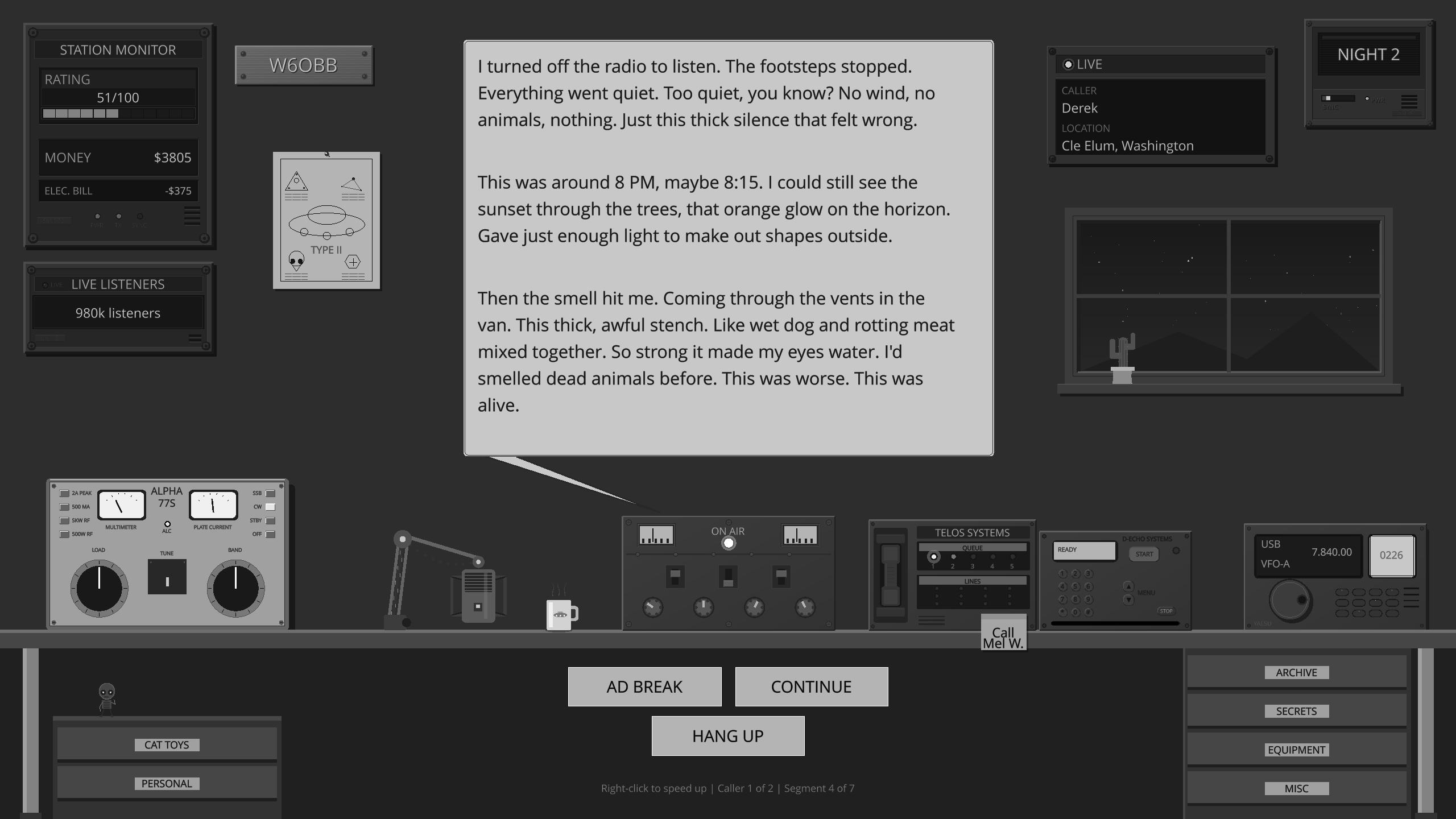
Ever wanted to host your own late-night paranormal radio show?
Across the Airwaves
You're on the air. Callers bring Mothman, Fresno Nightcrawlers, UFO sightings, reptilian autopsies, and whispers about AATIP and Project Blue Book. Every reply shapes how the night goes.
AI-Generated Summary
This paper analyzes the UFO phenomenon as a modern religious symbol system, categorizing it into four themes: transcendence, omniscience, perfection, and redemption. The author argues that while UFOs may be objectively real, they are being used as a surrogate for traditional religious faith, creating a risk of 'ufolatry'.
In this 1979 MUFON Symposium paper, Ted Peters explores the intersection of the UFO phenomenon and religious belief. Peters posits that UFOs have become a repository for religious symbolism in a modern, secularized society that has lost its traditional sense of wonder. He identifies four primary religious dimensions associated with UFOs: transcendence, omniscience, perfection, and redemption. Regarding transcendence, Peters notes that the sky has historically been associated with the divine, and UFOs, by traversing the 'infinity' of outer space, inherit this sacred quality. In terms of omniscience, he discusses how UFO witnesses often report that extraterrestrials possess intimate, god-like knowledge of human lives, citing accounts from figures like Charles Hickson, George Adamski, and Daniel Fry. The concept of perfection is linked to the circular shape of flying saucers—which Peters relates to the archetypal mandala—and the assumption that technologically advanced extraterrestrials must also be morally superior. Finally, he addresses the theme of redemption, noting that UFOs are often viewed as potential saviors that could rescue humanity from nuclear catastrophe or environmental collapse, a theme he observes in both contactee literature and popular culture, such as the film 'Close Encounters of the Third Kind'. Peters argues that these identifications are often superficial, but he acknowledges that the UFO phenomenon resonates with deep-seated human needs. He concludes by cautioning against 'ufolatry,' or the elevation of technology and extraterrestrials to the status of gods, which he argues violates the First Commandment and distracts from the true source of spiritual fulfillment. He also addresses the theological implications of extraterrestrial life, noting that many prominent theologians, including Catholics and Protestants, do not see a fundamental conflict between the existence of extraterrestrial life and traditional Christian doctrine.
The UFO is mysterious and majestic. It humbles us by reminding us of our earthbound limitations, of our inadequacies, of our finitude.
PDF not loading? Download the PDF directly
Official Assessment
The author argues that the UFO phenomenon functions as a covert system of religious symbols, specifically evoking transcendence, omniscience, perfection, and redemption. He suggests that while UFOs may be objectively real, they are being used as a surrogate for traditional religious faith in a secularized society, leading to a potential risk of 'ufolatry'.
Key Persons
- Andrew GreeleySociologist
- Carl JungPsychoanalyst
- Carl SaganCornell University exobiologist
- Charles HicksonFisherman
- George AdamskiUFO contactee
- Daniel FryUFO contactee
- Orfeo AngelucciUFO contactee
- Billy GrahamEvangelist
- Howard MengerUFO contactee
- R.L. DioneUFO speculator
- HukarSuperterrestrial
- John C. HoffmanEarthling
- Steven SpielbergFilm director
- Francis J. ConnellFormer dean of the School of Sacred Theology at the Catholic University of America
- L. C. McHughJesuit journalist
- + 2 more in document