Declassified UFO / UAP Document
LES RAPPORTS D'OBSERVATION D'OVNI CORRESPONDENT A DES OBSERVATIONS REELLES ET NON A DES PHENOMENES IMAGINAIRES
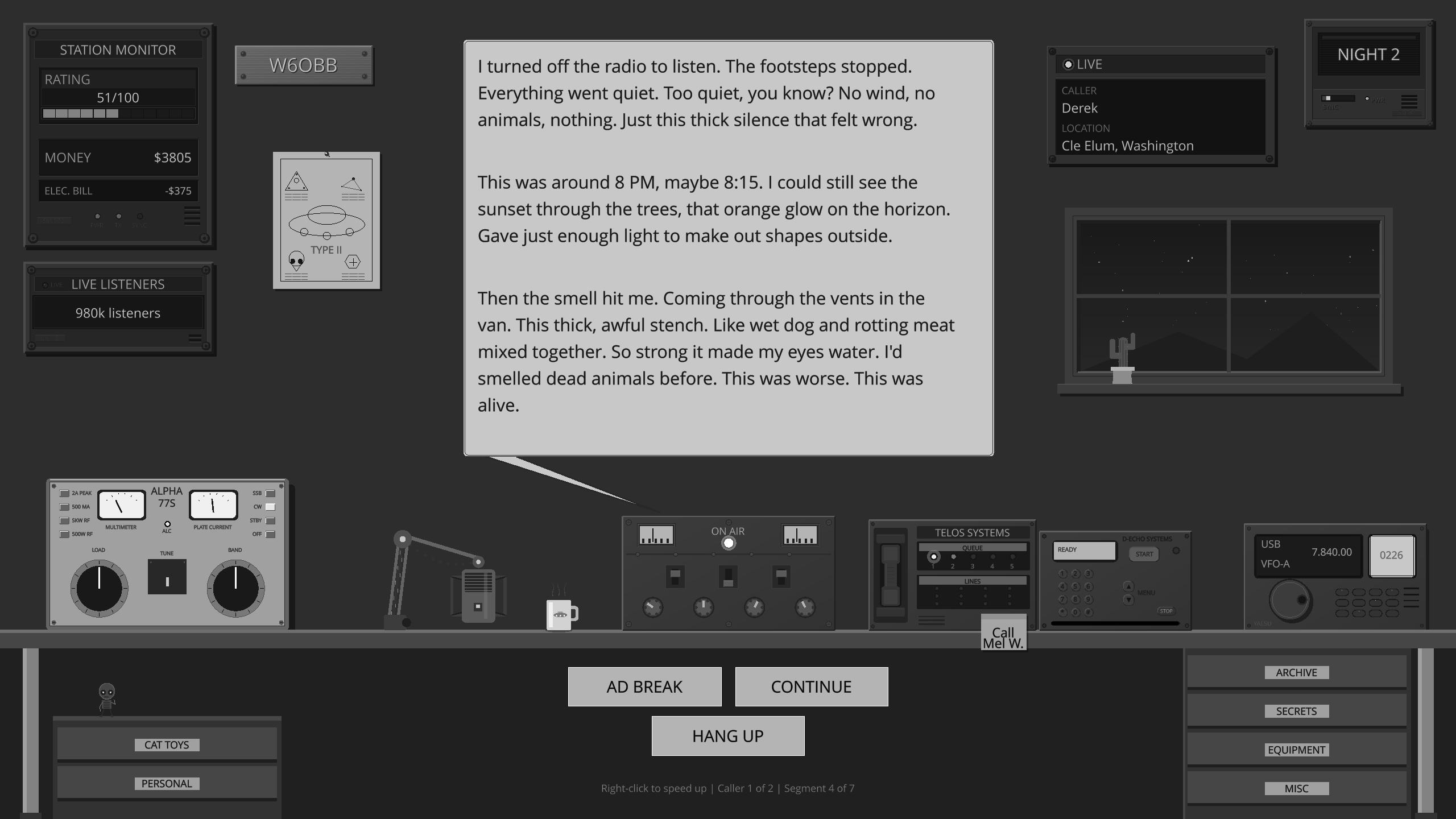
Ever wanted to host your own late-night paranormal radio show?
Across the Airwaves
You're on the air. Callers bring Mothman, Fresno Nightcrawlers, UFO sightings, reptilian autopsies, and whispers about AATIP and Project Blue Book. Every reply shapes how the night goes.

AI-Generated Summary
This G.E.P.A.N. report uses statistical modeling to argue that UFO reports in France are based on real physical objects. The author demonstrates that reporting rates correlate with population density and meteorological visibility, supporting the conclusion that UFOs are not imaginary.
This technical report, authored by Claude Poher of the G.E.P.A.N. (Groupe d'Étude des Phénomènes Aérospatiaux Non-identifiés) at the Centre National d'Études Spatiales in Toulouse, dated June 23, 1977, presents a statistical analysis aimed at validating the reality of UFO observations. Poher begins by referencing the Condon Report, specifically the work of Dr. W.K. Hartmann, regarding the correlation between the number of people overflown and the number of reports received during satellite re-entries. Poher adapts this model to UFO reports in France, proposing a 'social law' represented by the equation NR = (P x T) / 700,000, where NR is the number of reports, P is the population in the visible area, and T is the duration of the phenomenon in seconds. Through this model, Poher argues that if UFOs were not real objects, the reporting patterns would not align with population density and meteorological conditions. He calculates that for a single report to be generated, the object must have been visible to a population of 580 to 11,700 people, implying a trajectory length of only a few kilometers. The report further examines the impact of meteorological conditions on visibility, noting that reports are more frequent on clear days when visibility is higher. Poher tests his hypothesis by comparing UFO report data from two groups of French departments: those in the North with lower annual sunshine hours and those in the South with higher sunshine hours. He concludes that the data confirms his model, demonstrating that the number of reports is proportional to both population density and meteorological visibility. Consequently, Poher asserts that UFO reports correspond to real objects rather than imaginary phenomena, and that these objects are characterized by limited, short-range trajectories.
LES RAPPORTS D'OBSERVATION D'OVNI CORRESPONDENT A DES OBSERVATIONS REELLES ET NON A DES PHENOMENES IMAGINAIRES
PDF not loading? Download the PDF directly
Official Assessment
UFO observation reports correspond to real observations of objects and not to imaginary phenomena.
The author proposes a 'social law' (NR = (P x T) / 700,000) where the number of reports is proportional to the population density and the duration of the phenomenon. He concludes that UFOs are real objects with limited trajectories (a few kilometers) and that reporting rates are influenced by population density and meteorological visibility.
Key Persons
- W.K. HartmannDr. who published a study in the Condon Report