Declassified UFO / UAP Document
Report on Operation 'Flying Saucer' - 20th/21st June 1953
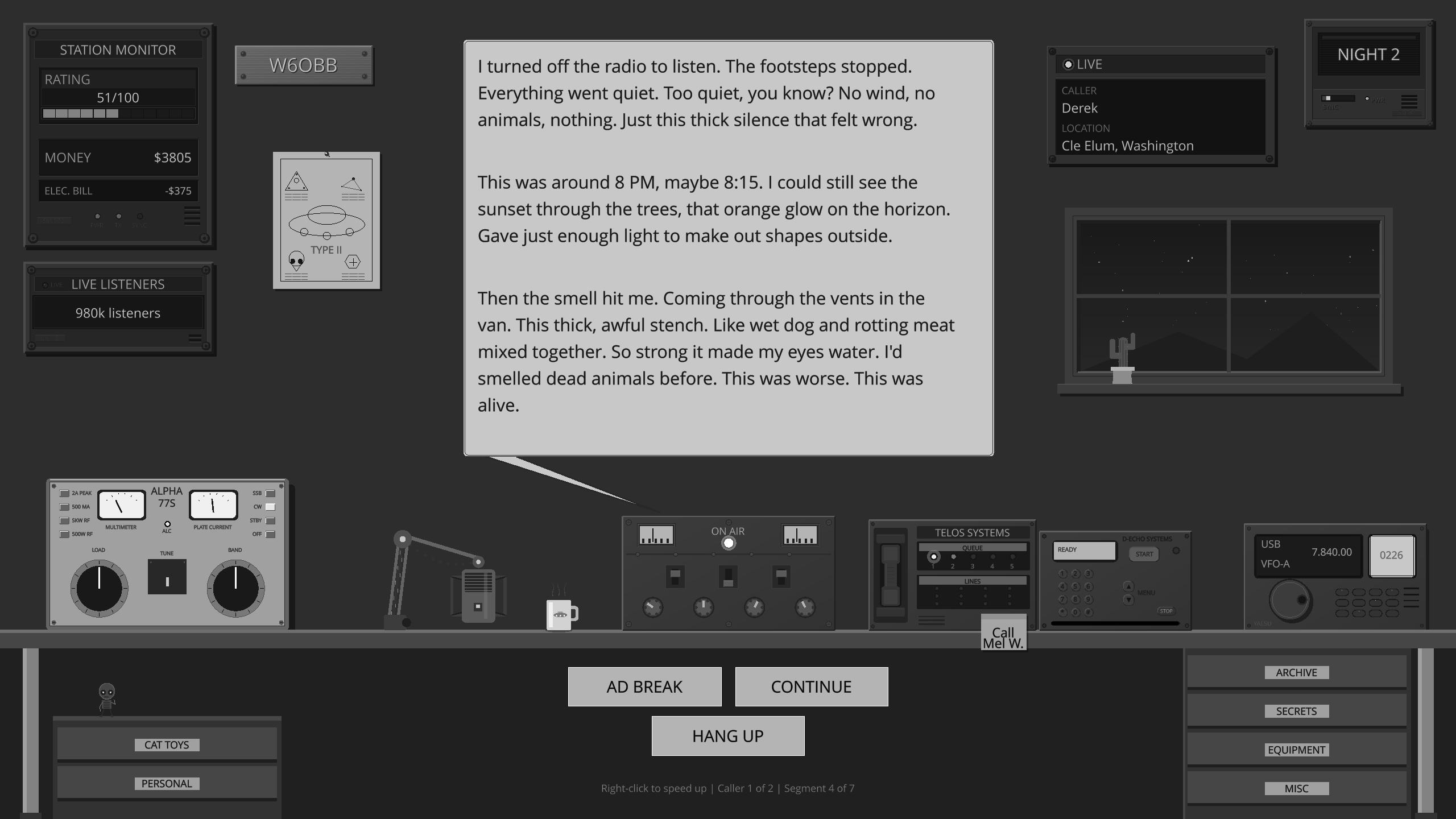
Ever wanted to host your own late-night paranormal radio show?
Across the Airwaves
You're on the air. Callers bring Mothman, Fresno Nightcrawlers, UFO sightings, reptilian autopsies, and whispers about AATIP and Project Blue Book. Every reply shapes how the night goes.

AI-Generated Summary
Operation 'Flying Saucer' was a 1953 RAAF air defence exercise testing Sydney's radar and interception capabilities. It concluded that while the organisational structure was sound, existing radar equipment was inadequate for modern jet aircraft control.
Operation 'Flying Saucer' was a major air defence exercise conducted by the Royal Australian Air Force on the 20th and 21st of June 1953, designed to test the Air Defence Organisation of Sydney. The exercise involved No. 22 (City of Sydney) (F) Squadron, No. 23 (City of Brisbane) (F) Squadron, No. 2 (F) O.T.U., and the Sydney Air Defence Training Sector. The exercise was the first occasion on which the Sector Operations Centre at Richmond was used in its permanent position. The attacking force consisted of six Lincoln bombers and two Beaufighters. The exercise provided valuable training for both aircrew and ground personnel, particularly in raid reporting and controlling. However, the report highlights significant limitations in the existing radar infrastructure, specifically the inadequacy of the ANT/PS3 radar at Richmond and the lack of height-finding radar equipment. Communication issues, such as high noise levels in the operations room and the need for more direct telephone lines, were also identified as areas for improvement. The report concludes that while the basic organisation is sound, the current radar equipment is insufficient for the control of modern jet aircraft. Recommendations include the installation of permanent land lines, the re-siting of radar equipment, and the provision of more advanced height-finding radar to ensure the effectiveness of the air defence system in future operations.
Operation 'Flying Saucer' was the most successful post-war Air Defence Exercise. The results achieved have shown that the basic organisation of the raid reporting and controlling organisation is sound, but that it is severely limited by the inadequacy of the radar units and the lack of height finding radar equipment.
PDF not loading? Download the PDF directly
Official Assessment
Operation 'Flying Saucer' was the most successful post-war Air Defence Exercise. The basic organisation of the raid reporting and controlling organisation is sound, but it is severely limited by the inadequacy of the radar units and the lack of height finding radar equipment.
The exercise demonstrated that the current radar infrastructure was inadequate for controlling jet aircraft. The use of the ANT/PS3 radar at Richmond was deemed unsuitable for GCI purposes. Communication improvements, including direct land lines and sound-proofing the controller's dais, were recommended.
Key Persons
- F. HeadlamGroup Captain, for Air Officer Commanding
- A.A. CampbellActive Reserve Signals Officer, Flight Lieutenant
- GranvilleFlight Lieutenant, GCI Controller at Williamtown