Declassified UFO / UAP Document
Laser Lightcraft Nanosatellites
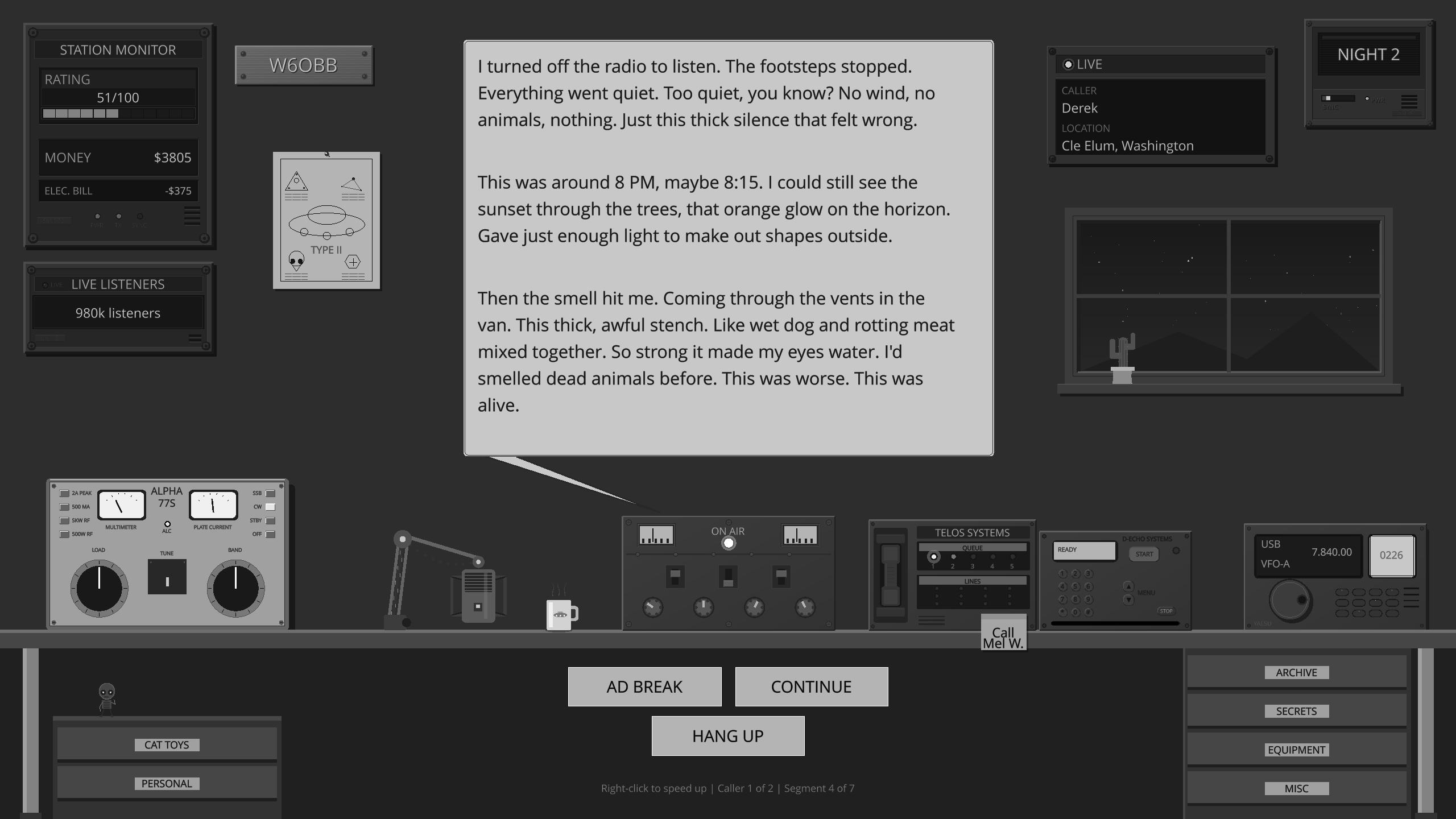
Ever wanted to host your own late-night paranormal radio show?
Across the Airwaves
You're on the air. Callers bring Mothman, Fresno Nightcrawlers, UFO sightings, reptilian autopsies, and whispers about AATIP and Project Blue Book. Every reply shapes how the night goes.

AI-Generated Summary
This document outlines the technical and economic feasibility of using high-energy laser propulsion to launch nanosatellites into orbit. It concludes that while laser-propelled Lightcraft are not ideal for combat, they offer a revolutionary, low-cost alternative for space access and distributed satellite swarm missions.
This Defense Intelligence Reference Document, dated November 1, 2010, provides a comprehensive technical overview of 'Laser Lightcraft Nanosatellites.' The document explores the feasibility of using high-energy, ground-based laser systems to propel small, lightweight spacecraft (nanosatellites and picosatellites) into low Earth orbit (LEO). The core concept involves a 'Lightcraft' vehicle that utilizes a laser beam to heat ambient air for propulsion during the atmospheric phase and then transitions to laser-thermal rocket mode once in space. The report details the history of the Lightcraft Technology Demonstration Program, noting successful tests conducted by the Air Force Research Laboratory (AFRL) and the U.S. Army at the White Sands Missile Range. The document evaluates various laser technologies, including multi-megawatt CO2 lasers, bulk slab solid-state lasers (BSSSL), high-power fiber lasers (HPFL), and free-electron lasers (FEL). It provides detailed cost analyses, suggesting that laser-propelled launch systems could reduce costs by two to three orders of magnitude compared to traditional chemical rockets. Beyond launch capabilities, the document discusses the potential for 'swarms' of coherently cooperating nanosatellites to form large, distributed apertures for radio frequency collection, high-resolution radiometry, and hyperspectral sensing. While the report investigates potential military applications, such as ballistic missile defense, it concludes that the most promising use for the technology is as a low-cost launch vehicle for small satellites. The document includes extensive technical schematics, cost summaries, and references to previous studies by researchers such as H. D. Froning and Leik Myrabo.
Laser propulsion is a new and exceptional method for reaching space. By launching spacecraft on a beam of electromagnetic radiation, researchers will have developed the first new method of achieving orbit since the late 1950's.
PDF not loading? Download the PDF directly
Official Assessment
Laser-propelled Lightcraft systems are identified as a potentially cost-effective method for placing nanosatellites into low Earth orbit. The document concludes that while military combat missions for Lightcraft were not found to be highly attractive compared to other options, the system is extremely promising for launch vehicle missions and for enabling distributed satellite swarms.
Key Persons
- F. MeadContributor of photographs
- I. BekeyProvided research notes, lectures, and briefings
- V. HassonConducted study of candidate multi-megawatt laser systems
- H. D. FroningResearcher/Author of cited studies
- Leik MyraboResearcher in laser propulsion