Declassified UFO / UAP Document
High-Frequency Gravitational Wave Communications
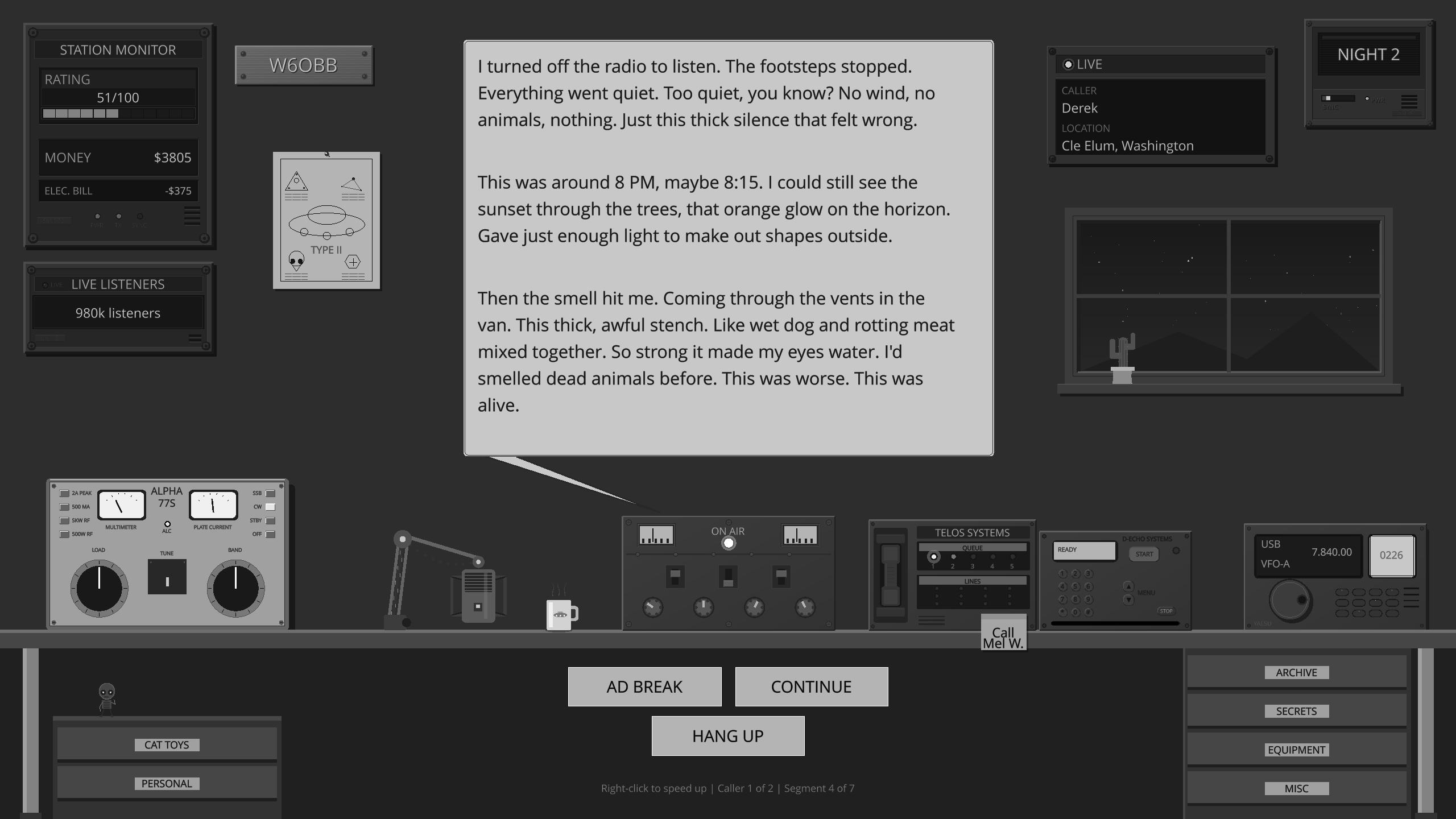
Ever wanted to host your own late-night paranormal radio show?
Across the Airwaves
You're on the air. Callers bring Mothman, Fresno Nightcrawlers, UFO sightings, reptilian autopsies, and whispers about AATIP and Project Blue Book. Every reply shapes how the night goes.

AI-Generated Summary
This document outlines the theoretical and practical potential for high-frequency gravitational wave (HFGW) communications as a secure, trans-global wireless technology. It details the development of the Li-Baker detector and provides a roadmap for future applications in navigation, timing, and propulsion.
This Defense Intelligence Reference Document, produced under the Advanced Aerospace Weapon System Applications (AAWSA) Program in 2010, provides a comprehensive technical overview of the potential for high-frequency gravitational wave (HFGW) communications. The document posits that HFGWs, which are gravitational waves with frequencies higher than 100 kHz, could revolutionize telecommunications by providing a wireless system capable of transmitting information directly through the Earth without attenuation or the need for traditional infrastructure like fiber optic cables or satellite transponders.
The report details the history of HFGW research, noting that while low-frequency gravitational waves are detectable by instruments like LIGO, HFGWs require different generation and detection methods. The document evaluates various proposed HFGW generators, including piezoelectric and infrared-excited molecule approaches, and identifies the Li-Baker detector as the most promising receiver technology. The Li-Baker detector utilizes the 'Li-Effect,' a synchro-resonance condition where electromagnetic and gravitational waves interact to produce a perturbative photon flux, allowing for the detection of HFGW signals.
Operational concerns such as link budgets, signal-to-noise ratios, and bandwidth are analyzed, with the report suggesting that HFGW systems could provide significant improvements in timing and navigation, potentially serving as a supplement or alternative to GPS. The document outlines a developmental roadmap spanning from 2009 to 2050, emphasizing the need for continued theoretical research and the construction of laboratory prototypes. Beyond communications, the report explores other potential applications for HFGW technology, including HFGW-induced nuclear fusion, propulsion, and surveillance. The document concludes that while the technology is in its infancy, the theoretical foundations are sound, and further investment in laboratory-scale experiments is essential to validate these concepts and transition them into practical applications.
Because HFGW communications are carried on an extremely narrow beam directly through the Earth, there is a very low probability of interception.
PDF not loading? Download the PDF directly
Official Assessment
The document concludes that HFGW communications are theoretically possible and offer significant advantages, including low probability of interception and the ability to pass through ordinary matter without attenuation. The Li-Baker detector is identified as the most promising technology for future development.
Key Persons
- Robert M L Baker, Jr.Inventor of the Li-Baker HFGW detector
- Gary StephensonChief investigator for Seculine Consulting
- R.C. WoodsResearcher at Louisiana State University (LSU)