Declassified UFO / UAP Document
Technological Approaches to Controlling External Devices in the Absence of Limb-Operated Interfaces
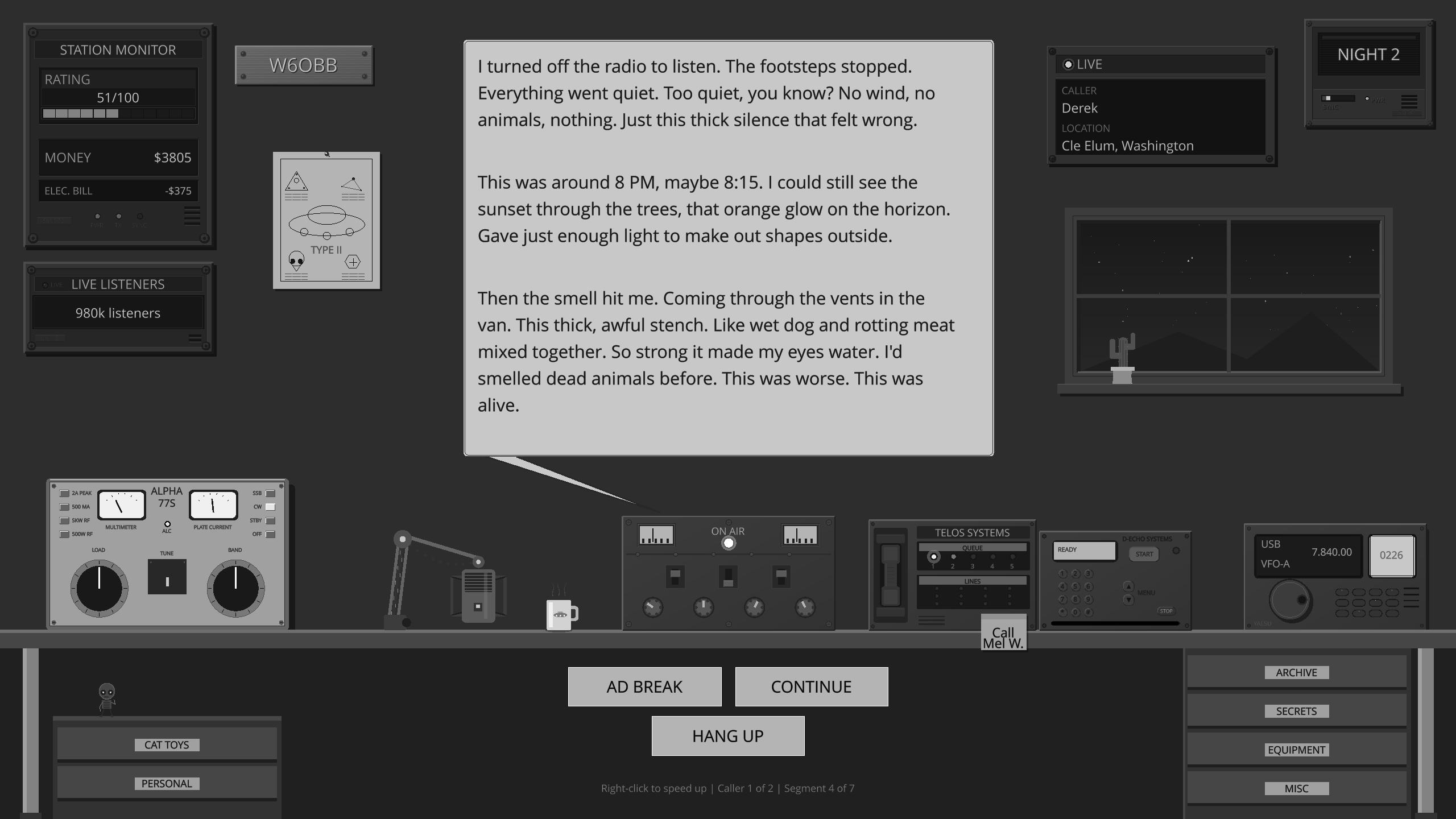
Ever wanted to host your own late-night paranormal radio show?
Across the Airwaves
You're on the air. Callers bring Mothman, Fresno Nightcrawlers, UFO sightings, reptilian autopsies, and whispers about AATIP and Project Blue Book. Every reply shapes how the night goes.

AI-Generated Summary
This DIA report surveys the state of Brain-Machine Interface (BMI) technology as of 2009, evaluating both noninvasive and invasive methods for controlling external devices via neural signals. It identifies high-bandwidth, invasive cortical connections as the most promising long-term solution for seamless human-machine integration.
This Defense Intelligence Reference Document, produced in 2010 for the Advanced Aerospace Weapon System Applications (AAWSA) program, provides a comprehensive technical survey of Brain-Machine Interface (BMI) technologies. The document explores the objective of enabling thought-based control of remote machinery and external devices without the need for mechanical interfaces like limbs, buttons, or trackballs. It reviews the biological foundations of neural signaling, contrasting the slow, chemical-based transmission of the human nervous system with the high-speed electronic transmission of physical circuits. The report categorizes BMI technologies into noninvasive and invasive methods. Noninvasive techniques discussed include electroencephalography (EEG), magnetoencephalography (MEG), electromyography (EMG), functional magnetic resonance imaging (fMRI), and near-infrared spectroscopy (NIRS). The document notes that while noninvasive methods are currently more commercially viable, they suffer from low information transfer rates and signal noise. Invasive technologies, such as cochlear implants, direct cortical arrays, and chronic neural implants, are examined for their potential to provide higher bandwidth and more precise control. The report highlights experimental research involving nonhuman primates and lampreys to demonstrate closed-loop control systems, where neural feedback is used to adjust device performance in real-time. It also addresses the challenges of long-term implantation, including tissue scarring and the need for biocompatible materials. The document concludes that while current technology is limited, future advancements in high-bandwidth duplex communication pathways—specifically those utilizing optical stimulation and ex-vivo-engineered neural tissue—could revolutionize thought-directed control of external systems.
The technology endpoint this paper seeks is thought-based operation of remote machinery during normal human activities without mechanical device interaction—that is, control of external devices without the need to go to a specified location, such as a shielded room; without the need to remain perfectly motionless to reduce signal noise; and without the need for interaction with a normal electro-mechanical device, such as an i-Phone or other handheld device with buttons and trackballs.
PDF not loading? Download the PDF directly
Official Assessment
The document concludes that noninvasive electrical monitoring of neural activity is the most promising commercial technology in the near term. For the long term, the most promising technology involves invasive single-neuron-based direct cortical connections to form high-bandwidth duplex communication pathways, specifically utilizing optical stimulation, gating, and ex-vivo-engineered neural tissue.
Key Persons
- BlankertzResearcher
- PopescuResearcher
- Mussa-IvaldiResearcher
- FetzResearcher
- ParikhResearcher
- ClementResearcher
- Jans NaumannSubject
- SchalkResearcher
- HochbergResearcher
- DeliaginaResearcher