Declassified UFO / UAP Document
A Historical Perspective on Anti-Gravity Technology
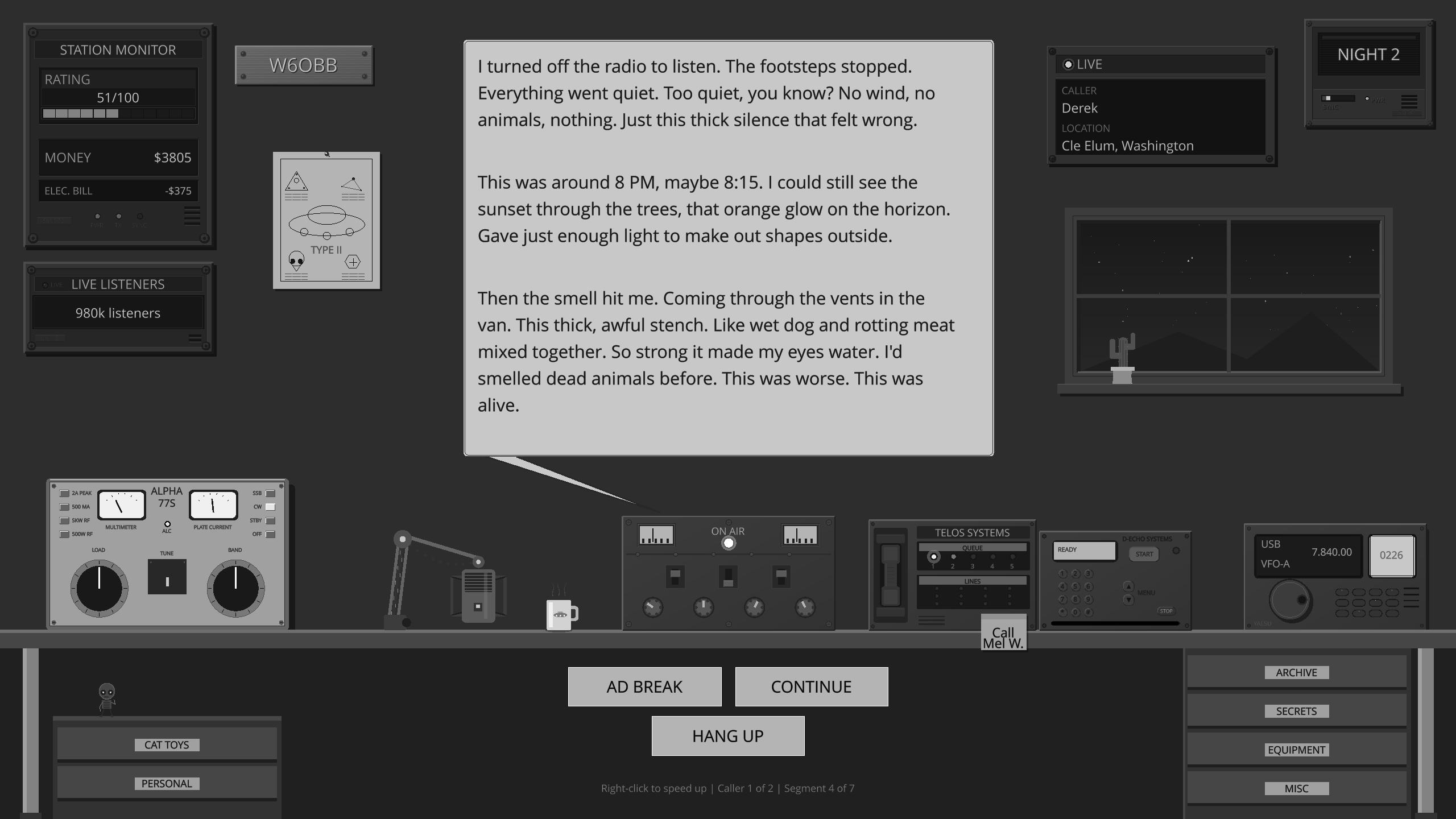
Ever wanted to host your own late-night paranormal radio show?
Across the Airwaves
You're on the air. Callers bring Mothman, Fresno Nightcrawlers, UFO sightings, reptilian autopsies, and whispers about AATIP and Project Blue Book. Every reply shapes how the night goes.

AI-Generated Summary
This document is a presentation by The Institute for Exotic Science outlining the history of anti-gravity research from the 1920s to the present. It highlights various experimental efforts and argues that such research is often hindered by classification and a lack of testable scientific frameworks.
This presentation, titled 'A Historical Perspective on Anti-Gravity Technology,' provides a chronological overview of various theories and experimental efforts aimed at manipulating gravity. The document is authored by Amy Eskridge, President of The Institute for Exotic Science and CEO of HoloChron LLC, both based in Huntsville. The presentation begins by defining gravity and anti-gravity, noting that while general relativity makes anti-gravity appear impossible without negative mass, the standard model of particle physics does not include such mass. It then traces the history of gravity research, starting with early figures like Copernicus, Kepler, Newton, and Einstein. The document highlights several controversial or fringe research efforts throughout the 20th and 21st centuries, including Thomas Townsend Brown’s 'electrogravitics' in the 1920s, Nikola Tesla’s 1928 'space drive' patent, and the Gravity Research Foundation established by Roger W. Babson in 1948. It also discusses the 'reactionless' Dean Drive, the Wallace Machine, and Eric Laithwaite’s gyroscope experiments. The presentation notes that the 1973 Mansfield Amendment restricted DoD research for non-military applications, which the author suggests led to the outsourcing of anti-gravity research to the private sector or black budget programs. Modern efforts mentioned include the work of Ning Li and Doug Torr, the Podkletnov Effect, Claude Poher’s 'Universons' theory, and Morningstar Applied Physics. The document also references the Boeing Phantomworks 'GRASP' program and the 2017 declassification of AATIP documents by the Defense Intelligence Agency. The presentation concludes by emphasizing the need for testable hypotheses and independently funded private research, expressing concern that promising results often disappear into the classified realm.
Before anyone can have the audacity to formulate even the most rudimentary plan of attack on the problem of harnessing the force of gravitation, he must understand the nature of his adversary. I take it as most axiomatic that the phenomenon of gravitation is poorly understood even by the best of minds, and the last word on it is very far indeed from having been spoken.
PDF not loading? Download the PDF directly
Official Assessment
The document argues that gravity remains poorly understood and that research into anti-gravity has historically been fragmented, often panned by the scientific community, or moved into classified government programs. It advocates for independently funded private research and the development of testable hypotheses.
Key Persons
- Amy EskridgePresident of The Institute for Exotic Science, CEO of HoloChron LLC
- Shantel ButlerR&D Director
- Nate KloseCreative Director
- Sam ReidGov’t Affairs Director
- Paul HandySr. EE
- Richard EskridgeProfessor Emeritus, CTO and Co-founder of HoloChron Engineering
- Thomas Townsend BrownResearcher of Biefeld-Brown effect
- Nikola TeslaInventor of space drive
- Roger W. BabsonFounder of Gravity Research Foundation
- Bryce DeWittAuthor of Gravity Research Foundation Essay
- Ning LiScientist, founder of AC Gravity LLC
- Doug TorrScientist, collaborator with Ning Li
- Claude PoherResearcher of Podkletnov Effect
- Paul MuradResearcher at Morningstar Applied Physics
- John BrandenburgResearcher at Morningstar Applied Physics