Declassified UFO / UAP Document
Aerospace Vehicle EMI Transient Test Techniques
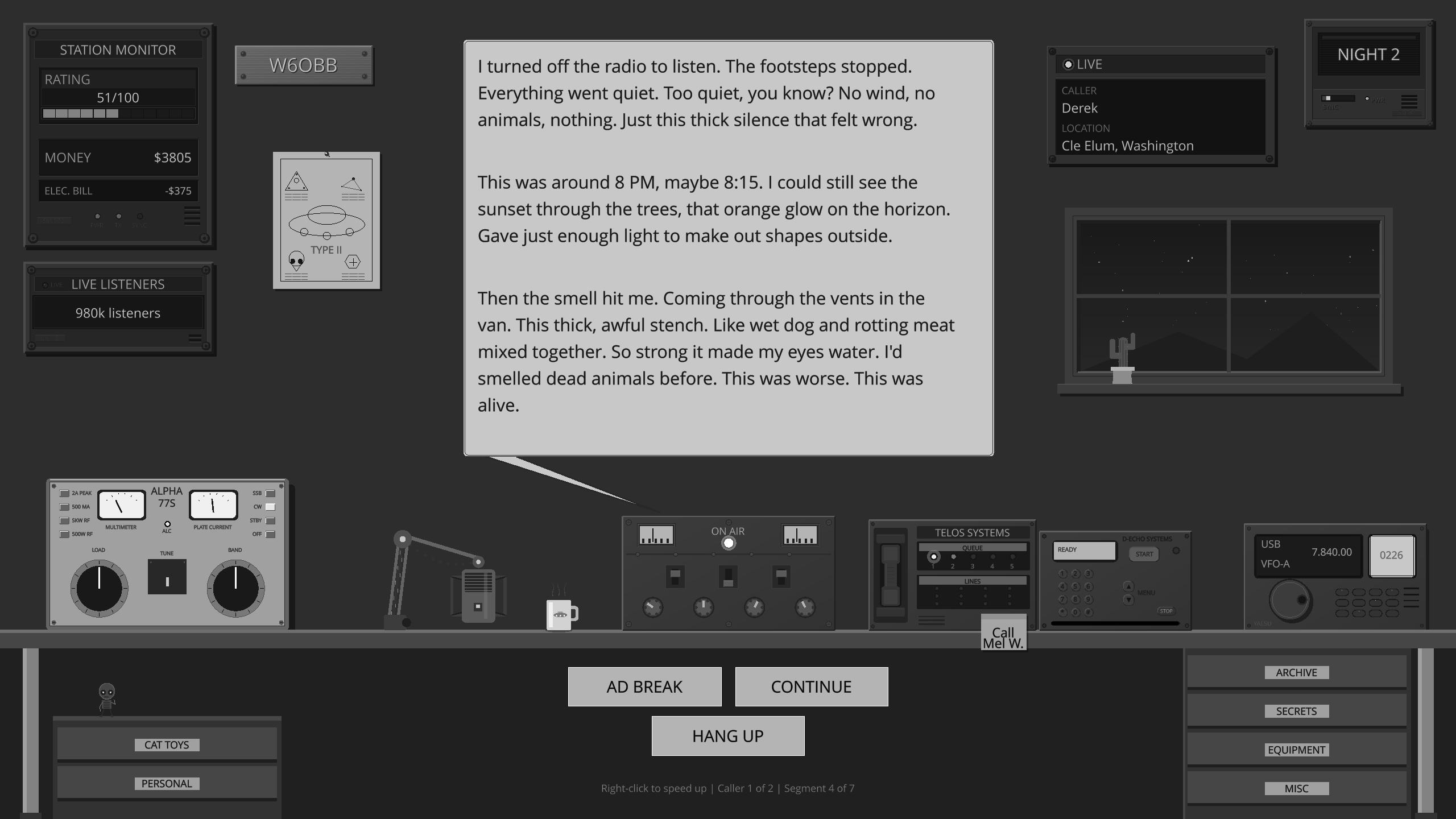
Ever wanted to host your own late-night paranormal radio show?
Across the Airwaves
You're on the air. Callers bring Mothman, Fresno Nightcrawlers, UFO sightings, reptilian autopsies, and whispers about AATIP and Project Blue Book. Every reply shapes how the night goes.

AI-Generated Summary
This 1972 technical report by Braddock Dunn and McDonald Inc. outlines methods for testing and protecting aerospace vehicle electrical systems against electromagnetic interference, including EMP and lightning. It highlights the necessity of cable shielding to prevent damage from induced transient currents.
This technical report, authored by James J. Schwarz and Harald J. Wagnon of Braddock Dunn and McDonald Inc., details test techniques for managing electromagnetic interference (EMI) in aerospace vehicles. The document, dated March 1, 1972, covers research conducted between January 1971 and February 1972. The primary focus is on the mitigation of transient phenomena, specifically electromagnetic pulses (EMP), lightning, and system-generated EMI, which are capable of inducing significant transient currents on electrical cabling. The report emphasizes that to ensure the integrity of sophisticated aerospace systems, the implementation of extensive cable shielding is required. The document includes technical descriptors related to electrical components, such as resistors, capacitors, transmission lines, and pulse generators, as well as instrumentation and testing methodologies for broadband voltage and low-frequency interference.
Transient phenomena such as electromagnetic pulse EMP, lightning or system generated electromagnetic interference EMI, can induce large transient currents on electrical cables.
PDF not loading? Download the PDF directly
Official Assessment
The document addresses the need for extensive cable shielding in sophisticated systems to protect against transient currents induced by electromagnetic pulse (EMP), lightning, or system-generated electromagnetic interference (EMI).
Key Persons
- Schwarz, James J.Author
- Wagnon, Harald J.Author