Declassified UFO / UAP Document
Unidentified Flying Object Report — Charlotte County, Florida, October 1966
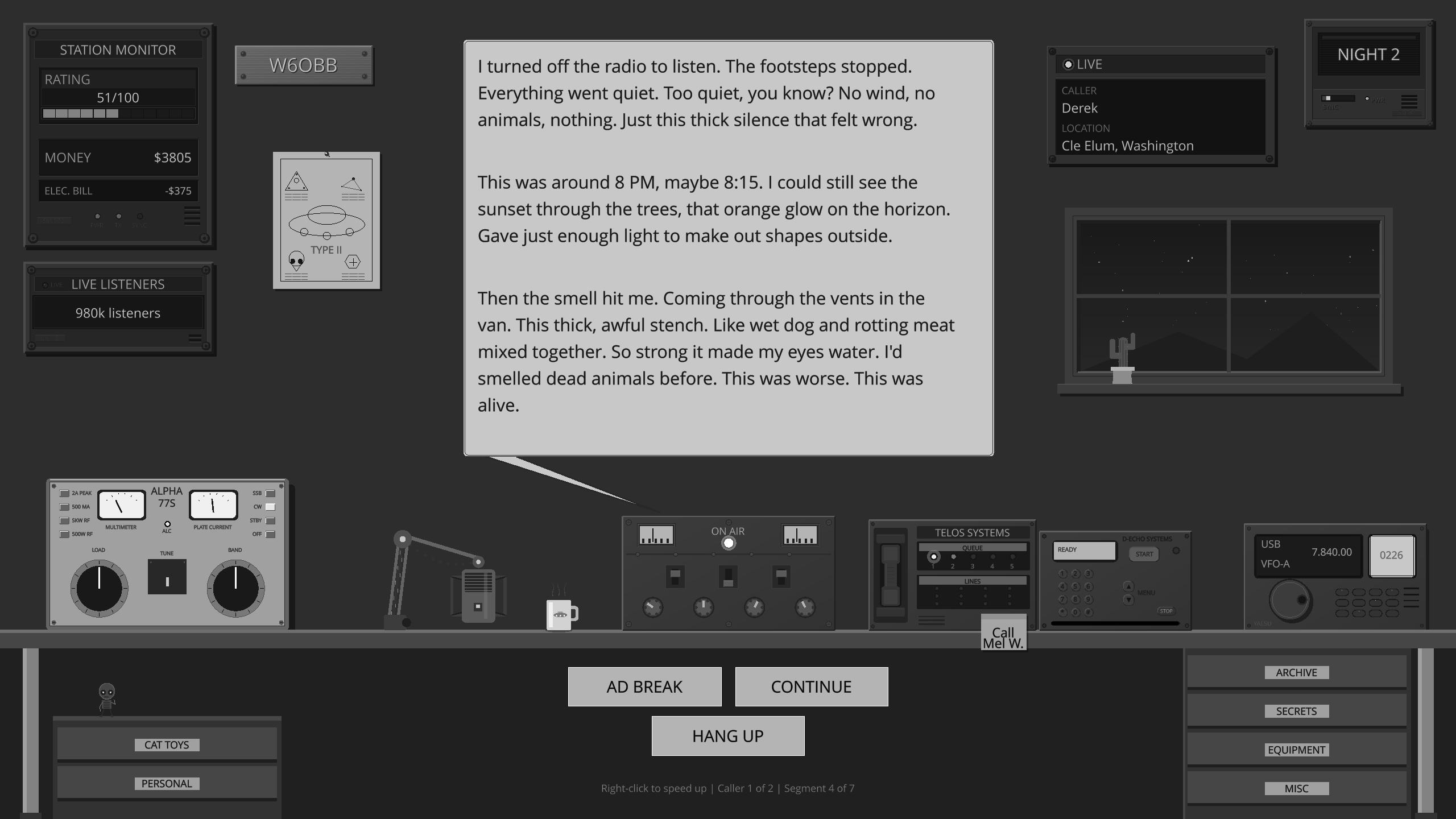
Ever wanted to host your own late-night paranormal radio show?
Across the Airwaves
You're on the air. Callers bring Mothman, Fresno Nightcrawlers, UFO sightings, reptilian autopsies, and whispers about AATIP and Project Blue Book. Every reply shapes how the night goes.
AI-Generated Summary
Residents in Florida reported seven stationary, pulsating lights over three nights in October 1966. The Air Force investigation concluded the objects were stars affected by atmospheric conditions.
Between October 17 and October 19, 1966, several residents of Port Charlotte and Punta Gorda, Florida, reported sightings of seven unidentified objects in the night sky. The observers, including a retired design engineer, a newspaper reporter, and a retired military officer, described the objects as stationary, star-like lights that appeared white with pulsating red and green colors. The witnesses observed these lights for up to three and a half hours using various optical aids, including binoculars, a rifle scope, and a telescope. Despite the duration and the use of equipment, no discernible shape, flight path, or sound was reported. The Air Force investigation, conducted by the 15th Tactical Fighter Wing at MacDill Air Force Base, concluded that the witnesses were rational individuals who had accurately described their visual experience. However, the investigating officer determined that the objects were simply stars. To support this conclusion, the Air Force consulted Dr. Heinrich Eichhorn, chairman of the astronomy department at the University of South Florida, who attributed the perceived color changes and pulsating effect to irregular atmospheric dispersion. The report includes a list of astronomical bodies visible in the area at the time, such as Capella, Aldebaran, and Vega, to further support the conclusion that the sightings were astronomical in nature.
A Dr. Heinrich Eichhorn, chairman of the University of South Florida's astronomy department was contacted and he described the phenomenon as irregular atmospheric dispersion.
PDF not loading? Download the PDF directly
Official Assessment
The objects were stars which appeared to change colors due to the prismatic effect of the earth's atmosphere, described by Dr. Heinrich Eichhorn as irregular atmospheric dispersion.
The investigating officer concluded that the observers were rational but had misidentified stars as unidentified objects.
Witnesses
- [illegible]Civilian
- [illegible]Civilian
- [illegible]Civilian
- [illegible]Civilian
- [illegible]Civilian
- [illegible]Civilian
- [illegible]Civilian
- [illegible]LtCivilian
Key Persons
- Dr. Heinrich EichhornChairman of the University of South Florida's astronomy department