Declassified UFO / UAP Document
Sighting Report and Correspondence — Seward, Pennsylvania, January 1965
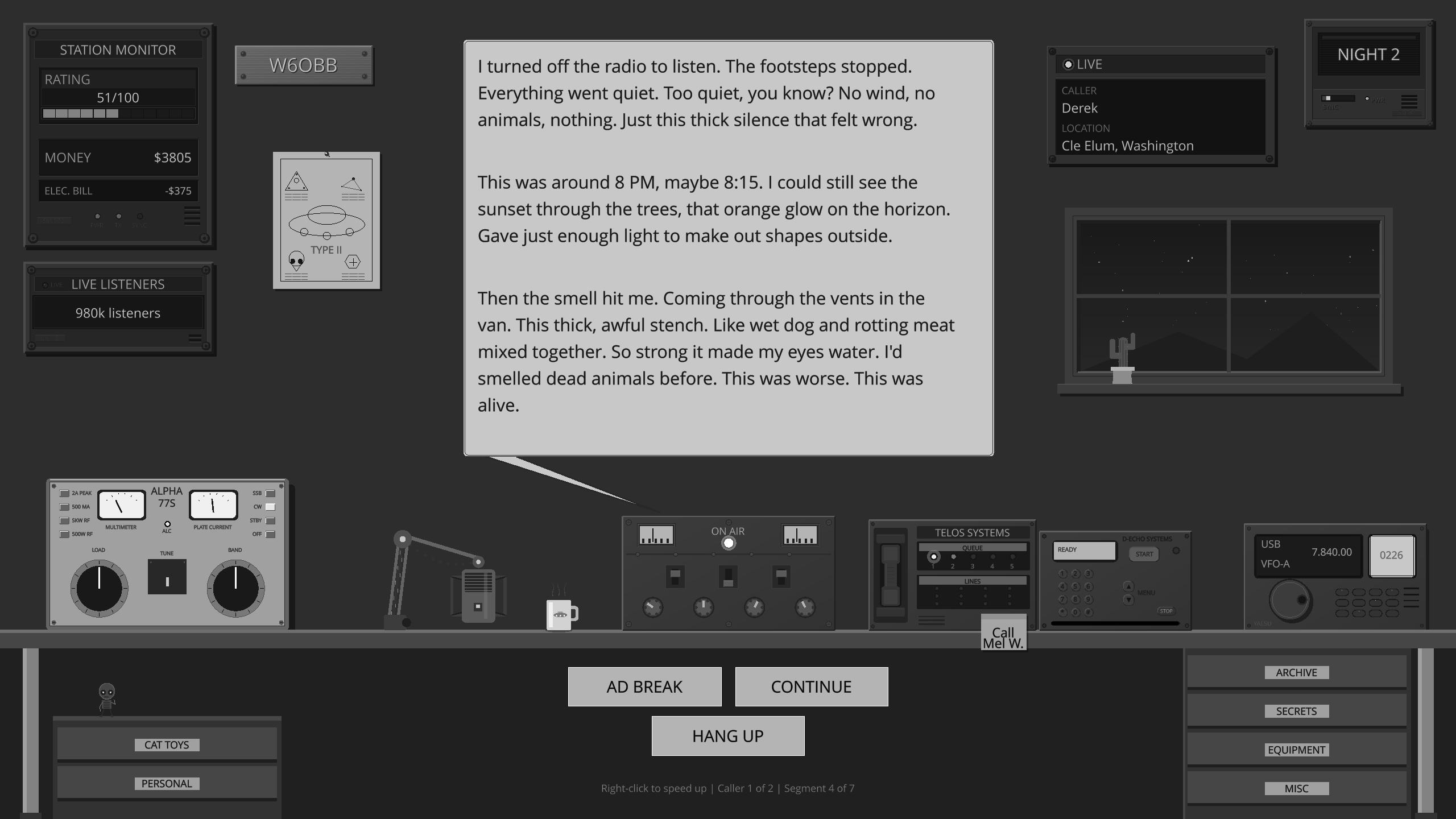
Ever wanted to host your own late-night paranormal radio show?
Across the Airwaves
You're on the air. Callers bring Mothman, Fresno Nightcrawlers, UFO sightings, reptilian autopsies, and whispers about AATIP and Project Blue Book. Every reply shapes how the night goes.

AI-Generated Summary
A civilian in Seward, Pennsylvania, reported a two-second aerial sighting on January 30, 1965. The Air Force investigated the report and concluded the object was a meteor, distinguishing it from satellite decay.
This document contains a sighting report and subsequent correspondence regarding an unidentified aerial object observed in Seward, Pennsylvania, on January 30, 1965. A civilian witness reported observing an object at 9:23 P.M. that appeared as a large silver glow, moving west for approximately two seconds. The witness described the object as looking like a shooting star, but noted the absence of a tail and compared the visual effect to a carbon arc light. The official conclusion reached by the Aerial Phenomena Branch at Wright-Patterson Air Force Base was that the object was a meteor. The report explicitly states that the duration and direction of the object's entry were inconsistent with satellite decay. In a follow-up letter dated February 4, 1965, Major Hector Quintanilla, Jr., Chief of the Aerial Phenomena Branch, addressed the witness, explaining that satellite decays are distinguished from meteor sightings by their specific flight paths and longer durations. He noted that a satellite re-entry over Pennsylvania would typically hold an easterly component and last longer than the two-second observation reported by the witness.
Looked like a shooting star except that there was no tail. Carbon arc light effect.
PDF not loading? Download the PDF directly
Official Assessment
Astronomical (METEOR). Duration and direction of entry wrong for Satellite Decay. Probable meteor sighting.
The object was determined to be a meteor rather than a satellite decay due to the duration and direction of the object's entry into the atmosphere.
Witnesses
- [illegible]Civilian
Key Persons
- HECTOR QUINTANILLA, JrChief, Aerial Phenomena Branch