Declassified UFO / UAP Document
Ground and Airborne Radar Observations of Unidentified Targets
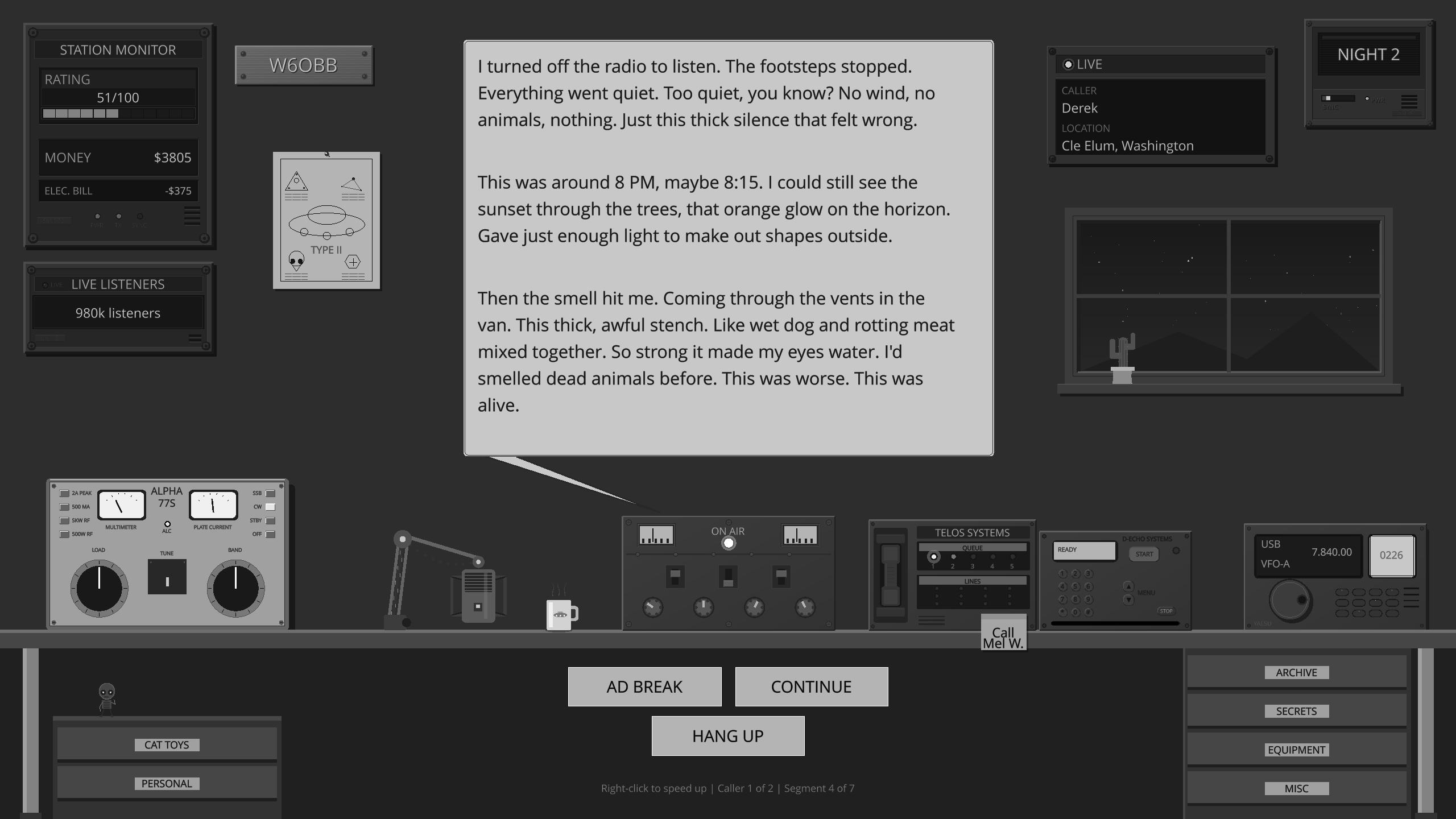
Ever wanted to host your own late-night paranormal radio show?
Across the Airwaves
You're on the air. Callers bring Mothman, Fresno Nightcrawlers, UFO sightings, reptilian autopsies, and whispers about AATIP and Project Blue Book. Every reply shapes how the night goes.

AI-Generated Summary
On March 20, 1955, radar in Tokyo tracked 16 unidentified targets. An F-86D interceptor was scrambled but could not visually identify the objects, which were later attributed to a temperature inversion.
This intelligence report details an incident on March 20, 1955, involving radar observations of unidentified targets over central Honshu, Japan. At approximately 1613 local time, the Tokyo Radar Traffic Control Center at Johnson Air Base detected sixteen targets in six formations. The targets appeared to move in a southeasterly direction. An F-86D aircraft, piloted by 1st Lt. C. D. Merrick, was scrambled from Yokota Air Base to intercept. During the pursuit, the pilot reported radar contact with two targets, but was unable to achieve visual confirmation. The pilot noted that the targets exhibited erratic motion and that his radar performance was generally good, though he experienced difficulty maintaining a lock. The report includes detailed accounts from the radar controllers and the pilot, noting that the targets eventually became stationary. The official evaluation, prepared by Captain Douglas J. Davis of the Air Technical Intelligence Center, concludes that the targets were likely the result of a temperature inversion, which created false echoes from ground targets. The report highlights that this was the first instance of such a prolonged airborne pursuit of unidentified targets and expresses surprise at the radar's behavior. The investigators noted that while the spurious response theory is supported by the fact that only two of the sixteen targets were observed on the aircraft's AI radar, there was insufficient data for a definitive evaluation. The report includes several enclosures, such as weather charts and radar overlays, to support the analysis of the atmospheric conditions at the time of the encounter.
The targets which moved and then became stationary are believed to have resulted from a possible temperature inversion that would justify false echoes from ground targets.
PDF not loading? Download the PDF directly
Official Assessment
The targets which moved and then became stationary are believed to have resulted from a possible temperature inversion that would justify false echoes from ground targets.
The incident was likely caused by a temperature inversion creating false radar returns. It is noted that this was the first report detailing such a long airborne pursuit of UFOs, and the radar performance was unusual.
Witnesses
- C. D. Merrick1st Lt.USAF
Key Persons
- George D. HastingsColonel, USAF, Director of Requirements
- A. DrepperdSgt.
- C. A. HardinCapt.